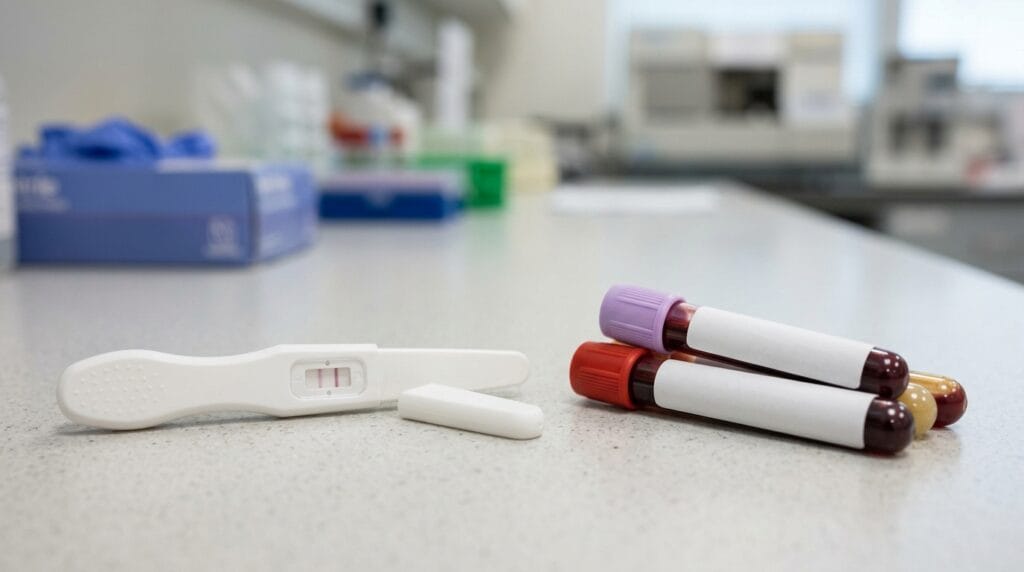

If your period is late and you are taking a GLP-1 medication like semaglutide or tirzepatide, it can throw you into a spiral fast. Maybe you started the medication for weight loss, PCOS-related issues, insulin resistance, or type 2 diabetes. Maybe your cycles were already irregular before. Now your period is off, your body feels different, and you are wondering the question that brought you here: could I be pregnant?
In 2026, this is becoming a more common concern. GLP-1 medications are widely used, and more people are hearing stories about “surprise pregnancies” while taking them. That does not mean the medication itself is a pregnancy test shortcut or a guaranteed cause of pregnancy. It means these drugs can show up in real-life situations where cycles change, weight changes, fertility shifts, and timing becomes harder to read.
If you are feeling confused, do not jump straight to panic. A late period on a GLP-1 can mean a few different things. Pregnancy is one possibility, but not the only one. What matters is understanding when to test, what symptoms are worth noticing, and when to speak with a medical professional quickly.
This guide breaks it down clearly so you know what to do next without making things more overwhelming than they already are.
Why this topic matters so much right now
GLP-1 medications are a major part of the current health conversation, and pregnancy questions are coming with them. Some people start ovulating more regularly after weight loss or metabolic improvement. Others have nausea, bloating, or appetite changes from the medication itself and do not know whether those feelings are side effects, hormone changes, or early pregnancy symptoms.
That overlap is exactly why this topic matters. A delayed period can feel medically confusing even before you add a medication that may affect appetite, digestion, and routine. For someone already prone to irregular cycles, the uncertainty gets even worse.
Symptoms can overlap in frustrating ways
Nausea, food aversions, fatigue, bloating, and changes in appetite can happen in early pregnancy. They can also happen as medication side effects. That makes it easy to second-guess everything.
Cycle changes can make timing harder
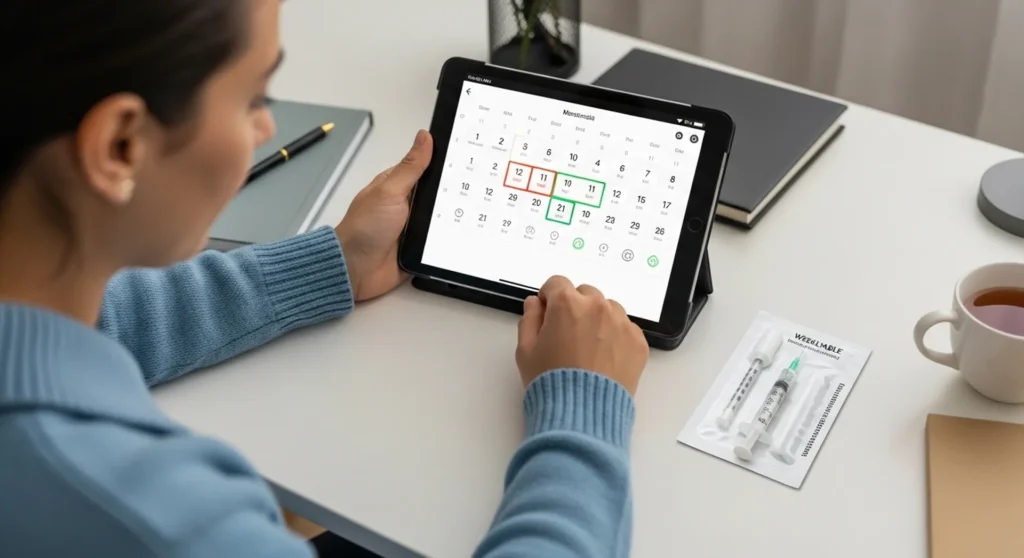
If your period is usually irregular, you may not know whether you are technically “late” or just outside your normal pattern. If your cycle has changed since starting treatment, it may be even harder to know the right day to test.
That uncertainty is what makes people spiral
When your body feels different and the calendar is no longer helping, it is easy to overread every symptom. The best way forward is not guessing harder. It is using the right test timing and responding step by step.
Can GLP-1 medications increase the chance of an unexpected pregnancy?
They are not fertility drugs, but they can change the bigger picture around fertility. For some people, weight loss and improved metabolic health can lead to more regular ovulation, especially if irregular cycles were linked to obesity or insulin-related conditions. That can mean pregnancy becomes more possible than it was before, even if you had assumed it was unlikely.
Improved ovulation can change your baseline risk
If you were rarely ovulating before and now your hormones are working in a more regular pattern, your chance of conceiving may rise. That does not happen for everyone, but it is one reason surprise pregnancies get talked about so much in this space.
Some guidance also warns about contraception issues
Tirzepatide, in particular, has raised extra concern because slowed stomach emptying may reduce the effectiveness of oral contraception in some situations. Vomiting or diarrhea can also make pills less reliable. That is one more reason some official guidance advises extra caution.
That does not mean every late period equals pregnancy
A late period can still be caused by stress, irregular ovulation, changes in weight, illness, thyroid issues, PCOS, or routine disruption. The point is not to assume. The point is to test at the right time and not ignore the possibility.
When should you take a pregnancy test if your period is late?
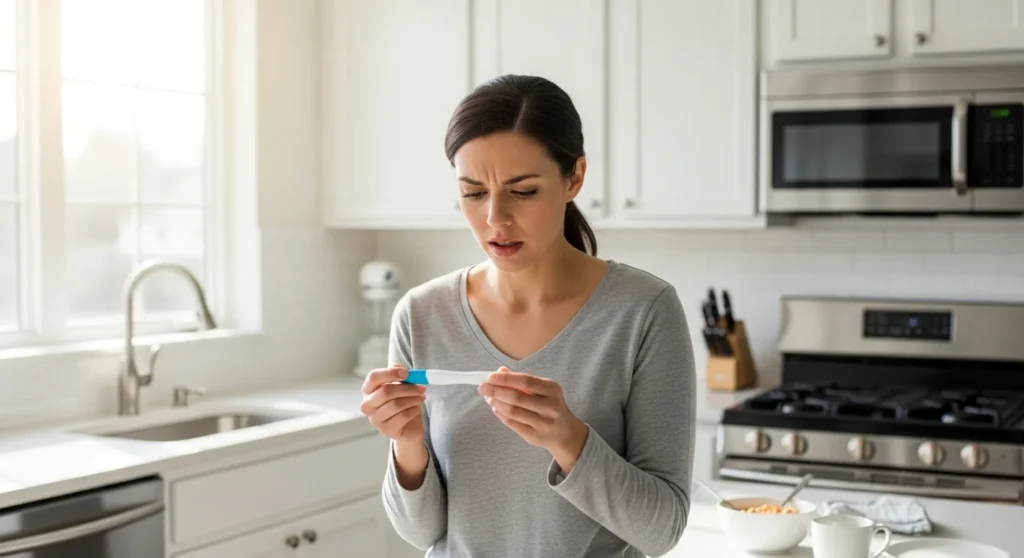
This is the part that matters most. Taking a test too early can waste your time and increase your stress. Most home pregnancy tests work best from the first day of a missed period. If you are not sure when your period should come because your cycles are irregular, a safer rule is to test at least 21 days after unprotected sex.
If your cycles are usually predictable
If your cycle is normally regular and your period is late, test from the first day it is due or missed. If that result is negative but your period still does not come, retest in 48 to 72 hours.
If your cycles are irregular
If you genuinely do not know when your period is due, count from the last time you had unprotected sex. In that case, waiting until at least 21 days after that encounter gives you a more reliable result than guessing based on a cycle that keeps moving.
Use the test correctly
Follow the instructions exactly. Use an unexpired test. If you are testing early, first morning urine may help because it is usually more concentrated. Avoid flooding yourself with fluids right before testing.
A negative result is not always the end of the story
If you tested early, ovulated later than expected, or used the test incorrectly, you can still get a false negative. If your period stays absent or symptoms keep building, retesting makes sense.
What symptoms should you pay attention to?
Symptoms alone cannot confirm pregnancy, but they can help you decide whether it is time to test again or call a clinician.
Possible early pregnancy symptoms
Signs that may point toward pregnancy include a missed period, breast tenderness, unusual fatigue, nausea, increased urination, and light spotting that does not feel like your usual period.
Possible medication side effects
GLP-1 medications can also cause nausea, vomiting, reduced appetite, bloating, constipation, and stomach discomfort. That is why symptoms can be so misleading here.
Watch for patterns, not just one symptom
One random symptom usually does not tell you much. A cluster of changes, especially with a missed period, matters more. If your breasts feel different, you are more tired than usual, and your period still has not come, testing is more important than continuing to guess.
Severe symptoms are different
If you have severe abdominal pain, fainting, shoulder pain, or heavy bleeding, that is not a “wait and see” situation. You need medical attention urgently because those symptoms can happen with serious problems, including ectopic pregnancy.
What should you do if the test is positive?
If your test is positive, the next step is not to panic. It is to act clearly and quickly. Contact the clinician who prescribed your medication and your pregnancy care provider or primary care clinician as soon as possible.
Do not keep guessing
If pregnancy is confirmed or strongly suspected, you need real medical guidance specific to your medication, dose, and health history. This is not something to figure out through social media comments.
Ask about medication next steps right away
GLP-1 medicines are generally not recommended during pregnancy, and official guidance says to speak with a healthcare professional promptly if you become pregnant while taking one.
Start the usual early-pregnancy basics
If you are not already taking a prenatal vitamin with folic acid, ask a clinician about starting one. Avoid alcohol and smoking, and review any other medications or supplements you are using.
You do not need to solve everything in one hour
A positive test can bring fear, excitement, confusion, or all three. The immediate goal is simple: confirm the result, contact the right clinician, and get proper next-step advice.
What if the test is negative but your period still does not come?
This is common enough that it deserves its own section. A negative test does not automatically mean nothing is going on.
Retest if the timing was borderline
If you may have tested too early, repeat the test in 2 to 3 days. Hormone levels rise over time in early pregnancy, so a later test may be more revealing.
Think beyond pregnancy too
Late or missing periods can also happen because of stress, travel, calorie restriction, rapid weight change, thyroid problems, PCOS, or other hormone-related issues. A late period still deserves attention even if pregnancy is ruled out.
See a clinician if the pattern continues
If your tests stay negative and your period remains absent or highly unusual, it is reasonable to ask for medical evaluation. That is especially true if this is a new change for you.
Your body does not need to be dramatic to deserve follow-up
You do not have to wait until things feel extreme. Ongoing confusion around missed periods, medication side effects, or hormone changes is enough reason to check in.
Final thoughts
A late period on a GLP-1 medication does not automatically mean pregnancy, but it is not something to brush off either. In 2026, more people are asking this exact question because these medications sit at the intersection of weight, hormones, fertility, and real-life uncertainty.
The smartest move is simple. Test at the right time. Retest if needed. Pay attention to severe symptoms. And if you get a positive result or your cycle changes feel unusual and ongoing, get medical advice quickly.
You do not need to diagnose yourself perfectly to take the next right step. You just need to stop guessing in circles and move forward with the clearest information you can get.
For added authority, you can include external links to UK government guidance on GLP-1 medicines and pregnancy, NHS guidance on when to take a pregnancy test, and MotherToBaby’s semaglutide fact sheet.