
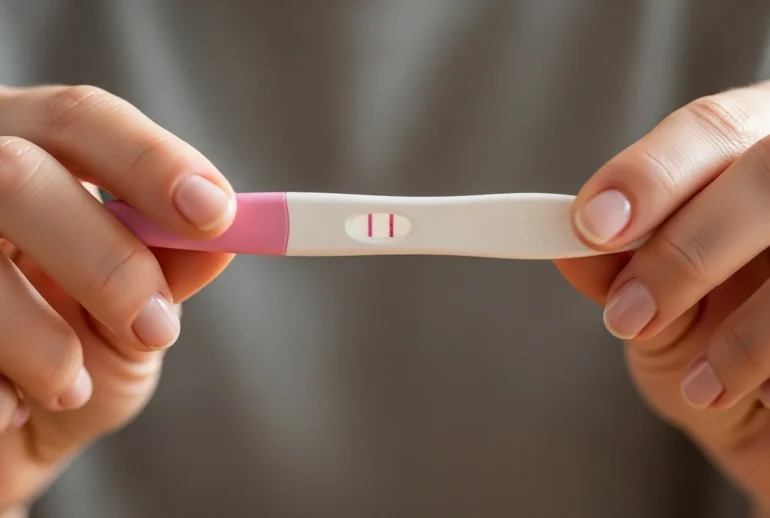
You’re tired. Your breasts feel sore. You’re bloated, moody, maybe even a little nauseous. And then you take a home pregnancy test… negative.
If you’re stuck in that “negative pregnancy test but feel pregnant” situation, you’re not being dramatic — and you’re not alone. A negative test can be wrong, especially if you tested early or your hCG level isn’t high enough yet.
This guide breaks down the most common reasons it happens, how to retest the smart way (without wasting a box of tests), and when it’s time to get a blood test or medical help.
First: can a negative pregnancy test be wrong?
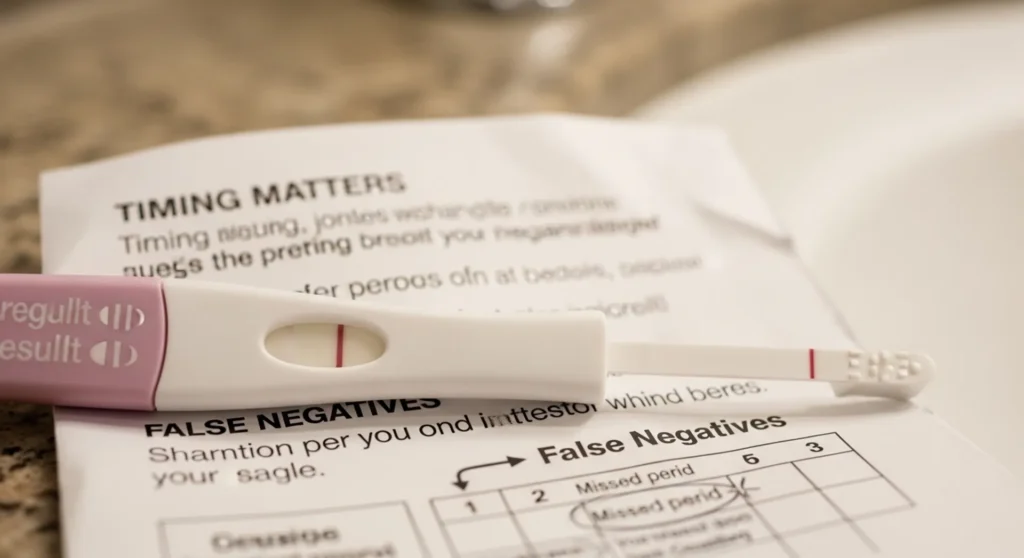
Yes. A false-negative is possible, and it usually comes down to timing, urine concentration, or testing errors. Mayo Clinic notes it’s possible to be pregnant and still get a negative result on a home test (a false negative), especially when testing too early or not following directions closely.
Home pregnancy tests: Can you trust the results? (Mayo Clinic)
9 reasons you feel pregnant but the test is negative
1) You tested too early
This is the #1 reason. Home urine tests detect hCG, and hCG rises after implantation. If implantation happened later than usual, your hormone level may still be too low when you test. Some early-detection tests can work before a missed period, but the results are less reliable than testing after you miss your period.
Related read: When to Take a Pregnancy Test: Timing, Accuracy, and What to Expect
2) Your urine was too diluted
If you tested later in the day after drinking lots of water, your urine may be too diluted to trigger a positive. Many clinicians recommend testing with first-morning urine because it’s typically more concentrated.
If you need a clean rule: test first thing in the morning, before coffee, before water, before anything.
3) You ovulated later than you think
If your cycle is irregular (or even just “a little off”), you may have ovulated later. That shifts everything: fertilization, implantation, and when hCG becomes detectable. If you assume you ovulated on day 14 but it was actually day 18 or 20, you can easily test “too early” without realizing it.
4) Implantation happened later
Implantation often happens about 10–14 days after conception, but it can vary. If implantation is late, hCG rises later, and your test stays negative longer.
If you’re noticing light spotting and wondering what it means, read: 10 Early Signs You Might Be Pregnant (Even Before a Missed Period)
5) You didn’t use the test exactly right
It happens more than people admit. Common mistakes:
- Checking results outside the recommended time window
- Not using enough urine / dipping too long or too short
- Reading the test in poor lighting
- Using an expired test
Pro tip: set a timer. Read it exactly when the instructions say. Not sooner, not later.
6) The test wasn’t sensitive enough
Not all tests detect low hCG levels equally. If you’re very early, a less sensitive test may read negative while a more sensitive one might show a faint positive (or vice versa depending on timing).
If you’ve tested multiple times and you’re confused, this article breaks it down: Pregnant but Testing Negative? 7 Reasons Your Pregnancy Test Might Be Wrong
7) It’s not pregnancy — PMS can mimic early symptoms
This part is annoying but true: progesterone can cause symptoms that look exactly like early pregnancy, including breast tenderness, fatigue, bloating, and mood changes. Stress can also intensify symptoms and delay your period.
If your period is late and you’ve been under stress, your body may be reacting to cortisol and hormone shifts — not necessarily pregnancy.
8) Medications or medical conditions are affecting symptoms
Some medications, hormonal conditions, thyroid issues, or changes in birth control can cause nausea, fatigue, breast tenderness, and cycle changes. These can feel like pregnancy even when you’re not pregnant.
That’s why your next steps matter — you don’t want to guess for weeks if your body is sending signals.
9) Rare but important: ectopic pregnancy or early loss
This section is not to scare you — it’s to keep you safe. In some situations, hCG levels can rise abnormally or symptoms can continue even after an early loss. If you have severe one-sided pelvic pain, shoulder pain, fainting, or heavy bleeding, seek urgent medical care.
If you’re in doubt and your symptoms are intense, don’t “wait it out.”
Exactly what to do next (simple, step-by-step)

Step 1: Wait 3–5 days and retest (correctly)
If your test was negative but your period still hasn’t come, wait 3–5 days, then retest using first-morning urine. This aligns with the fact that hCG rises over time, and a few days can make a big difference.
Step 2: Use a clear retest setup
- Use first-morning urine
- Don’t overdrink fluids the night before
- Follow timing instructions exactly
- Check the expiration date
- Take a photo of the result within the time window (helps reduce “line anxiety”)
Step 3: If it’s still negative and your period is still missing, request a blood test
A quantitative hCG blood test can detect pregnancy earlier and more reliably than urine tests. Cleveland Clinic explains blood tests can detect very small hCG levels and may confirm pregnancy earlier than urine tests.
That’s especially useful if:
- You’re late by a week or more
- You have ongoing symptoms
- You have irregular cycles and can’t pinpoint ovulation
- You’re worried about ectopic pregnancy or complications
When to call a doctor immediately
Don’t delay care if you have:
- Severe pelvic or abdominal pain (especially one-sided)
- Heavy bleeding (soaking pads) or bleeding with dizziness
- Fainting, weakness, or shoulder pain
- Fever or signs of infection
If you’re emotionally overwhelmed, you’re not failing
Uncertainty is brutal. The “maybe” period can feel worse than a clear yes or no. If you need a calm checklist for what to do when you suspect pregnancy, start here:
What to Do If You Think You Might Be Pregnant: A Step-by-Step Guide
Quick recap
- A negative pregnancy test can be wrong, especially if you tested early or your urine was diluted.
- Wait 3–5 days, then retest with first-morning urine and strict timing.
- If symptoms persist and your period is missing, ask for a blood test.
- Seek urgent care if you have severe pain, heavy bleeding, dizziness, or fainting.
Bottom line: If you’re stuck in the “negative pregnancy test but feel pregnant” loop, don’t keep guessing forever. Retest smart, then escalate to a blood test so you can get a real answer and move forward.