
Trying to get pregnant after GLP-1 medications in 2026 has become a much more common question than it was even a year or two ago. Medications like semaglutide and tirzepatide are now part of everyday conversations about weight loss, insulin resistance, PCOS, and type 2 diabetes. As more people use them, more people also end up asking the same practical question: if I want to conceive soon, what am I supposed to do now?
That confusion makes sense. A late period can feel like a pregnancy clue. So can nausea, fatigue, breast tenderness, and appetite changes. However, GLP-1 medications and the body changes around them can blur the picture fast. Some people lose weight and begin ovulating more regularly. Others already had irregular cycles before treatment. Then, once pregnancy enters the conversation, timing becomes stressful. You stop the medication now? Do you wait? Test right away? Do you need to panic if you already had unprotected sex?
This is why the topic fits CouldBePregnant.com so well. It sits right in the overlap between cycle confusion, pregnancy-test timing, and emotional uncertainty. It also connects naturally to your existing content on Late Period on GLP-1 Medication, Understanding Ovulation and Fertility Awareness, When to Take a Pregnancy Test, and What to Do If You Think You Might Be Pregnant.
Why This Topic Is Trending Right Now
Trying to get pregnant after GLP-1 medications in 2026 is trending because the medications are now mainstream, but the day-to-day fertility questions still feel messy. Many people are not looking for a technical drug summary. They want plain answers. They want to know whether a missed period means pregnancy, whether they should keep taking the medication if they might conceive, and how long they are supposed to wait before trying.
GLP-1 Medications Change the Fertility Conversation
These medications are not fertility drugs. Still, they can change the broader situation around fertility. Weight loss, metabolic improvement, and more regular ovulation can all make pregnancy more possible for some people than it was before. That does not mean everyone on a GLP-1 suddenly becomes highly fertile. It does mean some people who once assumed pregnancy was unlikely may need to rethink timing, testing, and contraception more carefully.
A late period does not answer the question by itself
This is where many people spiral. A delayed period might mean pregnancy. However, it can also mean stress, routine disruption, irregular ovulation, thyroid issues, PCOS, recent weight change, or simply a cycle that shifted. On top of that, nausea or appetite changes might come from the medication rather than pregnancy. So while a late period matters, it does not tell the full story on its own.
That is one reason your article on Pregnancy Symptoms vs. PMS is such a useful internal link here. The body often gives overlapping signals, and GLP-1 use can make them even harder to read. The smarter move is not guessing harder. It is stepping back and using better timing.
Official guidance now puts pregnancy planning front and center
Another reason this topic is hot in 2026 is that pregnancy planning around GLP-1s has become much more explicit in official guidance. Public guidance now says these medications should not be taken during pregnancy or just before trying to conceive, and washout timing differs by medication. That turns a vague internet rumor into a real planning issue. For someone who wants to get pregnant soon, the timing question is no longer optional.
That also explains why your newer GLP-1 content belongs in a larger cluster. The late-period article addresses the “am I pregnant right now?” panic. This follow-up post covers the next phase: “I want to try soon, so how do I plan this safely and realistically?”
Testing Gets More Confusing After Stopping or Changing Dose
The testing piece matters because many people assume once they stop the medication, everything becomes simple again. It usually does not. Cycles can still be irregular. Ovulation may still be hard to predict. Side effects may fade, but not immediately. Some people also change eating patterns, sleep, stress levels, and weight during this transition. All of that can affect how the body feels from week to week.
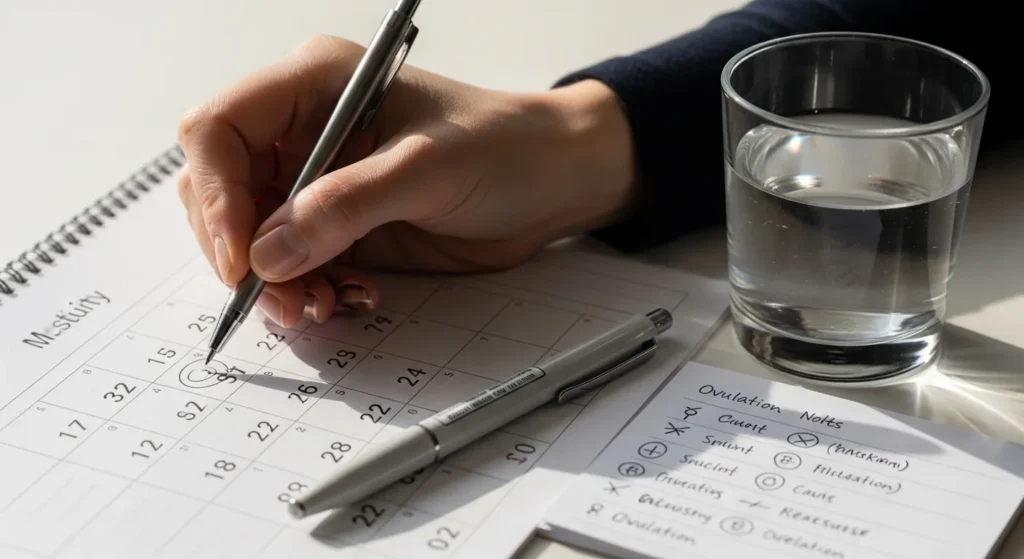
That is why trying to get pregnant after GLP-1 medications in 2026 is not just a medication question. It is also a timing question. If your period has never been very predictable, a missed period may not be the best signal. In that case, it may be more helpful to use cycle tracking, ovulation awareness, and the “days since unprotected sex” rule together instead of relying on one calendar date.
Your Negative Pregnancy Test but You Still Feel Pregnant? article is another good internal link here, because this is exactly the kind of situation where people test too early, get a negative result, and then feel even more confused.
How To Handle the “Could I Be Pregnant?” Window More Clearly
The goal is not to micromanage every symptom. It is to make a clearer plan. If you are thinking about pregnancy after GLP-1 use, you usually need three things: realistic medication planning, smarter test timing, and a low-drama way to know when to call your clinician.
A Practical Plan if You Are Trying or Might Already Be Pregnant
Start by getting specific about your situation. Are you planning pregnancy in the near future, or are you worried you may already be pregnant now? Those are different questions. If you are planning ahead, talk to your prescriber before stopping or changing anything. If you think pregnancy is already possible, the first step is not endless symptom-checking. It is testing at the right time.
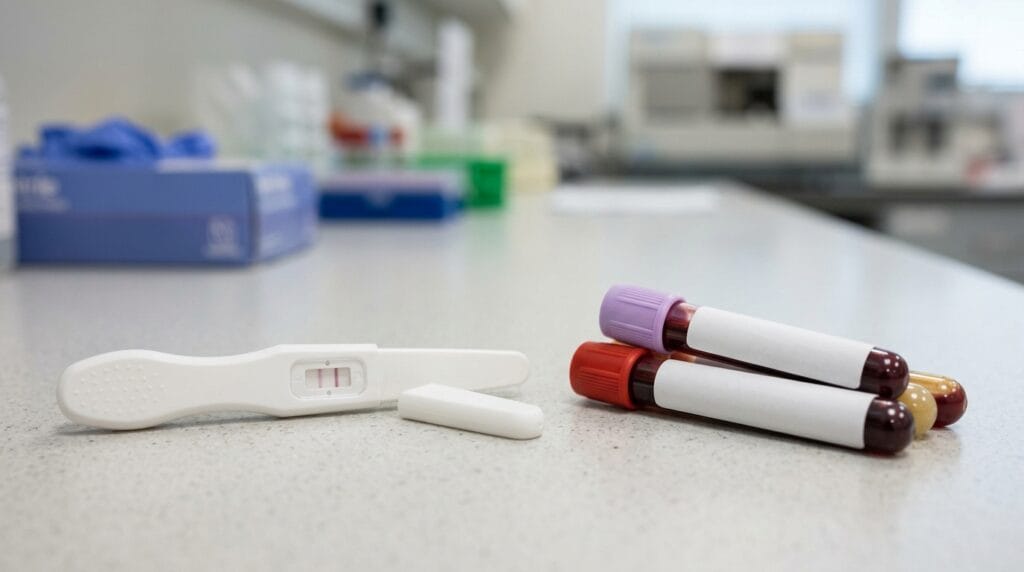
If your cycle is usually regular, home pregnancy tests work best from the first day of a missed period. If your cycles are irregular, counting at least 21 days from unprotected sex often gives a clearer answer than trying to guess when your period “should” come. Use the test exactly as directed. If the result is negative but the timing was early or uncertain, retest in 48 to 72 hours.
Readers who need a calm walkthrough can move naturally from this post into When to Take a Pregnancy Test and What to Do If You Think You Might Be Pregnant. Those posts support the next step without forcing people into panic.
Questions to ask your clinician before you start trying
Before trying to conceive after GLP-1 use, ask practical questions instead of vague ones. Examples include:
- How long should I stop this specific medication before trying to get pregnant?
- Do you want me to use contraception during a washout period?
- What should I expect with my cycles after stopping?
- Do I need help tracking ovulation if my periods are irregular?
- Should I start prenatal vitamins now?
- What should I do if I get a positive test while still taking the medication?
These questions matter because the answer may differ depending on whether you are taking semaglutide, tirzepatide, or another GLP-1 medicine, and whether you use it for weight loss, PCOS-related concerns, diabetes, or something else.
When to call sooner instead of waiting

Some situations should not be handled with more Googling. Call sooner if you have a positive pregnancy test while still taking the medication, heavy bleeding, severe abdominal pain, fainting, shoulder pain, or symptoms that make ectopic pregnancy a concern. Also call if your periods stop for a long time, your cycles change dramatically, or you feel stuck between repeated negative tests and persistent pregnancy-like symptoms.
If the emotional side of this feels heavy, it helps to remember that confusion does not mean failure. Plenty of people feel overwhelmed during this window. That is why your Unplanned Pregnancy Support piece can also work well as an internal link for readers who are not just looking for medical clarity, but emotional steadiness too.
In the end, trying to get pregnant after GLP-1 medications in 2026 is such a strong topic because it reflects a real-life situation many people are suddenly facing. The smartest approach is not to assume every symptom means pregnancy, and not to brush everything off either. It is to plan ahead when possible, test at the right time, and get medical advice early enough that you are not making major decisions in a panic.
For an external authority link, use MotherToBaby’s Weighing In: How GLP-1s Fit into Your Pregnancy Plans. It is one of the clearest current resources on product-label timing, pregnancy planning, and what we do and do not know yet.
Medical disclaimer: This article is for educational purposes only and is not a substitute for medical advice. Always contact your healthcare professional about medication changes, test timing, abnormal bleeding, severe pain, or possible pregnancy while taking a GLP-1 medication.