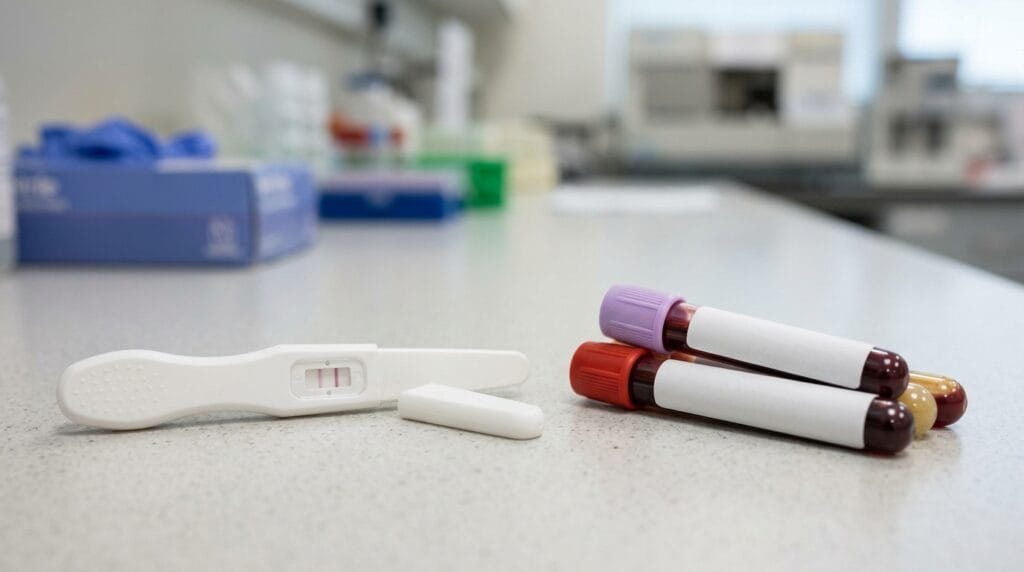

Your first pregnancy ultrasound can bring excitement, questions, and uncertainty. After seeing a positive pregnancy test, you may want immediate confirmation that everything is progressing normally. However, ultrasound appointments are not always scheduled right away, and the images may look different depending on how early the pregnancy is.
Some people have an ultrasound during the first trimester to estimate gestational age, investigate symptoms, or check the location of a pregnancy. Others receive their first routine scan later, depending on their medical history and prenatal care plan.
Understanding what the examination can and cannot show helps you prepare realistic expectations.
This 2026 guide covers ultrasound timing, common findings, appointment preparation, and questions to ask your healthcare professional.
When Is the First Pregnancy Ultrasound Scheduled?
The timing of an ultrasound depends on the reason for the examination. There is no universal rule requiring every pregnant person to receive a scan at exactly six, seven, or eight weeks.
A clinician may recommend an earlier examination when symptoms, previous pregnancy complications, or uncertain dates require investigation.
Otherwise, the first ultrasound may occur at a later prenatal appointment.
Understand what an early ultrasound can show
Ultrasound equipment creates images using sound waves. The examination allows a healthcare professional to view structures inside the body without using ionizing radiation.
During early pregnancy, the clinician may look for a gestational sac, an embryo when visible, and signs of developing cardiac activity.
However, visibility depends on gestational age, the type of examination, equipment, and individual circumstances.
A scan performed too early may not provide a definite answer.
Why pregnancy dating affects scan results

Pregnancy weeks are generally counted from the first day of the last menstrual period rather than the date of conception.
That distinction often surprises people who receive a positive home pregnancy test.
Late ovulation can make an early pregnancy younger than a calendar calculation suggests.
Consequently, an ultrasound may show less development than expected without automatically proving that something is wrong.
Clinicians consider menstrual history and ultrasound measurements together when estimating gestational age.
Read ACOG’s guidance on estimating pregnancy due dates for the medical framework.
What if the scan does not show an embryo yet?
An early scan may reveal a gestational sac before the embryo becomes clearly visible.
However, the meaning of that finding depends on the measurements, estimated gestational age, and symptoms.
Sometimes a repeat ultrasound is appropriate after enough time has passed to evaluate changes.
In other situations, the clinician may recommend blood tests or additional assessment.
Do not interpret a single image or an isolated number without professional guidance.
If you have pain or bleeding, tell your clinician rather than waiting for a routine follow-up.
Know the difference between ultrasound types
Two common approaches during pregnancy are transabdominal and transvaginal ultrasound.
A transabdominal examination uses a probe on the abdomen.
A transvaginal examination uses a narrow, covered probe placed inside the vagina, with the patient’s consent.
Healthcare professionals may recommend the transvaginal approach early in pregnancy because it can provide more useful images of small structures.
Neither examination should proceed without an explanation and appropriate consent.
What happens during a transvaginal ultrasound?
The clinician explains the procedure and positions the ultrasound probe carefully.
You may experience pressure or mild discomfort, although experiences differ.
Tell the professional if you feel pain or want the examination paused.
You can ask questions about privacy, positioning, and the reason for the recommended approach.
A support person may be allowed depending on the clinic’s policies.
Remember that choosing an examination method is a clinical decision made with your healthcare team.
How to Prepare for Your First Pregnancy Ultrasound
Preparation is usually straightforward, but individual clinics may provide different instructions.
Follow the guidance for your specific appointment rather than advice from an unrelated online video.
Some scans require a particular bladder preparation, while others do not.
Bring any previous pregnancy records and a list of relevant medical questions.
Understand your results and next steps
During the appointment, the sonographer or clinician may collect several measurements and images.
Depending on the clinical setting, the person performing the scan may not provide a complete interpretation immediately.
A qualified clinician should explain the findings and any follow-up recommendations.
Questions to ask after the examination
Ask whether the pregnancy location was identified and whether the findings match the estimated gestational age.
Find out whether the scan changes your estimated due date.
If the findings remain uncertain, ask when another ultrasound or blood test would be useful.
Also, discuss which symptoms should prompt urgent care.
Write down the answers so you can refer to them after the appointment.
Bring the information your clinician needs
Record the first day of your last menstrual period, if known.
Explain whether your cycles are usually regular or irregular.
Tell the clinician about previous pregnancies, miscarriages, ectopic pregnancy, fertility treatment, and current medications when relevant.
These details may influence how the ultrasound results are interpreted.
If you are unsure about a date, say so rather than giving an estimate as a confirmed fact.
Understand the estimated due date

An estimated due date helps organize prenatal care, but it is not a guaranteed delivery date.
ACOG explains that first-trimester ultrasound measurements provide the most accurate ultrasound method for pregnancy dating.
Your care team may combine the measurements with your menstrual history.
Do not repeatedly change your due date based on different pregnancy apps or later scans.
Ask your clinician which date should guide future appointments.
Know what ultrasound cannot guarantee
A reassuring early ultrasound is useful, but it cannot guarantee that every later pregnancy outcome will be normal.
Likewise, an uncertain early scan does not automatically establish pregnancy loss.
Some conditions require additional testing at later stages.
For instance, genetic screening uses different methods and answers different questions.
Our NIPT screening guide explains why screening and diagnosis should not be confused.
What happens if pregnancy location remains uncertain?
Occasionally, a positive pregnancy test is followed by an ultrasound that does not clearly identify a pregnancy inside or outside the uterus.
Clinicians may call this a pregnancy of unknown location.
It is a temporary clinical description, not a final diagnosis.
Follow-up may include repeat blood hCG measurements and ultrasound examination.
This evaluation matters because an ectopic pregnancy can become dangerous if it remains undetected.
Recognize symptoms that need urgent care
Seek emergency medical attention for sudden severe abdominal or pelvic pain, fainting, major dizziness, shoulder pain, or heavy bleeding.
These symptoms may indicate serious complications, including an ectopic pregnancy.
Do not wait for your scheduled ultrasound if you experience them.
ACOG’s ectopic pregnancy information explains why prompt evaluation can be lifesaving.
Prepare emotionally for uncertain findings
Waiting for answers can feel difficult, especially if you have experienced a previous pregnancy complication.
Consider bringing a trusted support person if clinic rules allow.
Ask the clinician to explain unfamiliar terms instead of relying on online image comparisons.
If results are inconclusive, request a specific follow-up plan.
Clear instructions can make the period between appointments easier to navigate.
Connect ultrasound care with prenatal planning
Your ultrasound forms only one part of prenatal care.
Other appointments may cover medical history, laboratory tests, medications, nutrition, and pregnancy health concerns.
The number and timing of visits can vary according to individual needs.
Read our tailored prenatal care guide for an explanation of current scheduling approaches.
What if you cannot get an appointment immediately?
Contact a healthcare professional to discuss your positive pregnancy test and relevant symptoms.
Ask when an ultrasound is clinically appropriate and what to do while awaiting the appointment.
Do not purchase repeated private scans as a substitute for needed medical evaluation.
Our step-by-step pregnancy guide offers general next steps.
Key takeaways for 2026
Your first pregnancy ultrasound can help assess pregnancy location, development, and dating.
However, the right timing depends on your circumstances, and very early scans may provide incomplete answers.
Follow preparation instructions, ask questions, and keep appointments for recommended follow-up.
Most importantly, seek urgent care for severe pain, fainting, or heavy bleeding rather than waiting for imaging.
Medical disclaimer: This article offers general health education and does not replace personalized prenatal care, diagnostic imaging, or emergency medical treatment.