Measles and pregnancy in 2026 has become an important health topic because measles cases have risen sharply across the United States.
CDC recorded 3,887 confirmed U.S. measles cases as of October 1, 2026. Health departments across 47 jurisdictions reported cases during the year.
This rise can create extra concern if you are pregnant, trying to conceive, or waiting to find out whether you are pregnant.
The MMR vaccine gives strong protection against measles for most people. However, CDC advises pregnant people not to receive MMR because it contains live, weakened viruses.
That does not mean pregnant people have no protection after an exposure.
Healthcare professionals may recommend immune globulin for certain pregnant patients who lack measles immunity. Timing matters because doctors need to give it soon after exposure.
This guide explains measles risk during pregnancy, how to check your immunity, what to do after an exposure, and when MMR vaccination fits into pregnancy planning.
Why Measles and Pregnancy in 2026 Deserve Extra Attention
Measles spreads extremely easily from person to person.
An infected person can release the virus into the air by breathing, coughing, or sneezing. The virus can remain in an indoor space even after that person leaves.
CDC says up to 90% of nearby people who lack immunity may catch measles after exposure.
Symptoms often begin with fever, cough, runny nose, and red or watery eyes. A rash usually follows several days later.
Many people recover without long-term problems. Still, measles can cause serious complications.
Pregnancy increases concern because the illness can affect both the pregnant person and the pregnancy.
The 2026 Outbreak Makes Your Immunity Status Worth Checking

U.S. public-health officials declared measles eliminated from the country in 2000. That meant the United States no longer had continuous domestic transmission lasting at least 12 months.
Elimination did not mean the disease disappeared forever.
Travel-related cases continued to enter the country, and outbreaks sometimes followed when the virus reached communities with lower vaccination rates.
The situation became much more significant in 2026.
By October 1, CDC had counted 3,887 confirmed cases across 47 U.S. jurisdictions.
Your personal risk still depends on several factors. These include your location, travel history, vaccination status, and whether you had direct contact with someone who has measles.
You do not need to assume that every fever or rash means measles. Instead, know your vaccine history and pay attention to official exposure notices.
Measles Can Cause More Serious Problems During Pregnancy
CDC places pregnant people among the groups with a higher risk of measles complications.
The infection can cause pneumonia and other serious illness. Measles during pregnancy can also increase the risk of pregnancy loss, premature birth, and low birth weight.
Rarely, an infected pregnant person can pass measles to the baby around the time of birth.
These risks make quick action important after a confirmed exposure.
Do not wait for a rash before calling your healthcare professional.
Measles symptoms usually appear several days after exposure. CDC says the first symptoms often develop about 7 to 14 days later, although timing can vary.
An infected person can also spread the virus before the rash appears.
That makes early communication with your healthcare team especially important.
Pregnant People Should Not Receive the MMR Vaccine
The MMR vaccine protects against measles, mumps, and rubella.
For most eligible people who are not pregnant, vaccination provides the best protection against measles.
Pregnancy changes that recommendation.
CDC advises pregnant people not to receive MMR because it contains live, weakened viruses.
People who receive MMR should generally avoid becoming pregnant for 28 days afterward.
This recommendation differs from guidance for several other vaccines.
For example, healthcare professionals can give an injectable flu vaccine during pregnancy. Tdap also plays an important role later in pregnancy.
If you might already be pregnant, tell the healthcare professional before receiving MMR.
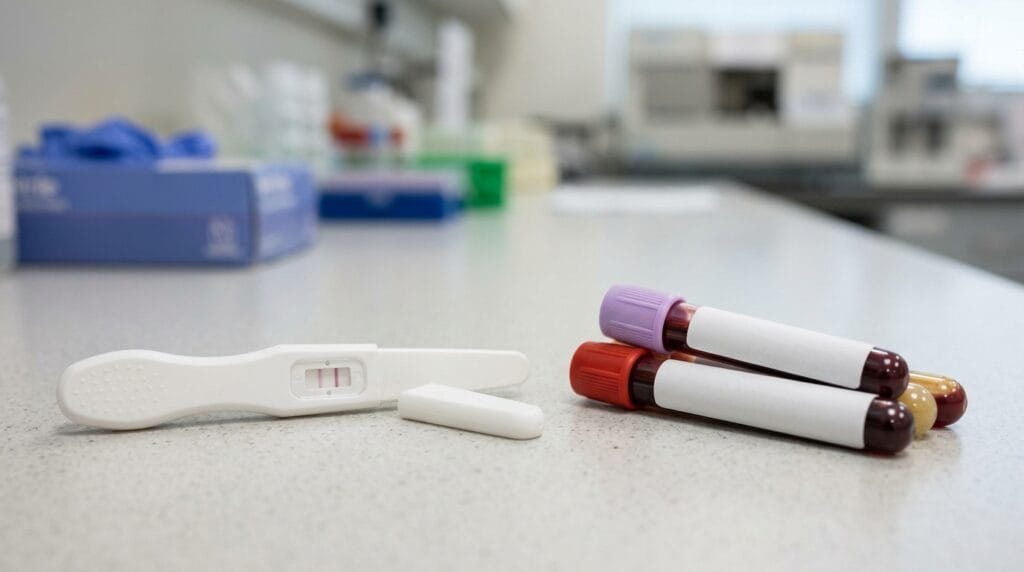
You may also want to confirm pregnancy before making vaccine decisions. Our guide on when to take a pregnancy test explains how testing too early can lead to a false negative.
What to Do After a Measles Exposure During Pregnancy
Act quickly if a health department, healthcare facility, school, workplace, or family member tells you that you had a confirmed measles exposure.
Call your healthcare professional first.
Do not walk into a clinic or waiting room without warning the staff. Measles spreads so easily that clinics may need to arrange a separate entrance or examination area.
Tell the office that you are pregnant or could be pregnant. Explain when the possible exposure occurred.
Your healthcare team may ask about previous MMR doses and vaccination records.
They may also check previous laboratory results if you have already had immunity testing.
If you cannot find your vaccine records, do not assume that you lack immunity. A healthcare professional can help determine the next step.
Immune Globulin May Help After Exposure
Pregnant people should not receive MMR as routine post-exposure protection.
Instead, CDC lists susceptible pregnant people among the groups who may need immune globulin after measles exposure.
Immune globulin contains antibodies that can provide temporary protection.
Healthcare professionals may use it to prevent measles or reduce the severity of illness after exposure.
CDC recommends giving immune globulin within six days of exposure when appropriate.
That short window explains why you should call promptly.
Do not wait to see whether you develop symptoms before asking for advice.
A doctor or public-health professional can determine whether the exposure qualifies and whether you need immune globulin.
If symptoms develop, call before going to a medical office whenever possible.
Tell the staff about the measles exposure so they can protect other patients.
Seek emergency care for severe breathing difficulty, confusion, fainting, severe dehydration, or another life-threatening symptom. Tell emergency personnel about the possible measles exposure as early as possible.
How to Prepare for Measles Before Pregnancy
The easiest time to address MMR vaccination is before conception.
If you plan to become pregnant, review your vaccination history during a preconception visit.
Many adults already have strong protection because they received MMR during childhood.
You may not need another dose.
Bring any vaccination records you can find. Your healthcare professional can compare them with current recommendations.
They may also consider your age, travel plans, occupation, local outbreaks, and previous laboratory results.
If you need MMR, receiving it before pregnancy can help protect you during pregnancy.
Check Vaccine Records Before Trying to Conceive
Preconception planning does not need to become complicated.
Start with the basics.
Review your vaccines, medications, supplements, and major medical conditions with a healthcare professional.
If you need an MMR dose, complete it before trying to conceive. CDC advises waiting 28 days after vaccination before becoming pregnant.
You can use that same preconception period to address other simple health steps.
For example, CDC recommends 400 mcg of folic acid each day for people who can become pregnant.
Our folic acid before pregnancy guide explains when to start and what to check on a prenatal vitamin label.
If pregnancy happens sooner than planned, do not assume that missing a preconception step means something has gone wrong.
Bring your vaccination history to your first prenatal conversation and ask what you should do next.
Accidental MMR Vaccination Does Not Mean You Should Assume Harm
Sometimes a person receives MMR and then discovers that pregnancy had already started.
This situation can cause understandable worry.
CDC advises against MMR during pregnancy because of a theoretical risk from the live vaccine. However, CDC does not consider accidental MMR vaccination during pregnancy a reason to terminate a pregnancy.
Contact your healthcare professional and explain when you received the vaccine and when you discovered the pregnancy.
Your clinician can provide individualized counseling.
A similar approach helps when you cannot remember whether you received MMR as a child.
Do not assume that you need an immediate vaccine if pregnancy is possible.
Instead, ask a healthcare professional to review your available records and determine whether additional testing or vaccination makes sense.
If you recently received a positive pregnancy test, our step-by-step early pregnancy guide can help you organize medications, appointments, supplements, and other questions.
Your prenatal visit schedule may also look different from older pregnancy calendars. Our 2026 tailored prenatal care guide explains how healthcare teams can adjust the number and type of visits based on individual needs.
The main message about measles and pregnancy in 2026 is simple: know your immunity status when possible and act quickly after a confirmed exposure.
The large 2026 outbreak makes this issue more relevant, but it does not mean every pregnant person faces the same level of risk.
Vaccination history, local transmission, travel, and direct exposure all matter.
If you are planning pregnancy and need MMR, receive the vaccine before conception and follow the recommended 28-day waiting period.
If you are already pregnant, CDC advises against receiving MMR.
After a confirmed exposure, call your healthcare professional promptly. Susceptible pregnant patients may qualify for immune globulin if they receive it within the recommended time window.
Do not walk into a clinic after a suspected exposure without calling first. Advance notice helps healthcare workers protect other patients.
For current case numbers and outbreak information, review the CDC measles cases and outbreaks page.
Medical note: This article provides general educational information and does not replace medical advice. If you are pregnant or could be pregnant and have had a known measles exposure, contact a healthcare professional or local public-health department promptly.