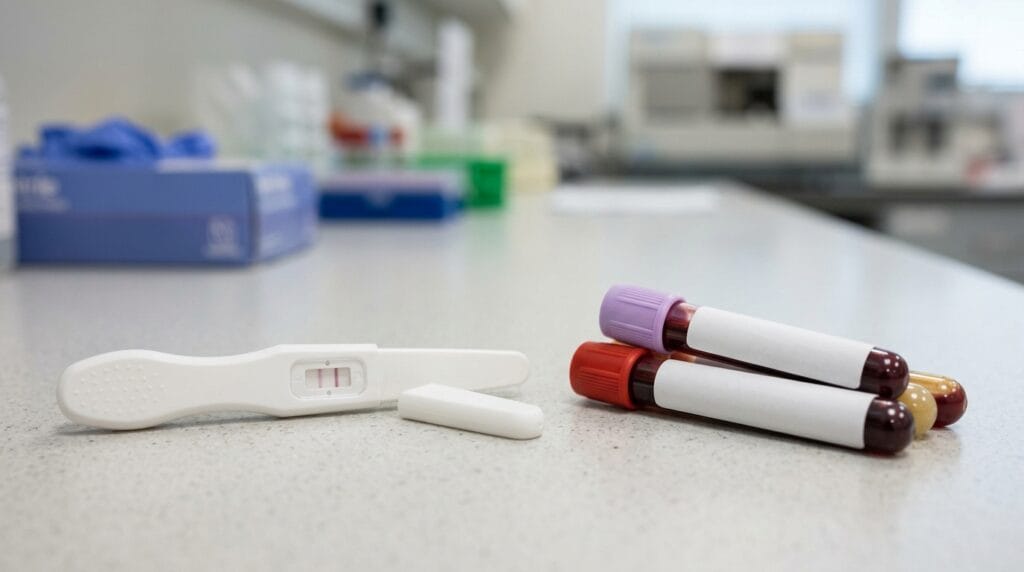

After a positive pregnancy test, it is common to start hearing about tests that may be offered during the first trimester. One of the best known is NIPT, also called noninvasive prenatal testing or cell-free DNA screening.
NIPT uses a blood sample from the pregnant person to analyze small fragments of DNA that come mainly from the placenta. It can estimate the chance of certain chromosome conditions, but it cannot confirm by itself that a fetus does or does not have a condition.
In 2026, professional guidance continues to stress one key point: NIPT is a screening test, not a diagnostic test. A “high-risk” result needs follow-up. A “low-risk” result lowers the chance of the conditions screened for, but it does not guarantee that everything is normal.
If you recently got a positive home test, you may want to start with our guide on what to do before your first prenatal appointment.
What NIPT Can Screen For and When It Is Done
NIPT can usually be performed starting at about 10 weeks of pregnancy. The test looks at cell-free DNA circulating in the pregnant person’s blood. Some of that DNA comes from the placenta and can be used to estimate the chance of certain chromosome differences.
Current guidance recommends making cell-free DNA screening for the common trisomies available to all obstetric patients who want it. The decision should come after clear counseling about what the test can detect, what it can miss, and what different results may mean.
You do not have to accept genetic screening simply because it is offered. You can also choose to decline it. The right choice depends on what information you want during pregnancy and how you might use that information.
Trisomies 21, 18, and 13 Are the Main Targets
NIPT is mainly used to screen for a higher chance of trisomy 21, also known as Down syndrome; trisomy 18, also called Edwards syndrome; and trisomy 13, also called Patau syndrome.
For these common chromosome conditions, cell-free DNA is considered the most sensitive and specific prenatal screening method available. Still, “more accurate” does not mean “diagnostic.” Screening tests can produce false-positive and false-negative results.
It helps to think of NIPT as a way to estimate risk. The result may show that a condition is more or less likely. If a result comes back high risk, the next step is usually a conversation with a healthcare professional about genetic counseling and diagnostic testing.
Timing Matters for NIPT

NIPT can generally be done from 10 weeks of pregnancy onward. Testing too early can increase the chance that there is not enough cell-free DNA in the sample to produce a useful result.
Before ordering the test, your healthcare professional may confirm gestational age using the first day of your last menstrual period, ultrasound findings, or other clinical information. If your cycles are irregular or you are unsure when your last period started, tell the clinic.
Sometimes the laboratory cannot produce a clear result. The report may use terms such as “no result,” “inconclusive,” or “no-call.” This should not be treated as a negative result. Your clinician may discuss genetic counseling, ultrasound, repeating the test in some situations, or moving to diagnostic testing.
If you are still waiting for your first appointment, our guide on what to do when you cannot get a prenatal appointment yet can help you organize the waiting period.
Sex Chromosomes and Microdeletions Need More Context
Updated recommendations make an important distinction between screening for the common trisomies and the extra conditions included on some expanded NIPT panels.
Screening for sex chromosome differences can be offered as an optional add-on. Current guidance recommends treating it as an “opt-in” choice with counseling before testing. That gives patients a chance to understand what may be reported and what follow-up might be needed.
Routine screening for microdeletion conditions is different. Professional guidance does not recommend routine general-population screening for microdeletions. Some commercial panels include these conditions, but a longer list on the report does not automatically mean the test is more useful for every pregnancy.
Ask exactly what the panel includes before agreeing to testing. Also ask what the clinic would recommend if one of the optional results came back positive, uncertain, or difficult to interpret.
Why a High-Risk NIPT Result Is Not a Diagnosis
A high-risk result can feel frightening. Even so, it does not automatically mean that the fetus has the condition listed on the report.
NIPT analyzes cell-free DNA that comes mainly from the placenta. The placenta and fetus usually share the same chromosome pattern, but not always. Other biological factors can also affect a screening result.
The chance that a positive result is truly positive also depends on the condition being screened for and the chance of that condition before testing. This is one reason major medical decisions should not be based on a screening result alone.
CVS and Amniocentesis Can Provide Diagnostic Answers
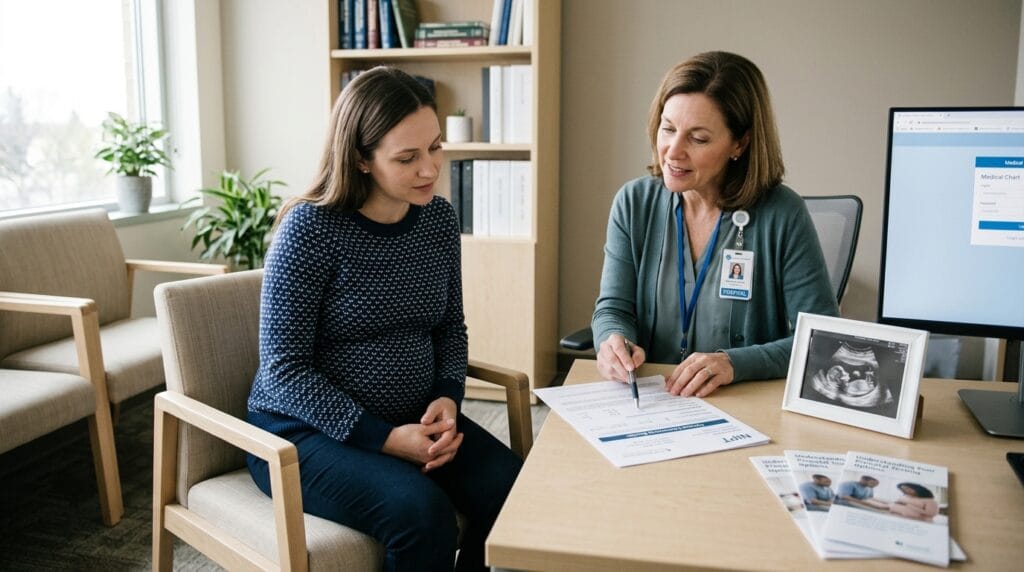
After a high-risk NIPT result, a healthcare professional may offer genetic counseling and diagnostic testing. Two common diagnostic options are chorionic villus sampling, usually called CVS, and amniocentesis.
CVS takes a small sample of placental tissue and is generally performed earlier in pregnancy. Amniocentesis tests a sample of amniotic fluid and is performed later.
These tests can provide diagnostic information that NIPT cannot. They are also medical procedures with their own benefits, limitations, and risks, which should be discussed for your individual situation.
If you receive a high-risk result, ask which confirmatory test may be appropriate based on how far along you are, your medical history, ultrasound findings, and the specific result. You can also ask for a genetics consultation before making a decision.
The current ACOG guidance on noninvasive prenatal testing explains why cell-free DNA screening should not be treated as diagnostic testing.
How to Read NIPT Results Without Jumping to Conclusions
NIPT reports may use terms such as “low risk,” “high risk,” “positive,” “negative,” or “no result.” The wording varies by laboratory, so review the actual report with the healthcare professional who ordered it.
A low-risk result means the test found a lower chance of the specific conditions it screened for. It cannot rule out every genetic condition, birth defect, or pregnancy complication.
A high-risk result means more information is needed before anyone can make a diagnosis. An inconclusive result also deserves follow-up rather than being assumed to be normal.
NIPT Does Not Replace Ultrasound or the Rest of Prenatal Care
It is easy to assume that an advanced genetic blood test can replace other parts of prenatal care. It cannot.
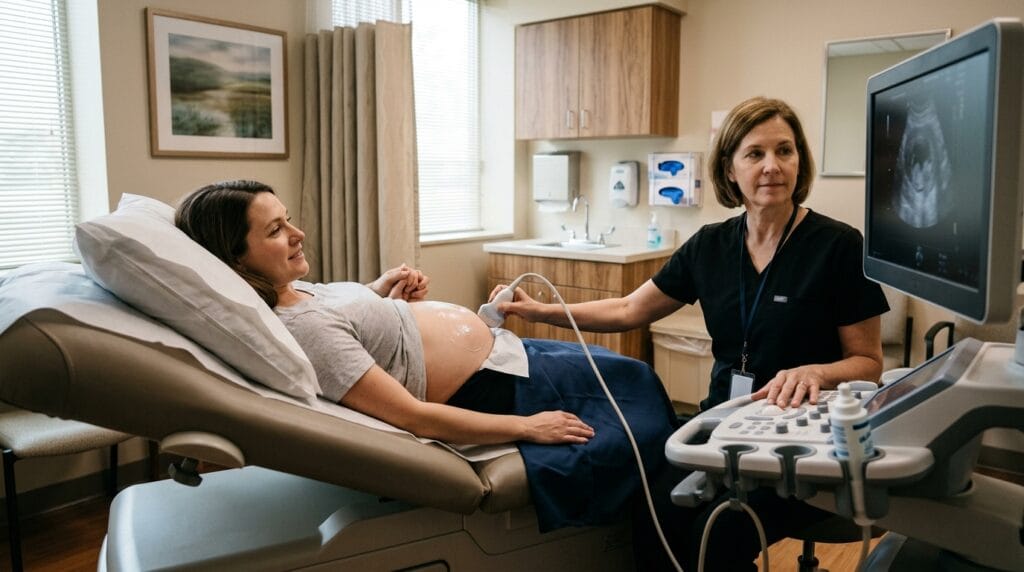
ACOG continues to recommend a second-trimester ultrasound to look for fetal structural differences. An anatomy ultrasound can identify findings that NIPT is not designed to screen for.
Prenatal care may also include other blood tests, urine tests, screenings, vaccinations, physical assessments, and conversations based on your gestational age, health history, and pregnancy needs. NIPT is only one part of that larger plan.
Ask Questions Before and After You Get the Result
Before choosing NIPT, ask which conditions the laboratory will screen for, what the test may cost, what your insurance may cover, and what each type of result would mean.
After you receive the report, ask whether it changes any part of your care. If the result is high risk, ask about genetic counseling and diagnostic testing. If it is inconclusive, ask whether repeating NIPT makes sense or whether another testing approach would be better.
You also have the right to accept or decline prenatal screening after receiving appropriate information. Counseling should help you understand your options, not pressure you toward one choice.
If your next in-person appointment is still weeks away, a virtual visit may sometimes help you review general questions or results. Our guide to telehealth after a positive pregnancy test explains when virtual care can help and when you still need an in-person visit.
NIPT can be a useful tool during pregnancy, especially for screening for trisomies 21, 18, and 13. Its accuracy as a screening method is strong, but understanding its limits is just as important.
A low-risk result does not guarantee a pregnancy without health problems. A high-risk result does not confirm a diagnosis. An inconclusive result should not automatically be treated as negative.
The best way to use NIPT is alongside informed counseling, appropriate ultrasound, and the rest of your prenatal care. Ask what your panel includes, what the results mean, and what follow-up choices you would have before making important decisions.
Medical disclaimer: This article provides general educational information only. It does not replace medical advice, diagnosis, genetic counseling, or prenatal care. Appropriate testing depends on gestational age, medical history, prior results, personal preferences, and other factors. Talk with a qualified obstetric or genetics professional about your individual results and options.