
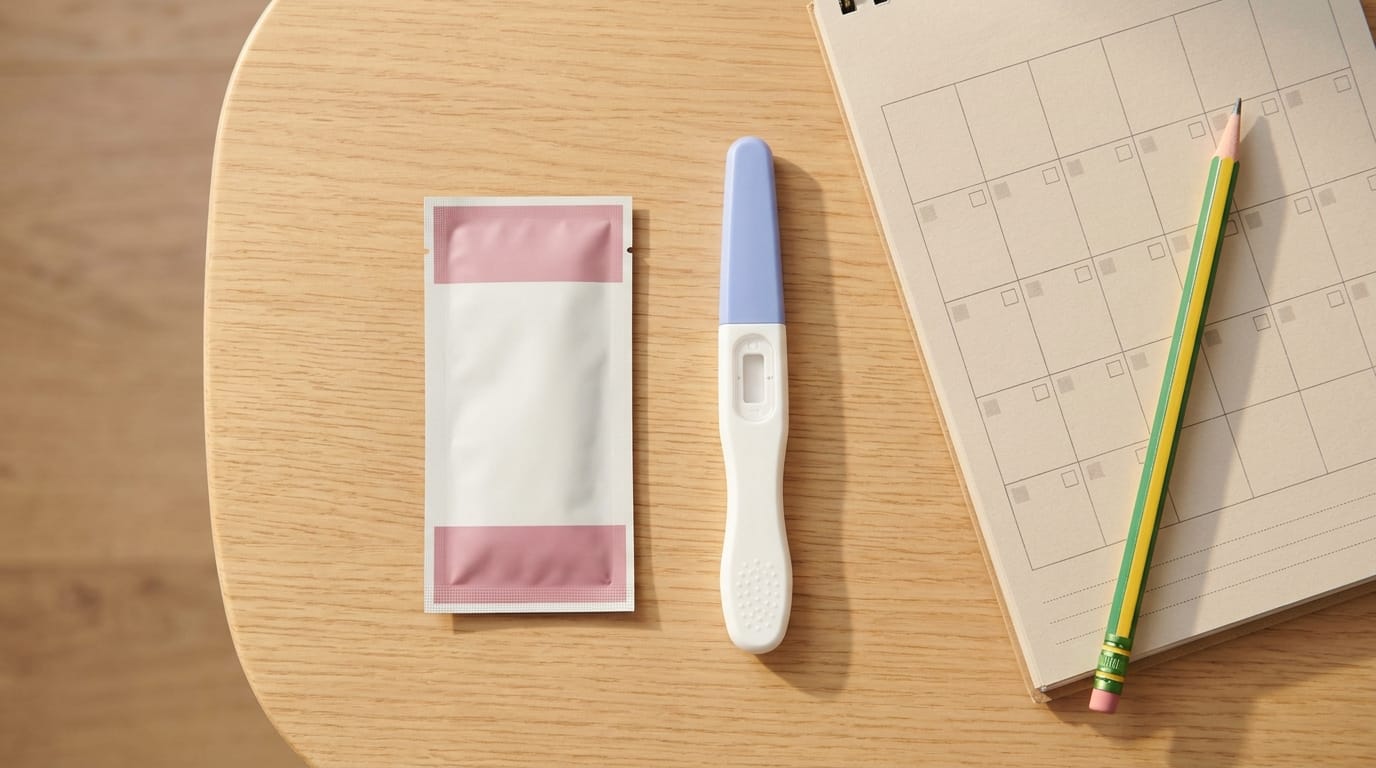
Medical note: This article is for general education only and cannot replace individualized advice, diagnosis or care from a qualified healthcare professional.
If you have extra ovulation strips at home, it is tempting to use one when you think you might be pregnant. The idea sounds plausible because ovulation and pregnancy tests both involve reproductive hormones. But they are designed to answer two different questions, and mixing them up can delay a clear answer.
The key difference in an ovulation test vs pregnancy test comparison is the hormone each test is intended to detect. Ovulation predictor kits, also called OPKs, primarily identify a rise in luteinizing hormone (LH). Pregnancy tests detect human chorionic gonadotropin (hCG).
New fertility evaluation guidance published by the American Society for Reproductive Medicine in October 2026 reinforces a useful point: urinary LH tests provide indirect evidence of an impending ovulation event, not confirmation that conception occurred. This guide explains what each tool can do, why unexpected results happen, and when you should use a proper pregnancy test instead.
What LH and hCG Tests Actually Measure
During a menstrual cycle, LH rises shortly before the ovary releases an egg. An ovulation predictor kit is designed to detect that hormonal rise, allowing people trying to conceive to identify a potentially fertile period. The timing can be helpful, but a positive LH result does not guarantee that ovulation happened, that fertilization occurred or that a pregnancy developed.
Pregnancy tests solve a different problem. After implantation, hCG begins to increase and can eventually be detected in urine or blood. A home pregnancy test looks for hCG at or above the test’s detection threshold. It cannot establish the exact date of conception or determine whether a pregnancy is developing normally. Those questions may require medical history, repeat testing or ultrasound when indicated.
Why an LH Surge Is Not a Pregnancy Diagnosis
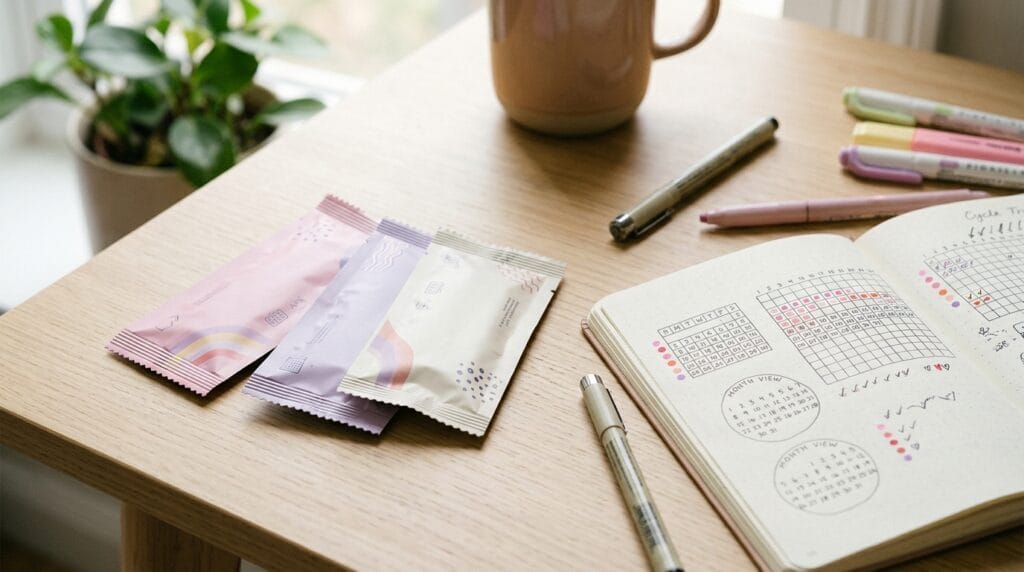
According to the FDA’s ovulation testing guide, urine-based ovulation kits detect the LH surge that generally occurs around one to one-and-a-half days before ovulation. Some devices measure other hormone markers as well. Their purpose is to help identify a fertile interval, not to confirm pregnancy or establish whether a particular intercourse resulted in conception.
The ASRM’s 2026 fertility evaluation opinion states that urinary LH testing provides indirect evidence of ovulation and that test accuracy can vary. If a positive ovulation result is followed by a negative pregnancy test, the two results do not contradict each other: the tests look for different biological events.
What a Positive Ovulation Strip Usually Means
For many line-based OPKs, a result counts as positive only when the test line is as dark as or darker than the control line; always use the specific kit instructions. A faint LH test line can be completely normal because low levels of LH may be present throughout the cycle. Unlike pregnancy strips, the appearance of any second line on an OPK is not automatically a positive result.
A surge may indicate ovulation is approaching, but its timing varies from person to person. The egg may not be released exactly when an app predicts, and not every hormonal rise results in confirmed ovulation. For people trying to conceive, strips are planning tools rather than certificates of fertility. For people avoiding pregnancy, an OPK should not be used as proof that intercourse is safe from conception.
Why Some OPKs Show Unexpected Lines
LH levels fluctuate. Starting testing too late, testing at an unsuitable time, using excess fluids, reading outside the specified window, or having an irregular cycle can affect your experience. Some individuals with polycystic ovary syndrome or other endocrine differences may have higher baseline LH or patterns that complicate interpretation. The 2026 ASRM guidance specifically notes false positives and false negatives can occur.
A single dark strip is not enough to explain why a period is late. If you have unpredictable cycles, combining menstrual history with a clinician’s advice may be more useful than trying to interpret daily line changes. In a fertility evaluation, medical professionals may choose additional approaches for confirming ovulation when clinically relevant. Our article about pregnancy test timing can help separate testing for conception from testing for an established pregnancy.
Can an Ovulation Test Turn Positive During Pregnancy?
Sometimes, yes. Certain LH immunoassays may cross-react with hCG because the hormones share structural features. An Australian regulator’s medical device safety discussion describes how pregnancy-related hCG can cause an ovulation kit to appear to show an LH surge. However, cross-reactivity varies by product, so a positive or negative OPK cannot reliably diagnose or exclude pregnancy.
This is where online anecdotes can mislead. Someone who sees a positive ovulation strip and later confirms pregnancy may conclude that the strip predicted pregnancy. That does not establish the same method will work for another person or with another kit. A test not validated for pregnancy detection should not be repurposed to make medical decisions, especially when time-sensitive care is important.
Why a Pregnancy Test Is the Right Next Step

If you are concerned about pregnancy, use a test designed to detect hCG. The FDA’s home pregnancy test guidance explains how urine pregnancy tests work and why the timing of use affects accuracy. Results are usually more reliable from the first day of a missed period than several days beforehand. A negative result taken early may need to be repeated later.
A pregnancy test cannot immediately detect a pregnancy caused by sex yesterday or a few days ago. The biological process needs time before hCG reaches measurable levels. If you cannot predict the date of your next period, the NHS advises using a test at least 21 days after your last unprotected sexual encounter.
How to Choose the Right Home Test and Interpret Results
Start with the question you are trying to answer. If you are planning sex to conceive, an ovulation predictor kit may help identify a likely fertile window. If you need to know whether pregnancy may already be present, use a urine pregnancy test. If you have persistent symptoms, irregular bleeding or conflicting results, a healthcare professional can decide whether blood tests or other evaluation are necessary.
The two tests also have different reading rules. An OPK may require a test line to match or exceed the control line. On many pregnancy tests, any correctly timed colored second line can indicate a positive result. Both require a working control indicator and attention to the kit’s official reading window. Never transfer one brand’s instructions to a completely different test.
A Simple Plan If Your Period Is Late
First, check your estimated period date and the date of any unprotected sex. If the period is due or late, take an hCG pregnancy test according to the manufacturer’s instructions. If the test is negative but was taken early, retest after several days. If the result is unclear, avoid repeatedly comparing dried test strips under different lighting; use a new test at the appropriate time.
A positive hCG result warrants follow-up appropriate to your circumstances. Some people need a blood hCG measurement or ultrasound, while others can begin with a routine prenatal appointment or discuss options with a trusted healthcare professional. Our blood versus urine hCG test guide explains why a clinician may recommend different tests when results are uncertain.
If you are actively trying for pregnancy and never seem to identify an LH surge, it may be worth reviewing your testing technique and cycle patterns. Some people need to test over more days, while others have conditions that make strips difficult to interpret. Do not diagnose yourself with infertility after a few confusing kits. A fertility specialist can recommend a sensible evaluation based on age, health history and how long you have been trying.
When Symptoms or Results Require Medical Care
Contact a healthcare professional when your period remains absent despite appropriately timed negative tests, when results fluctuate unpredictably, or when you have significant or persistent pelvic symptoms. Ectopic pregnancy and other conditions cannot be ruled out simply because an ovulation kit was negative. A single home test also cannot determine pregnancy location. Clinical assessment is important when symptoms suggest a possible complication.
Seek urgent attention for severe abdominal or one-sided pelvic pain, shoulder pain, fainting, severe weakness or heavy bleeding, especially if pregnancy is possible. The American College of Obstetricians and Gynecologists describes these warning signs in its ectopic pregnancy resource. Do not wait for a stronger positive line before obtaining emergency assessment.
The bottom line is straightforward: an ovulation strip may help estimate when ovulation is approaching, but it is not a substitute for a pregnancy test. A dark LH line can occur for several reasons, and a negative LH line cannot prove you are not pregnant. Use the tool matched to your question, follow instructions carefully, and seek professional guidance when the result or symptoms remain uncertain.