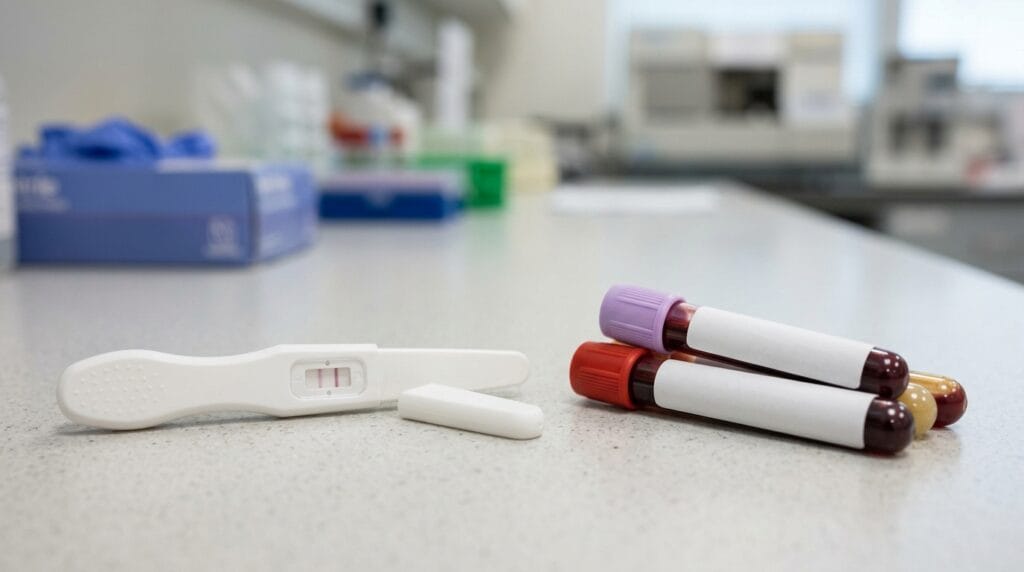
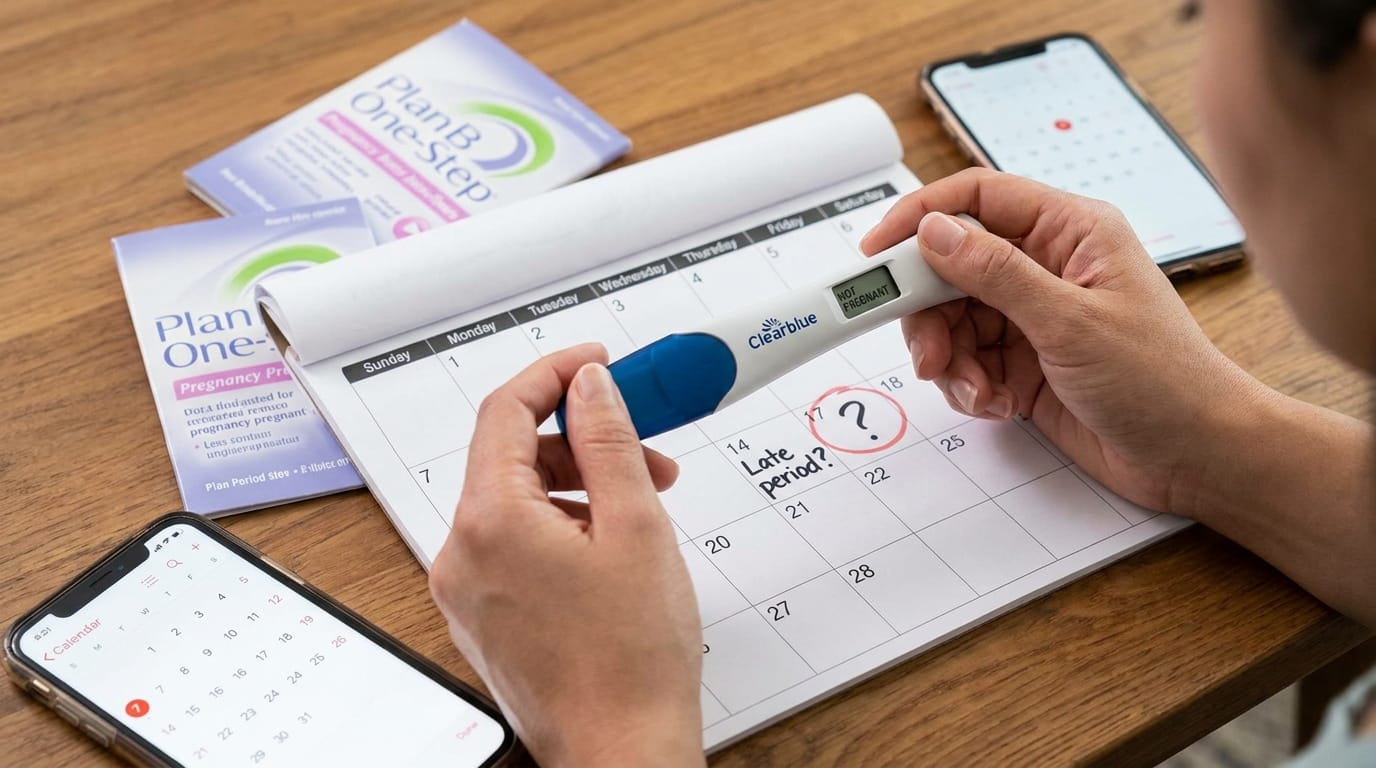
A late period after Plan B can create a lot of uncertainty. You took emergency contraception because you wanted to reduce your chance of pregnancy, but now your period has not arrived when expected. Maybe you are spotting. Maybe your breasts feel sore. Maybe you took a pregnancy test and it was negative, but you still cannot stop wondering whether you could be pregnant.
The good news is that a change in your next period can happen after taking Plan B. Emergency contraception can temporarily affect the timing of ovulation, which can make your next period arrive earlier or later than you expected. It can also cause spotting or changes in bleeding.
However, Plan B does not prevent every pregnancy. That means timing your pregnancy test correctly matters more than trying to interpret every cramp, symptom, or change in discharge.
Why Your Period Can Be Late After Taking Plan B
Plan B One-Step and similar emergency contraceptive pills contain levonorgestrel. Levonorgestrel emergency contraception mainly works by delaying or preventing ovulation. If ovulation happens later than it normally would, your next period may also arrive later.
Therefore, a delayed period does not automatically mean Plan B failed. A period may also arrive somewhat earlier than expected. Some people notice spotting or bleeding that looks different from their usual period.
This can make pregnancy symptoms especially difficult to interpret. Breast tenderness, mild cramping, nausea, fatigue, spotting, bloating, and changes in your period can overlap with hormonal changes, PMS, stress, and early pregnancy.
If you are comparing symptoms, read our guide on pregnancy symptoms vs. PMS. Symptoms can provide clues, but they cannot confirm whether you are pregnant.
How Plan B affects ovulation and your next menstrual cycle

To understand why your cycle can change, it helps to understand what emergency contraception is designed to do. Pregnancy does not happen immediately after sex. Sperm can remain capable of fertilizing an egg for several days. Emergency contraception works during this window by reducing the chance that an egg will be available for fertilization.
If levonorgestrel delays ovulation, the rest of the menstrual cycle may shift as well. Your expected period date is based partly on when ovulation occurred. Therefore, changing the timing of ovulation can change the date of your next bleed.
A late period is not proof that you are pregnant
Seeing your expected period date come and go is understandably worrying. However, a late period by itself cannot tell you whether Plan B worked.
Stress can also influence cycle timing. Changes in sleep, illness, travel, weight, exercise, medication, PCOS, thyroid conditions, and naturally irregular cycles can make predicting a period even more difficult.
This is why repeatedly checking symptoms is usually less helpful than using a clear pregnancy-testing timeline.
Spotting after Plan B does not confirm or rule out pregnancy
Spotting after emergency contraception can also cause confusion. You may see a small amount of pink, red, or brown discharge and wonder whether it is your period, a medication effect, or something related to pregnancy.
Irregular bleeding can occur after emergency contraception. However, bleeding alone cannot reliably confirm that you are not pregnant.
Likewise, spotting should not automatically be labeled “implantation bleeding.” Many different hormonal changes can cause light bleeding. A pregnancy test taken at the appropriate time provides far more useful information than trying to identify pregnancy based only on the appearance of spotting.
If your symptoms are making you question whether pregnancy is possible, our guide to early pregnancy signs explains what symptoms may occur while also emphasizing why testing is necessary.
When should you take a pregnancy test after Plan B?
This is the most important part. If you test too early, you may receive a negative result even though pregnancy is still possible. Home pregnancy tests detect human chorionic gonadotropin, or hCG, which begins increasing after a pregnancy implants.
Current guidance from the American College of Obstetricians and Gynecologists says you should take a pregnancy test if you have not had your period within about a week of when you expected it. For people with irregular cycles or no reliable expected period date, counting from the sexual encounter or emergency contraception can be easier.
Planned Parenthood’s current guidance recommends taking a pregnancy test about three weeks after taking the morning-after pill if your period has not arrived.
You can review the American College of Obstetricians and Gynecologists guidance on emergency contraception for additional medical information.
If your cycle is normally regular
If you usually know exactly when your period should begin, you can test when it is late. However, if your first result is negative and your period still does not come, repeating the test later may provide a clearer answer.
A practical approach is:
- Check the expiration date on the pregnancy test.
- Follow the manufacturer’s instructions exactly.
- Use first-morning urine when testing very early, because it is usually more concentrated.
- Avoid drinking excessive amounts of water immediately before testing.
- Read the result only during the time window listed in the instructions.
- Repeat the test if you tested early and your period remains absent.
For more detailed testing guidance, see when to take a pregnancy test and how timing affects accuracy.
If your periods are irregular or you do not know when you are due

Irregular periods make the situation harder because there may be no reliable “missed period” date. In that situation, using time since the sexual encounter can be more useful than relying on a cycle-tracking app.
If it has been about three weeks since you took emergency contraception and you still have not had your period, taking a home pregnancy test is a reasonable next step. If you had unprotected sex again after taking Plan B, remember that the timeline may need to be counted from the most recent pregnancy risk.
This matters because taking Plan B after one sexual encounter does not provide ongoing protection against pregnancy from sex that happens later in the cycle.
What to Do If Your Period Is Still Missing After Plan B
If your test is negative, your next step depends on when you tested and what happens afterward. A negative result taken very early may simply mean there was not enough hCG in your urine yet.
If enough time has passed and you continue to receive negative pregnancy tests, pregnancy becomes less likely. However, a healthcare professional can help evaluate persistent missed periods, unusual bleeding, or other symptoms.
You may also want to read why you can have a negative pregnancy test while still feeling pregnant. That guide covers late ovulation, testing errors, cycle changes, PMS, medications, and other possible explanations.
Know when symptoms need medical attention
Most cycle changes after emergency contraception are not emergencies. Still, certain symptoms deserve prompt medical evaluation.
Contact a healthcare professional if your period remains significantly delayed, you continue having unusual bleeding, or you are uncertain about repeated pregnancy-test results.
Seek urgent medical care if you develop severe or worsening lower abdominal or pelvic pain, especially if it is one-sided, or if you experience fainting, severe weakness, shoulder pain, or heavy bleeding. These symptoms can have causes unrelated to pregnancy, but they can also occur with complications such as ectopic pregnancy and should not be diagnosed at home.
If your pregnancy test becomes positive, emergency contraception cannot end an established pregnancy. Plan B is not an abortion medication. At that point, contact a healthcare professional for appropriate pregnancy care and guidance.
Our step-by-step guide for what to do if you think you might be pregnant can also help you organize your next steps after a positive, negative, or confusing test result.
several pregnancy tests
Try not to take several pregnancy tests within a few hours of each other. hCG does not rise enough during such a short period to make repeated testing especially useful. Testing according to a sensible timeline gives you clearer information and can reduce unnecessary confusion.
It is also important to remember that emergency contraception only addresses a recent risk of pregnancy. It does not protect against sexually transmitted infections, and it should not replace an ongoing contraceptive method if you regularly need pregnancy prevention.
If you frequently find yourself worried about pregnancy after sex, a healthcare professional can explain longer-term birth control options that may fit your needs. Condoms can also reduce the risk of many sexually transmitted infections when used correctly.
Bottom line: A late period after Plan B does not automatically mean you are pregnant. Emergency contraception can shift ovulation and change when your next period arrives. Instead of relying on spotting, cramps, nausea, or other symptoms, use a pregnancy test at the appropriate time. If your cycle is predictable, test when your period is clearly late. If your cycle is irregular, testing around three weeks after emergency contraception can give you a much clearer answer. Seek medical care if your period remains absent, your results stay confusing, or you develop significant pain or abnormal bleeding.
This article is for general educational purposes and is not a substitute for diagnosis or personalized medical advice from a qualified healthcare professional.