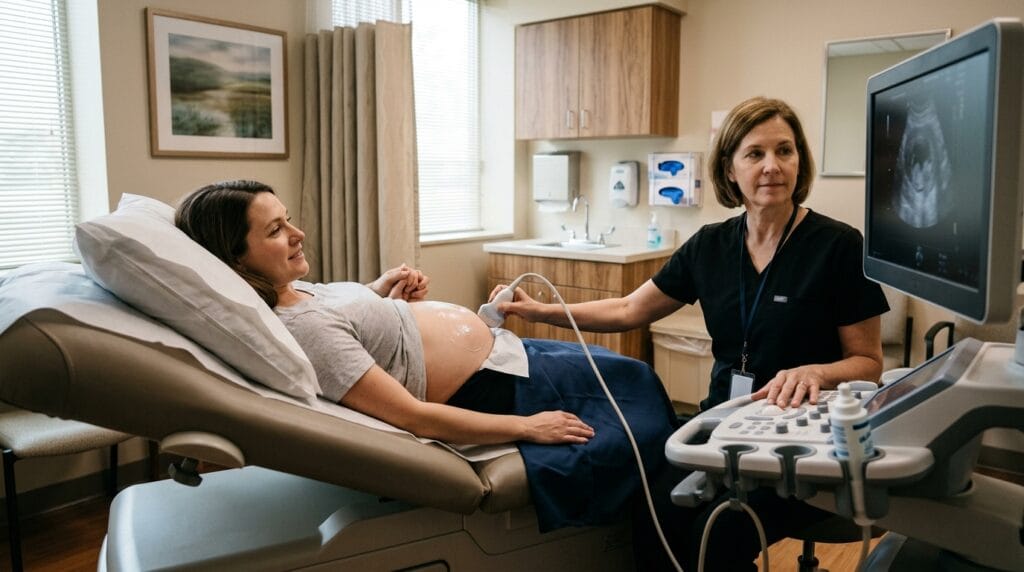

Pregnancy care has traditionally followed a familiar schedule. You might expect appointments every few weeks at first, then more often as your due date gets closer.
That approach is changing.
The American College of Obstetricians and Gynecologists, or ACOG, now recommends a more flexible model called tailored prenatal care. Instead of giving every pregnant person the exact same visit schedule, healthcare professionals can adjust care based on medical risk, pregnancy history, social needs, available resources, and personal preferences.
For some people with an uncomplicated pregnancy, that may mean fewer routine in-person appointments. It may also include telehealth visits or certain types of home monitoring.
However, fewer office visits should not mean less medical care.
The goal is to make sure each person receives the right services at the right time without requiring unnecessary trips to a clinic. People with health concerns or pregnancy complications may still need frequent appointments and additional monitoring.
If you recently tested positive and are still waiting for your first visit, read our guide on what to do if you cannot get a prenatal appointment yet in 2026.
Why Prenatal Care Schedules Are Changing
The traditional prenatal care model in the United States often includes about 12 to 14 visits during pregnancy. Yet the number of appointments alone does not guarantee that someone receives every recommended service.
ACOG now supports tailoring care around the individual instead.
A person with an uncomplicated pregnancy may not need the same schedule as someone with high blood pressure, diabetes, a previous pregnancy complication, or another medical concern.
Transportation can matter too. So can work schedules, childcare, distance from a clinic, access to reliable internet, and the ability to attend repeated appointments.
A tailored plan tries to account for these real-life factors without reducing the quality of care.
What ACOG Means by Tailored Prenatal Care

Tailored prenatal care begins with a detailed assessment of your needs.
Your healthcare professional reviews your medical history, previous pregnancies, medications, current health, and possible risk factors. The conversation may also cover mental health, transportation, housing, food access, work, insurance, and other issues that can affect your ability to receive care.
Your provider can then build a prenatal schedule around the services you actually need.
For people without chronic medical conditions or pregnancy complications, ACOG says a targeted schedule of roughly eight to nine visits may be appropriate.
That does not create a universal eight-visit rule. Your schedule can change during pregnancy if new concerns appear.
Fewer Visits Does Not Mean Skipping Important Care
A streamlined prenatal schedule still needs to include important pregnancy services.
Depending on your pregnancy and health history, care may include blood pressure monitoring, laboratory tests, urine testing, ultrasound, genetic screening discussions, vaccination, fetal growth checks, and conversations about nutrition, mental health, delivery, and postpartum care.
Some services require an in-person appointment. A blood draw cannot happen through a video call. An ultrasound also requires appropriate equipment and trained staff.
The point of tailored care is not to remove these services. It is to organize appointments around when those services are actually needed.
For example, an appointment that does not require a physical examination or testing might sometimes happen through telehealth. A later visit that includes laboratory work or an ultrasound would still happen in person.
ACOG explains its current recommendations in its clinical guidance on tailored prenatal care delivery.
Your First Assessment Still Matters
A flexible schedule does not mean waiting months before speaking with a healthcare professional.
ACOG recommends an early, comprehensive assessment. Ideally, this assessment should take place before 10 weeks of pregnancy when possible.
That early conversation can identify health conditions or medications that need attention. It can also help determine whether your pregnancy fits an average-risk schedule or needs closer monitoring.
Your provider may ask about previous pregnancies, miscarriages, ectopic pregnancy, fertility treatment, surgeries, medications, allergies, family history, and chronic conditions.
Bring a complete medication list. Include prescription drugs, over-the-counter medicines, vitamins, herbal products, supplements, and weight-management medications.
Do not stop an important prescription simply because you received a positive pregnancy test. Some medications need adjustment during pregnancy, but stopping suddenly can also create risks. Ask a qualified healthcare professional for guidance.
Our positive pregnancy test next-steps guide can help you prepare before that first conversation.
Telehealth Can Become One Part of Prenatal Care
Telehealth is another part of the tailored model.
A virtual appointment can reduce travel time and make prenatal care easier to fit around work, childcare, school, or other responsibilities. It may also help people who live far from maternity care services.
Still, telehealth has clear limits.
A video appointment cannot replace every physical examination, laboratory test, ultrasound, or urgent medical evaluation.
The best use of virtual care depends on what needs to happen during that specific appointment.
Know What Can and Cannot Happen Virtually

A virtual prenatal visit may work well for reviewing symptoms, discussing test results, talking about nutrition, checking medications, answering questions, or planning upcoming care.
Some patients may also use home equipment to collect information such as blood pressure when their provider recommends it and confirms that the equipment and technique are appropriate.
Other parts of prenatal care still require an office, clinic, laboratory, or imaging center.
If you have bleeding, severe pain, fainting, severe dizziness, fever, shortness of breath, or another concerning symptom, do not assume that a routine telehealth visit is enough. You may need prompt in-person evaluation.
Our guide to telehealth after a positive pregnancy test in 2026 explains when virtual care may help and when an in-person visit matters.
How to Know What Prenatal Schedule Is Right for You
There is no single appointment schedule that every pregnant person should copy from an app, social media post, or online calendar.
Your care plan should come from a healthcare professional who understands your medical history and pregnancy.
A healthy person with an uncomplicated pregnancy may qualify for a streamlined schedule. Someone else may need more frequent visits from the beginning.
The plan can also change. A pregnancy that starts as low risk may later require closer monitoring.
Some Pregnancies Still Need More Frequent Monitoring
ACOG’s tailored model is not designed to reduce visits for people who need more care.
You may require additional appointments if you have a chronic health condition, pregnancy complication, concerning symptoms, or a history that raises your risk.
Examples can include high blood pressure, diabetes, kidney disease, certain heart conditions, autoimmune disease, or a previous serious pregnancy complication.
Multiple pregnancy, fetal growth concerns, abnormal testing, or new symptoms may also change the schedule.
Your provider may recommend additional laboratory testing, ultrasound, specialist visits, or other monitoring depending on the situation.
That is why comparing your appointment count with someone else’s pregnancy is not very useful.
Ask These Questions When Building Your Care Plan
You do not need to memorize a standard prenatal calendar. Instead, ask your healthcare professional what your individual plan includes.
- How many prenatal visits do you recommend for me?
- Which appointments need to happen in person?
- Can any appointments safely happen through telehealth?
- What tests or screenings are planned during each trimester?
- Do I need any home monitoring equipment?
- What health conditions would change my visit schedule?
- Who should I contact between appointments if I have questions?
- Which symptoms require urgent medical attention?
Also ask how your clinic handles scheduling changes.
If an appointment gets delayed, find out whether the timing affects any planned test or screening. Some pregnancy services have recommended time windows, so moving an appointment may sometimes require a different plan.
The biggest change in prenatal care is not simply having fewer appointments. It is making each appointment more purposeful.
For some healthy pregnancies, fewer in-person visits may reduce travel, missed work, childcare needs, and other barriers. Telehealth can add flexibility when the appointment does not require hands-on care.
For higher-risk pregnancies, tailored care may mean the opposite. More visits, more testing, and specialist care may be appropriate.
The number of appointments is therefore not the best measure of whether your prenatal care is good. What matters is whether you receive the medical services, monitoring, information, and support that your pregnancy requires.
If your clinic offers a schedule that looks different from the traditional prenatal calendar, ask why. A tailored plan should be explained clearly and developed with your needs in mind.
Medical disclaimer: This article provides general educational information only. It is not medical advice and cannot determine how often you personally need prenatal care. Your appointment schedule should be based on your health, pregnancy history, symptoms, risk factors, and recommendations from a qualified maternity care professional. Seek prompt medical care for severe pain, heavy bleeding, fainting, severe dizziness, breathing problems, or other concerning symptoms.