
If you are pregnant during fall or winter in 2026, you may hear your doctor or midwife mention the RSV vaccine. That can raise several questions. What is RSV? Why is the vaccine given late in pregnancy? Is it safe? Does your baby still need another RSV shot after birth?
The RSV vaccine during pregnancy is designed to help protect newborns during their first months of life. RSV, or respiratory syncytial virus, usually causes cold-like symptoms in adults. Babies can become much sicker, especially during their first RSV season.
CDC recommends one dose of Pfizer’s Abrysvo for pregnant women during weeks 32 through 36 of pregnancy. In most of the continental United States, the recommended seasonal window runs from September through January. The goal is to give the pregnant person’s immune system enough time to make antibodies and pass them to the baby before birth.
This article explains how the 2026 recommendation works, why timing matters, how maternal vaccination compares with infant RSV antibodies, and what questions you may want to ask during prenatal care.
Why RSV Vaccine Timing During Pregnancy Matters in 2026
RSV spreads most heavily during certain times of the year. In much of the United States, activity rises during fall and winter. That seasonal pattern explains why CDC does not recommend maternal RSV vaccination throughout the entire year in most locations.
The vaccine also needs time to work. Your immune system must respond to the vaccine and create antibodies. Those antibodies then cross the placenta and reach the baby.
Because newborns have developing immune systems, this transferred protection can help during the first months after birth. Those early months are important because very young infants can face a higher risk of severe RSV illness.
CDC Recommends the RSV Vaccine During Weeks 32 Through 36
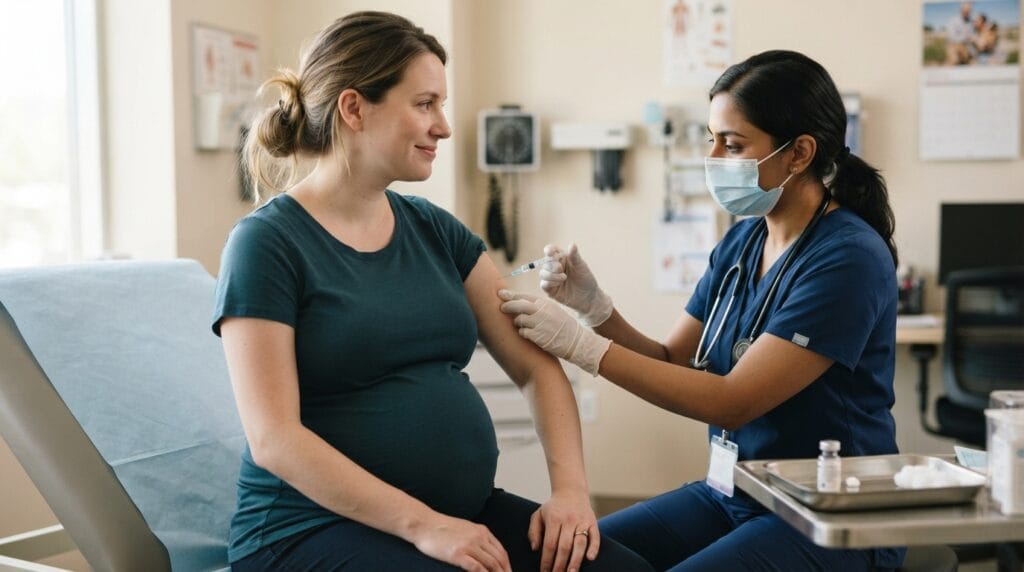
CDC recommends Pfizer’s Abrysvo during 32 weeks and 0 days through 36 weeks and 6 days of pregnancy. That is a specific window rather than a general recommendation to receive the vaccine at any point during pregnancy.
The timing balances two goals. First, the pregnant person needs enough time to make antibodies. Second, the baby needs enough time before delivery for those antibodies to cross the placenta.
If someone reaches more than 36 weeks and 6 days without receiving the maternal vaccine, CDC generally recommends protecting the baby after birth with an RSV antibody instead of giving the vaccine too late.
Your prenatal schedule may already include conversations about vaccines, lab work, fetal growth, and other routine care. If your visit schedule looks different from what you expected, our guide to tailored prenatal care in 2026 explains why prenatal visits may now be planned more individually.
Why the 32-to-36-Week Window Is So Specific
The vaccine does not provide instant protection to the baby. CDC notes that it takes about two weeks for the pregnant person’s immune system to build antibodies and transfer protection through the placenta.
That is why receiving the vaccine very close to delivery may not give the baby enough time to receive the intended benefit. It is also why the recommendation begins at 32 weeks rather than much earlier in pregnancy.
Gestational age matters. If you are unsure how far along you are, ask your prenatal provider before scheduling any pregnancy-specific vaccine. Ultrasound dating, your last menstrual period, and your pregnancy history may all help establish the estimated gestational age.
Why September Through January Matters in Most of the U.S.
CDC recommends seasonal maternal RSV vaccination because the goal is to protect babies who will enter RSV season soon after birth.
In most of the continental United States, pregnant women who are 32 through 36 weeks pregnant between September and January fall within the usual recommended window.
Timing can differ in places where RSV season does not follow the usual mainland pattern. CDC specifically notes that areas such as Alaska, Hawaii, Puerto Rico, Guam, the U.S. Virgin Islands, and parts of southern Florida may use different timing based on local RSV circulation.
This makes local prenatal guidance important. A recommendation you see online may not match the season where you live.
Maternal RSV Vaccine or an Infant Antibody: Most Babies Need One
There are two main ways to protect an infant from severe RSV during the first season of life. One option is maternal vaccination during pregnancy. The other is a long-acting RSV antibody given directly to the baby.
CDC says most babies do not need both approaches. The choice depends on several factors, including whether the pregnant person received the maternal vaccine, when vaccination occurred, when the baby is born, and individual medical circumstances.
The infant options include long-acting monoclonal antibodies such as nirsevimab. These products work differently from a vaccine. They provide antibodies directly to the baby rather than teaching the baby’s immune system to create its own response.
Do Not Assume the Baby Automatically Needs Both
It is easy to think that more protection must always be better. RSV prevention does not usually work that way.
If the pregnant person receives the recommended maternal vaccine at the appropriate time, the baby usually does not also need an RSV antibody after birth. In contrast, an infant may need an antibody if the mother did not receive maternal RSV vaccination during the current pregnancy or if there was not enough time for protection to transfer before delivery.
There can be exceptions for certain infants with specific risks. Your pediatric or prenatal care team can explain which approach fits your situation.
If you recently received a positive test and have not reached this stage of pregnancy yet, start with the basics. Our guide on what to do during the first 72 hours after a positive pregnancy test can help you organize your next steps.
What to Ask About the RSV Vaccine During Pregnancy

You do not need to wait until week 32 to start asking questions. Bringing up RSV earlier can help you understand whether your due date overlaps with the recommended seasonal window.
Ask which RSV vaccine your clinic uses. Pfizer’s Abrysvo is the RSV vaccine that CDC recommends for use during pregnancy. Other RSV vaccines, including Arexvy and mResvia, are not recommended for pregnant women.
You can also ask whether the RSV vaccine can happen during the same appointment as other recommended pregnancy vaccines. CDC states that maternal RSV vaccination can occur at the same visit as vaccines such as Tdap or influenza when those vaccines are otherwise recommended.
Safety, Previous Pregnancy, and Other Vaccines Are Worth Discussing
Many people want to know about safety before agreeing to any vaccine during pregnancy. That is a reasonable question.
CDC states that available clinical-trial evidence supports the benefits of the recommended maternal RSV vaccine for preventing severe RSV disease in infants. Your own medical history can still matter, so discuss severe allergies, previous vaccine reactions, medications, pregnancy complications, and any other concerns with your healthcare professional.
If you are also thinking about prenatal testing, remember that vaccines and screening tests serve different purposes. For example, NIPT in 2026 screens for certain chromosome conditions. It does not protect against infections such as RSV.
Keeping these parts of prenatal care separate can make the schedule feel less overwhelming. One appointment may focus on screening. Another may cover vaccines, nutrition, symptoms, or birth planning.
What If You Received an RSV Vaccine During a Previous Pregnancy?
Current CDC guidance has an important detail for repeat pregnancies. If you already received a maternal RSV vaccine during a previous pregnancy, CDC does not currently recommend another maternal dose in a later pregnancy.
Instead, the new baby should generally receive a long-acting RSV antibody after birth when protection is needed. CDC continues to evaluate whether repeat maternal vaccination might provide enough additional benefit to change that recommendation in the future.
This is one reason it helps to keep vaccination records from earlier pregnancies. Tell your prenatal provider if you remember receiving an RSV vaccine before, even if you are unsure of the exact date.
Do not rely only on memory if records are available. A pharmacy, previous healthcare system, state immunization registry, or medical chart may help confirm what you received.
If this is your first pregnancy, the discussion may be simpler. Your provider can look at your gestational age, expected delivery date, local RSV season, health history, and preferences. Together, those details can help determine whether maternal RSV vaccination fits your prenatal plan.
The most important point is that the RSV vaccine during pregnancy follows a specific schedule. It is not a vaccine that pregnant women receive at any random time. CDC recommends Abrysvo during weeks 32 through 36 and generally from September through January in most of the continental United States.
Maternal vaccination can give a newborn protection during the first months of life, when RSV can cause more serious illness. If maternal vaccination does not happen at the recommended time, an infant RSV antibody provides another way to protect the baby.
Ask about RSV before you reach the final weeks of pregnancy. Find out which option your care team recommends, whether your location follows the usual seasonal schedule, and whether you received the vaccine during an earlier pregnancy.
You can review the current recommendations directly through the CDC guidance on protecting infants from RSV.
Medical disclaimer: This article provides general educational information only. It does not replace individual prenatal or pediatric medical advice. Vaccine recommendations may depend on gestational age, location, medical history, previous vaccination, local RSV activity, and other factors. Discuss pregnancy vaccines with a qualified healthcare professional.