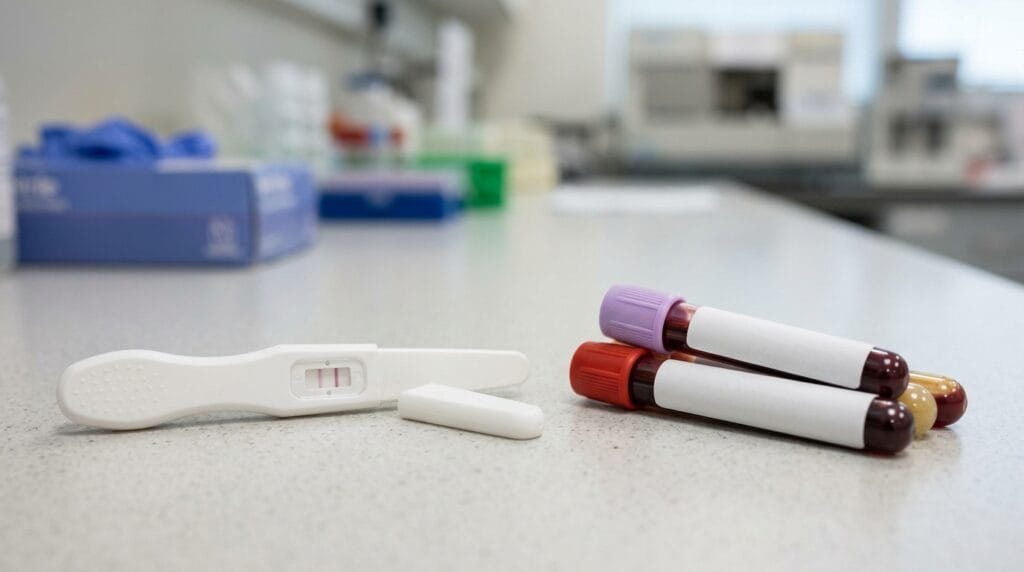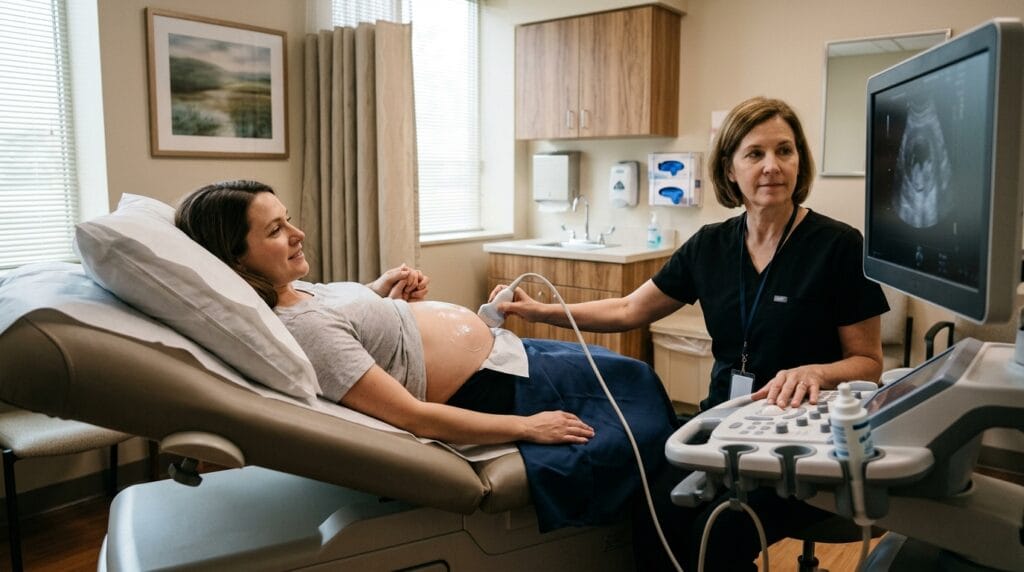

Spotting after a positive pregnancy test can feel concerning, especially when you have only recently learned that you might be pregnant. You may notice a small amount of pink, red, or brown blood and wonder whether the pregnancy is developing normally.
Light bleeding can occur in early pregnancy for several reasons. Some causes are relatively minor, while others require prompt medical attention.
Unfortunately, the color of the blood or the presence of cramps cannot reliably identify the cause.
This guide explains possible reasons for spotting, what your healthcare professional may evaluate, and which symptoms require emergency care.
What Spotting After a Positive Pregnancy Test Can Mean
Spotting generally describes a small amount of vaginal bleeding. It may appear on underwear, toilet tissue, or a panty liner rather than soaking a menstrual pad.
However, people describe bleeding differently, and the amount may change over time.
Any bleeding during a possible or confirmed pregnancy deserves discussion with an appropriate healthcare professional.
Understand common causes of early pregnancy spotting

The cervix becomes more vascular during pregnancy, which can make it more sensitive.
Sometimes spotting occurs after sex, a pelvic examination, or another event that irritates cervical tissue.
Other possible causes include infection, pregnancy-related complications, or bleeding for which an immediate explanation is not found.
A clinician considers symptoms, medical history, examination findings, and testing before identifying a cause.
Why the color of spotting is not a diagnosis
Brown blood may reflect blood that has taken longer to leave the body, while bright red blood may indicate more recent bleeding.
However, color alone cannot determine whether a pregnancy is healthy.
Some people have light bleeding and continue with their pregnancies. Others experience spotting associated with a serious complication.
Do not rely on photographs from social media to classify bleeding.
Instead, note the amount, duration, and associated symptoms for your healthcare team.
What about so-called implantation bleeding?
Some people attribute light bleeding around the expected period to implantation.
However, bleeding patterns cannot reliably confirm when implantation occurred or establish that a pregnancy is developing normally.
If you already have a positive test, treat new bleeding as a symptom to discuss with your clinician rather than assuming a harmless explanation.
Likewise, the absence of spotting does not indicate anything negative about pregnancy health.
For additional context, read our pregnancy symptoms versus PMS guide.
Know the conditions that need medical assessment
Bleeding can sometimes accompany early pregnancy loss or an ectopic pregnancy.
An ectopic pregnancy develops outside the normal uterine cavity and can become life-threatening if it causes internal bleeding.
It may initially produce symptoms that resemble ordinary early pregnancy.
Therefore, a positive pregnancy test does not confirm that the pregnancy is inside the uterus.
When spotting could indicate ectopic pregnancy
Possible symptoms include vaginal bleeding and pelvic or abdominal pain, sometimes on one side.
Severe pain, shoulder pain, fainting, marked weakness, or significant dizziness requires emergency medical care.
Do not wait for another home test if these symptoms develop.
Clinicians may use blood hCG measurements and ultrasound to determine the appropriate next steps.
ACOG provides detailed information in its ectopic pregnancy guidance.
What to Do When You Have Spotting in Early Pregnancy
Contact your prenatal care team or an appropriate healthcare service to report the bleeding.
Explain how far along you believe you are and whether you have pain, dizziness, fever, or other symptoms.
Follow their assessment instructions rather than diagnosing the cause at home.
When severe symptoms occur, seek immediate emergency evaluation.
Prepare useful information for your healthcare team
Record when bleeding began and whether it has increased or decreased.
Describe whether you notice only a few spots or need a pad.
Explain any cramping, pain, fever, unusual discharge, or other changes.
Also, provide information about your pregnancy test and menstrual history.
What tests might a clinician recommend?
The clinician may assess your symptoms, pregnancy history, and vital signs.
Depending on the situation, testing can include ultrasound, quantitative blood hCG measurements, or other laboratory tests.
Sometimes repeat evaluation is needed because the pregnancy is too early for a definite ultrasound finding.
Clinicians may also consider blood type and Rh status when evaluating pregnancy bleeding.
Never assume that one hCG measurement alone determines whether a pregnancy is viable.
Do not repeatedly test to diagnose bleeding
A home pregnancy test detects hCG but does not identify why bleeding is occurring.
A darker test line cannot prove that a pregnancy is healthy.
Likewise, a lighter line may reflect urine concentration or test differences.
Use tests as directed, but seek medical evaluation for bleeding rather than relying on repeated photographs of test strips.
Our late period after Plan B guide explains why symptom interpretation and test timing can become confusing.
Keep track of the amount of bleeding
Recording the amount of bleeding can help a clinician understand changes over time.
For example, note whether spotting remains light or progresses to bleeding that fills pads.
If you pass clots or tissue, inform your healthcare team.
Do not delay urgent care just to obtain a more detailed record.
Severe bleeding, fainting, or worsening pain demands immediate attention.
Do not assume cramping is always normal
Mild cramping can occur during pregnancy, but pain accompanying bleeding needs appropriate assessment.
Persistent, worsening, or one-sided pain may require prompt investigation.
Severe pain requires emergency care.
A symptom’s significance depends on the complete picture, not only its intensity at one moment.
Tell your clinician if pain changes or new symptoms appear.
Ask whether follow-up testing is necessary
Some early pregnancy evaluations cannot provide a final answer during the first visit.
In those cases, your clinician may recommend repeat blood testing or another ultrasound.
Ask exactly when to return and what should prompt earlier assessment.
Follow-up matters even when bleeding decreases, because improvement alone does not establish the pregnancy’s location or outcome.
Understand that every pregnancy is different
Some people experience light bleeding and later have normal pregnancies.
Others receive a diagnosis that requires additional treatment or observation.
Neither situation can be predicted simply by comparing the bleeding with someone else’s experience.
Social media stories may offer emotional connection, but they cannot substitute for individualized medical assessment.
Consider emotional support during uncertainty
Bleeding after a positive test can create worry or disappointment, especially when answers are not immediately available.
If helpful, ask a trusted person to accompany you to an appointment or assist with practical arrangements.
You can also ask the healthcare team for counseling resources.
There is no single correct way to feel while awaiting results.
Know what not to do at home
Do not attempt to stop bleeding with unprescribed medication, herbs, or supplements.
Do not discontinue prescribed medications without medical advice.
Ask your healthcare professional about physical activity and any temporary precautions relevant to your situation.
Following generic online instructions may not address the underlying problem.
Discuss your pregnancy history honestly

Tell the clinician about previous ectopic pregnancy, pelvic surgery, fertility treatment, miscarriage, and other relevant health information.
These details can influence risk assessment and follow-up.
However, serious complications can also occur in people with no recognized risk factors.
Never dismiss concerning symptoms solely because you are otherwise healthy.
Check the right emergency warning signs
ACOG and CDC identify severe abdominal pain, fainting, significant dizziness, and serious bleeding among symptoms that require urgent evaluation during pregnancy.
Some people also experience shoulder pain with dangerous internal bleeding.
Seek immediate medical help if these symptoms occur.
When you contact emergency services, explain that you have a positive pregnancy test or may be pregnant.
Use reliable resources rather than online guesses
Medical organizations provide evidence-based information about pregnancy bleeding.
For example, ACOG describes possible causes and recommends appropriate evaluation.
Meanwhile, the CDC explains broader urgent maternal warning signs.
For general pregnancy planning, explore our positive pregnancy test next-steps guide.
What to remember about spotting in 2026
Spotting after a positive pregnancy test does not always indicate pregnancy loss, but it should never be diagnosed from color or timing alone.
Report bleeding to a healthcare professional and follow the recommended assessment plan.
Seek emergency care for severe pain, fainting, shoulder pain, or heavy bleeding.
Clear medical follow-up is more useful than repeated online comparisons of symptoms and test strips.
Medical disclaimer: This educational article does not diagnose pregnancy bleeding or replace urgent medical assessment. Seek professional care for new bleeding during pregnancy.