
If you are trying to conceive, waiting to test, or have just seen a positive result, you may be wondering how much folic acid before pregnancy in 2026 you actually need.
CDC continues to recommend that women who can become pregnant get 400 micrograms, or mcg, of folic acid every day.
This recommendation matters even before a pregnancy test turns positive because important development begins very early in pregnancy. In many cases, a person does not yet know they are pregnant when the neural tube begins forming.
Folic acid is a form of vitamin B9. It can be found in supplements and fortified foods. Natural foods also contain folate, another form of vitamin B9.
CDC’s September 2026 guidance emphasizes one important point: folic acid is the form that has been shown to help prevent neural tube defects.
That does not mean every person needs the same prenatal vitamin or that taking more is always better. Certain medical histories may require individualized recommendations.
This guide explains the standard 400 mcg recommendation, why timing matters, and what to do if you discover a pregnancy before you have started a prenatal vitamin.
Why Folic Acid Before Pregnancy Matters So Early
Folic acid helps the body make new cells.
During early pregnancy, it plays an important role in the development of the neural tube. The neural tube later develops into the baby’s brain and spinal cord.
Neural tube defects include conditions such as spina bifida and anencephaly.
Because this development begins very early, public-health recommendations focus on getting enough folic acid before conception rather than waiting until the first prenatal appointment.
CDC recommends 400 mcg every day for women capable of becoming pregnant.
If you are planning a pregnancy, CDC recommends starting at least one month before conception and continuing during pregnancy.
The Standard Recommendation Is 400 mcg of Folic Acid Every Day
For most people who may become pregnant, the general recommendation is straightforward: get 400 mcg of folic acid daily.
You can obtain it from a vitamin, fortified foods, or a combination of both.
Fortified breads, cereals, pasta, rice, and other grain products may contain added folic acid. Supplement labels can also list the amount included in each serving.
A balanced diet still matters.
Foods such as leafy green vegetables, beans, citrus fruits, and other foods naturally contain folate. However, CDC continues to recommend getting the recommended amount of folic acid because that is the form proven to help prevent certain neural tube defects.
If you are actively trying to conceive, this is one of the few early-pregnancy steps that makes sense before there is even a positive test.
The Neural Tube Develops Before Many People Know They Are Pregnant
One reason folic acid gets so much attention is timing.
Many people do not take a pregnancy test until after a missed period. Others have irregular cycles and may not realize pregnancy is possible for several weeks.
Meanwhile, early embryonic development has already started.
This is why waiting for a positive pregnancy test is not the ideal time to begin thinking about folic acid if pregnancy is possible.
If you are sexually active and pregnancy could occur, getting the standard daily amount can provide protection before you know whether conception happened.
You do not need to follow a complicated fertility diet to meet this recommendation.
A simple routine is usually more practical: check your vitamin label, take the recommended amount consistently, and eat a varied diet.
If you are currently watching your cycle and wondering when testing makes sense, our step-by-step guide for what to do if you think you might be pregnant can help you organize the next steps.
Folic Acid and Folate Are Related, but They Are Not Identical Terms
Supplement labels can become confusing because you may see several terms.
Folate is the general name for vitamin B9 compounds. Natural folate occurs in foods.
Folic acid is the synthetic form commonly used in fortified foods and supplements.
You may also see products marketed with forms such as methylfolate or 5-MTHF.
CDC’s current guidance states that folic acid is the only type of folate that has been shown in studies to help prevent neural tube defects.
That does not mean other forms of folate have no biological role. It means the prevention evidence behind the public-health recommendation specifically supports folic acid.
If your prenatal vitamin contains a different form and you are unsure whether you are getting the recommended amount of folic acid, ask a pharmacist, doctor, midwife, or other qualified healthcare professional.
Avoid changing supplements based only on advertising that claims one form is automatically superior for everyone.
How to Choose a Prenatal Vitamin Without Overcomplicating It
The supplement aisle can make pregnancy preparation feel harder than it needs to be.
One bottle may promise fertility support. Another may highlight methylated vitamins. Another may contain dozens of herbs or nutrients in very high doses.
Start with the basics.
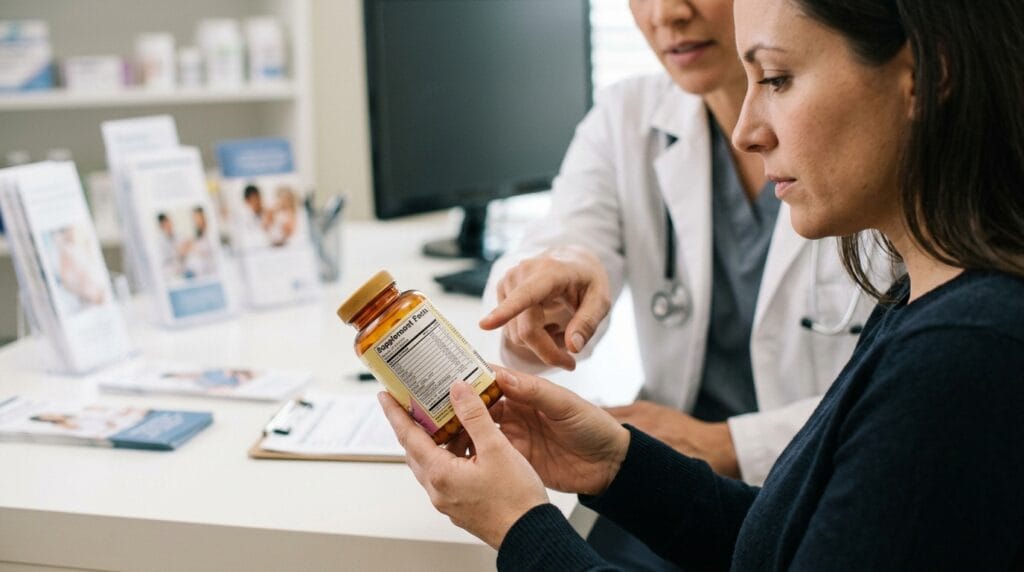
Check whether the vitamin contains folic acid and how much is included in the recommended daily serving.
Also check whether the serving requires one tablet or several. A label that lists 400 mcg per serving may require two gummies or two capsules to reach that amount.
Do not assume that every product marketed as a prenatal automatically matches your individual needs.
Read the Label and Ask Before Taking Higher Doses
More folic acid is not automatically better.
Some people may be advised to take a higher amount because of their medical or pregnancy history. Examples can include certain previous pregnancies affected by neural tube defects or particular medications and health conditions.
Those situations require individualized medical guidance.
Do not copy another person’s high-dose regimen from social media.
Also review the rest of the supplement.
Prenatal products can contain iron, iodine, vitamin D, vitamin A, choline, DHA, and other nutrients in different amounts.
Your healthcare professional may recommend a specific product based on diet, laboratory results, medical history, or medications.
If you take prescription medicine, do not stop it simply because you are trying to conceive or received a positive test.
Some medicines need adjustment during pregnancy, but abruptly stopping an important treatment can also cause harm.
What If You Just Found Out You Are Pregnant and Were Not Taking Folic Acid?
Do not assume you have already missed your chance to do something useful.
Start by contacting a qualified healthcare professional and asking about an appropriate prenatal vitamin.
CDC recommends continuing folic acid during pregnancy, so starting after a positive test can still be part of normal prenatal care.
Many pregnancies begin before the person has made every ideal health change.
You may have taken medication, missed vitamins, had alcohol before knowing, or simply not realized conception was possible.
The useful next step is to get accurate medical guidance rather than trying to calculate risk from internet comments.
Start the Recommended Routine and Prepare for Your First Prenatal Conversation

If your pregnancy test is positive, write down the first day of your last menstrual period if you know it.
Make a list of all medications, vitamins, supplements, and herbal products you use.
Include over-the-counter products too.
Ask your healthcare professional whether your current prenatal vitamin contains an appropriate amount of folic acid.
If you have chronic health conditions, prior pregnancy complications, bariatric surgery, epilepsy, diabetes, or another issue that could change nutrition recommendations, mention that early.
Your prenatal care schedule may also depend on your individual risk factors rather than following one identical calendar for everyone.
Our 2026 tailored prenatal care guide explains how prenatal visits can now be adjusted based on medical and personal needs.
Do Not Double or Triple Your Dose to “Catch Up”
Learning that folic acid matters early can make some people worry that they should immediately take several prenatal vitamins.
Do not do that unless a healthcare professional specifically tells you to.
Taking extra prenatal tablets can also increase other nutrients, not just folic acid.
Some vitamins and minerals can cause problems when taken in excessive amounts.
Instead, follow the recommended serving on the product and ask for medical guidance if you think you may need a higher folic acid dose.
If your positive test was unexpected and you are still deciding what you want to do, protecting your health while you think through your options is reasonable.
Our pregnancy options counseling guide explains how person-centered counseling can help you get information without pressure.
The main message about folic acid before pregnancy in 2026 is simple.
CDC recommends 400 mcg of folic acid every day for women capable of becoming pregnant. If you are planning a pregnancy, start at least one month before conception when possible.
Continue during pregnancy unless your healthcare professional gives you a different recommendation.
Read labels carefully because not every supplement contains the same type or amount of folate.
Remember that food is still important, but a balanced diet does not remove the public-health recommendation for folic acid.
If you have just learned that you are pregnant and were not taking a vitamin, focus on what you can do now rather than blaming yourself for what happened before you knew.
For the latest recommendations, review the CDC guidance on folic acid before and during pregnancy.
Medical note: This article provides general educational information and does not replace medical or nutritional advice. Some people require different folic acid doses because of medical history, medications, previous pregnancy outcomes, or other factors.