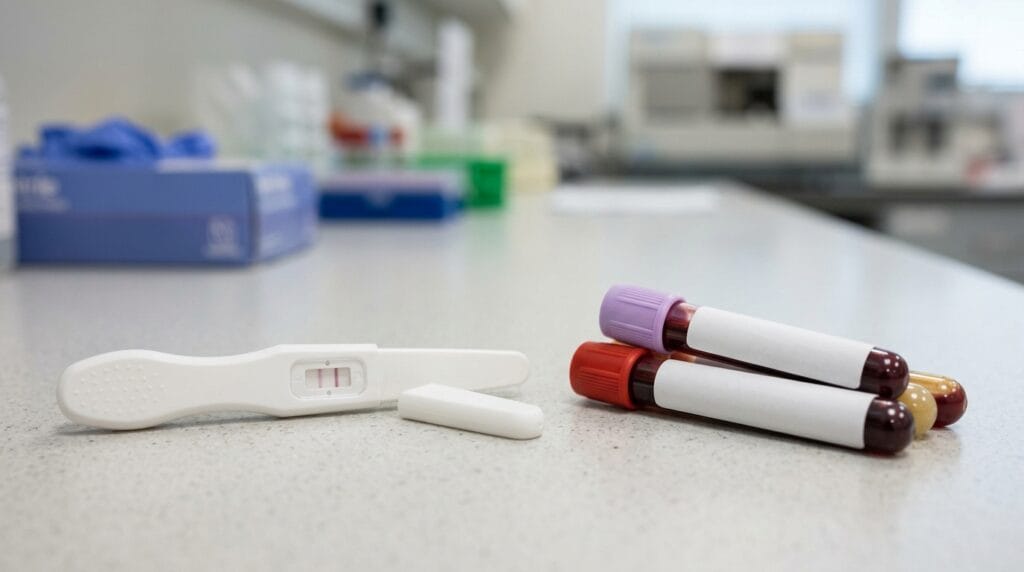
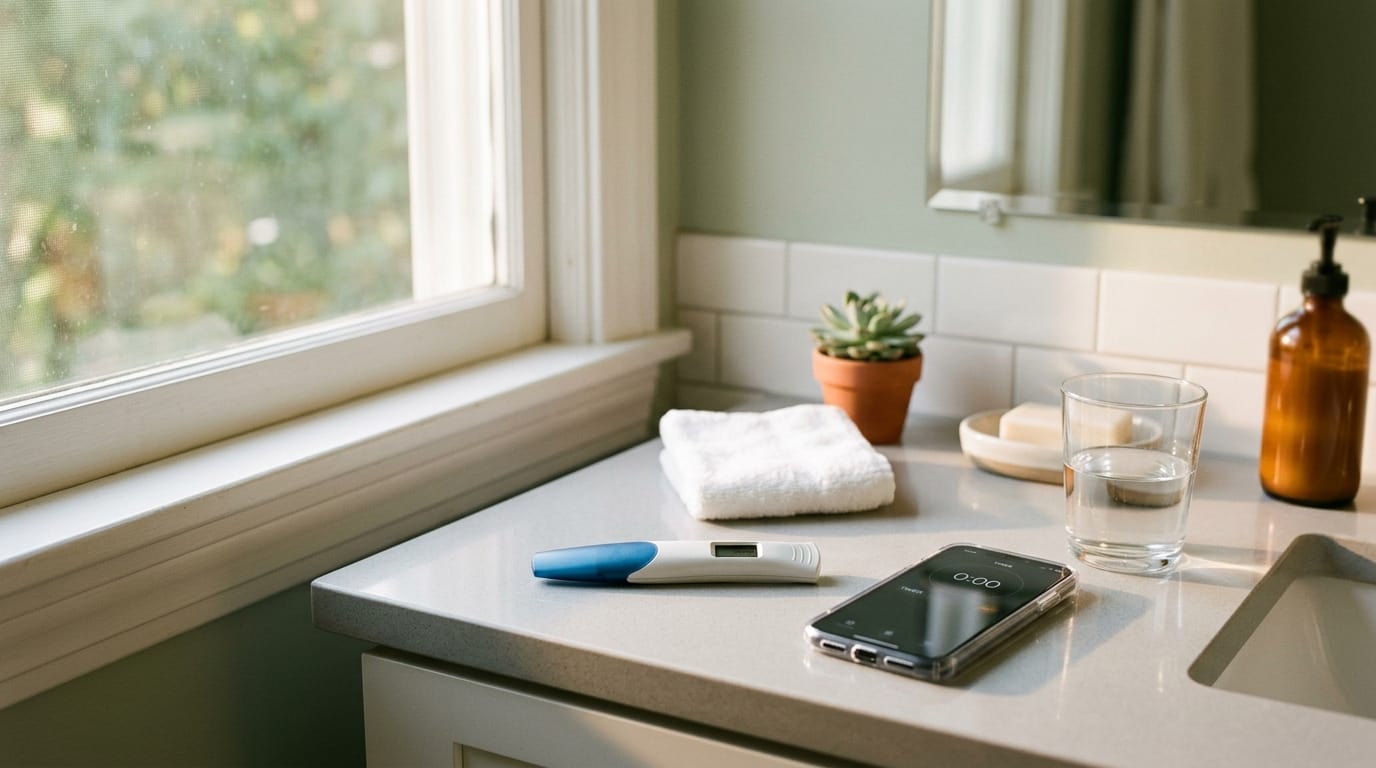
A pregnancy test at night vs morning can give confusing results, especially if you test early. You may take a test before bed and see a negative result. Then you may test again the next morning and see a faint line. This can feel stressful, but it often comes down to timing, urine concentration, and how much hCG your body has made so far.
Home pregnancy tests detect hCG, which is a hormone linked with pregnancy. In early pregnancy, hCG starts low and rises over time. Because of that, the same person may get different results depending on the day, the test brand, the time of day, and how diluted the urine is. So, timing can matter more than many people expect.
This does not mean nighttime testing is useless. Many modern tests can detect pregnancy at different times of day, especially after a missed period. However, if you are testing before your period is due or right around the first day of a missed period, morning urine may give the clearest result.
This guide connects with other Could Be Pregnant resources, including Can I Still Be Pregnant Even If the Test Is Negative?, 10 Early Signs You Might Be Pregnant, Pregnancy Symptoms vs. PMS, and What to Do If You Think You Might Be Pregnant.
Why Morning Pregnancy Tests Are Often More Reliable
Morning testing is often recommended because first-morning urine is usually more concentrated. During the night, you may go several hours without drinking or urinating. As a result, hCG may be easier for a test to detect. This can matter when hCG is still low.
Testing at night can still work, but it may be less reliable if you drank a lot of fluids during the day. Water, tea, coffee, juice, and other drinks can dilute urine. When urine is diluted, the amount of hCG in that sample may fall below the test’s detection level. Therefore, a nighttime negative does not always mean you are not pregnant.
The timing of your cycle also matters. A test taken after your missed period is usually more reliable than one taken several days before. If you test too early, the body may not have enough detectable hCG yet. This is one of the most common reasons for a false negative.
How hCG Affects Your Result

hCG does not appear at the same level for everyone on the same day. Ovulation can happen earlier or later than expected. Implantation can also vary. If you ovulated later than usual, your expected period date may not match your actual pregnancy timeline. In that case, a test may look negative even though pregnancy is still possible.
For example, someone with regular cycles may test on the first day of a missed period and get a clear positive. Another person may ovulate late, test on the same calendar day, and get a negative. Both people may have followed the instructions correctly. The difference may simply be hormone timing.
Testing Too Early Can Cause a False Negative
A false negative can happen when you test before hCG rises enough. This is common when people test before a missed period. It can also happen when cycles are irregular, ovulation is delayed, or implantation happens later.
If you get a negative result but your period still does not come, repeat the test in 48 hours. Use first-morning urine if possible. If the test remains negative and your period stays late, consider calling a healthcare provider.
Diluted Urine Can Make a Line Look Lighter
Diluted urine can affect the darkness of the test line. A faint line in the morning and a negative at night can happen if your nighttime urine has less hCG concentration. This does not always mean the pregnancy is changing. It may only mean the sample was weaker.
To reduce confusion, avoid drinking a large amount of fluid right before testing. If you must test later in the day, try waiting a few hours after your last urination. This gives hCG more time to collect in the urine sample.
When Night Testing Can Still Be Accurate
Night testing can be accurate when hCG levels are high enough. If your period is already several days late, many tests may show a positive result at any time of day. A strong positive line at night is usually meaningful if you followed the instructions and read the result on time.
However, nighttime testing becomes more uncertain when the result is negative or very faint. In that situation, the best next step is not panic. Instead, test again with first-morning urine. Use the same brand if you want a cleaner comparison.
Also, remember that different pregnancy tests have different sensitivities. One brand may detect lower hCG levels than another. Digital tests can feel easier to read, but they may not always show a positive as early as some line tests. Always read the package and follow the exact timing instructions.
Do Not Read the Test After the Time Window
Reading a test too late can create confusion. Some tests may show evaporation lines after they dry. These lines can look gray, faint, or colorless. A true result should be read only within the time window listed in the instructions.
Use a timer instead of guessing. If the instructions say to read at three minutes, check at three minutes. If they say not to read after ten minutes, do not use a later line as proof. A fresh test gives better information than an old test from the trash.
What to Do If Morning and Night Results Do Not Match
Different results can feel alarming, but they are not rare. If your morning test looks faintly positive and your night test looks negative, use the morning result as the better clue. Then repeat in 48 hours. If hCG is rising, the line may become easier to see.
If your night test is positive and your morning test is negative, check the instructions and timing. Make sure the positive was not read late. Also check the expiration date. If the result remains confusing, take another test or ask a provider about a blood test.
A blood pregnancy test can measure hCG more directly than a home urine test. Your provider may recommend it if you have pain, bleeding, fertility treatment, irregular cycles, prior ectopic pregnancy, or unclear home results. For general pregnancy test guidance, Mayo Clinic has a helpful overview here: Mayo Clinic home pregnancy tests.
Best Testing Plan for Clearer Answers

If you want the clearest answer, wait until the first day of your missed period or later. Test with first-morning urine. Check the expiration date. Follow the instructions exactly. Use a timer. Read the result only during the correct window.
If the test is negative but your period does not arrive, test again in two days. If you still feel pregnant or your cycle remains unusual, read Can I Still Be Pregnant Even If the Test Is Negative?. That guide explains common reasons a test may look negative even when symptoms continue.
If the test is positive, start thinking about next steps. You may want to call a provider, review medications, begin prenatal vitamins if you have not already, and track symptoms. If bleeding starts after a positive test, the article on Chemical Pregnancy in 2026 may offer helpful context, but medical guidance is still important.
Call a Provider for Pain, Heavy Bleeding, or Ongoing Confusion
Most confusing test results are not emergencies. Still, some symptoms need prompt care. Call a provider or seek urgent help if you have heavy bleeding, severe one-sided pelvic pain, fainting, shoulder pain, severe dizziness, fever, or intense abdominal pain.
You should also call if your period is very late, tests keep changing, or you have a history of ectopic pregnancy or pregnancy loss. A healthcare provider can help decide whether you need a urine test, blood test, ultrasound, or follow-up plan.
A pregnancy test at night vs morning can produce different results because early pregnancy testing depends on hCG levels and urine concentration. Morning urine often gives the best chance of detecting low hCG. Night testing may still work, especially after a missed period, but diluted urine can make results harder to trust.
In conclusion, do not let one confusing test control the whole story. Test at the right time, use morning urine when possible, follow instructions carefully, and repeat in 48 hours if needed. If symptoms, bleeding, pain, or uncertainty continue, contact a healthcare provider. Clear answers often come from timing, patience, and the right follow-up step.