

Faint positive vs evaporation line confusion can turn a simple home pregnancy test into an emotional roller coaster. You take the test, wait, look closely, tilt it under the light, take a photo, zoom in, ask yourself if the line has color, then wonder if you should test again immediately. It is stressful because one tiny mark can feel like it carries the weight of your whole future.
The hard truth is that a home pregnancy test is only helpful when you use it correctly and read it at the right time. A faint line can mean early pregnancy, especially if it appears within the test’s reading window and has visible color. But a pale, gray, or colorless mark that appears after the test dries may be an evaporation line, not a true positive result.
This guide explains how to think through a faint positive vs evaporation line result without spiraling. It will help you understand what to check first, when to retest, and when to contact a healthcare professional. This is educational content, not a diagnosis. If you have severe pain, heavy bleeding, fainting, shoulder pain, or symptoms that feel urgent, seek medical care right away.
Why Faint Positive vs Evaporation Line Confusion Happens
Pregnancy tests work by detecting human chorionic gonadotropin, often called hCG, in urine. Your body starts producing hCG after implantation. In very early pregnancy, hCG may still be low, so the test line may look light instead of dark. That can create a faint positive result.
However, pregnancy tests also dry after use. As urine evaporates, the test strip may leave a faint mark, shadow, or grayish streak. If you look at the test too late, that dried mark can look like a second line. This is where confusion starts.
A faint positive can happen very early
A faint positive can appear when there is enough hCG for the test to detect, but not enough to create a strong dark line yet. This can happen if you test before or around the day your period is due. It can also happen if your urine is diluted or if you ovulated later than expected.
The line darkness does not always tell the full story. A light line that appears during the correct time window can still matter. What matters most is whether the line appeared when the instructions told you to read the test, whether it has color, and whether a follow-up test becomes clearer after a couple of days.
Read the result within the correct time window
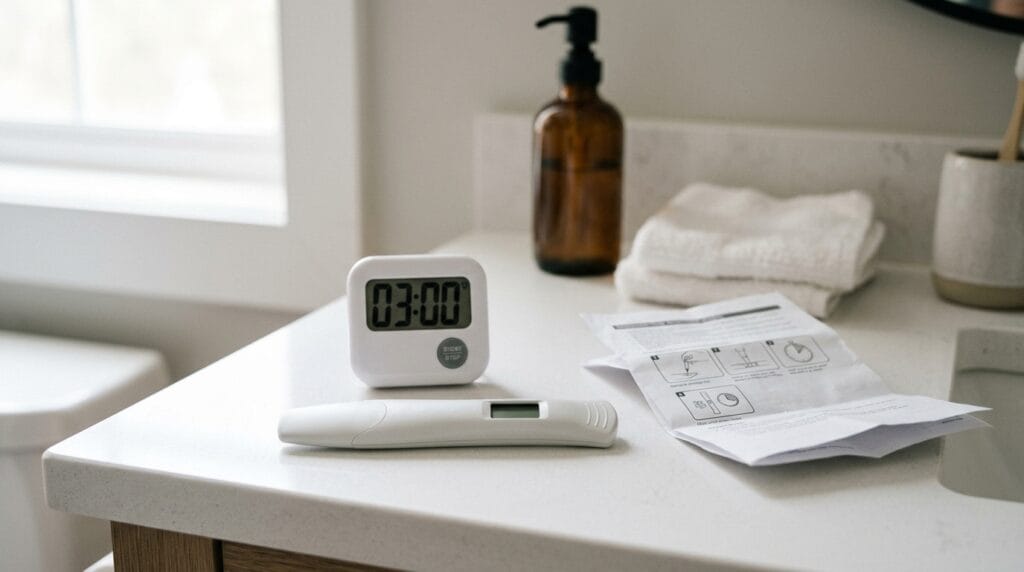
The timer matters more than your eyes. Every pregnancy test has a specific reading window, often a few minutes after testing. You should read the result only during that window. Do not keep checking the same test 20 minutes, one hour, or three hours later. By then, the strip may have dried, and any new mark may not be reliable.
This is one of the easiest ways to avoid faint positive vs evaporation line confusion. Set a timer before you test. Read the instructions before you start. Once the valid reading window has passed, throw the test away instead of studying it again.
Color matters more than shadow
A true positive line usually has color. Depending on the test, that color may be pink or blue. An evaporation line often looks gray, colorless, or like a shadow. It may also appear thinner or less defined than the control line.
Still, do not rely on color alone if you are unsure. Some tests are harder to read than others, especially blue-dye tests, early tests, or photos taken under poor lighting. If the line is unclear, the better answer is not to panic-read the same test. The better answer is to retest with a fresh test at the right time.
Evaporation lines usually come from late reading
An evaporation line usually appears after the urine has dried. It does not mean the test detected pregnancy hormone. It means the test changed after the valid reading time. This is why reading too late can create a false sense of hope or fear.
Evaporation lines often cause the most anxiety when someone wants an answer badly. If you are hoping to be pregnant, you may see a faint mark and feel excited. If you are worried about being pregnant, the same mark may feel terrifying. Either way, the test should not become your only source of truth if you read it late.
If timing is part of the problem, read your related guide on when to take a pregnancy test. That article can help readers understand why testing too early or reading results incorrectly can lead to confusion.
Retest with first morning urine after 48 hours
If you cannot tell whether the line is real, wait and test again. First morning urine often gives a clearer result because it is usually more concentrated. Try to avoid drinking a large amount of fluid right before testing, because diluted urine can make early results harder to read.
Waiting about 48 hours can also help because hCG often rises quickly in early pregnancy. If the first faint line was a true early positive, the next test may look clearer. If the first mark was an evaporation line, a fresh test read correctly may stay negative.
How to Handle an Unclear Pregnancy Test Result

An unclear result can feel urgent, but you do not need to solve it by taking five tests in one hour. That usually creates more confusion, especially if you use different brands, test at different times of day, or keep comparing photos under different lighting.
A calmer plan works better. Check when your period was due, review when you had possible pregnancy risk, use a fresh test, follow the instructions exactly, and read the result only during the valid window. Then decide your next step based on the result and your symptoms.
Use a simple next-step plan
If the line appeared within the correct time window and has color, treat it as a possible positive and test again in a couple of days. You may also contact a healthcare provider, especially if you need confirmation, take medications, have health concerns, or have symptoms that worry you.
If the line appeared after the reading window, treat it as unreliable. Do not call it positive based on a dried test. Retest with first morning urine and follow the instructions exactly. If the second test is negative but your period still does not arrive, test again in a few days or speak with a healthcare professional.
If your test is negative but you still feel pregnant, your internal article on can I still be pregnant even if the test is negative? is a helpful next link. It explains why testing too early, diluted urine, and irregular ovulation can affect results.
Know when to contact a healthcare professional
Contact a healthcare professional if your tests stay confusing, your period remains missing, or you have symptoms that feel unusual for your body. You should seek urgent care right away if you have severe one-sided pelvic pain, shoulder pain, fainting, heavy bleeding, dizziness, or intense abdominal pain. Those symptoms need medical attention, not more home testing.
For official background on home pregnancy tests and hCG detection, readers can review the FDA pregnancy home-use test guidance. This gives the article a reliable external reference while keeping your blog focused on practical test interpretation.
If the test becomes clearly positive, your next step is not to panic-scroll. Take a breath and move into practical care. Your guide on what to do if you think you might be pregnant can help readers understand testing, next steps, and support options.
If symptoms are making the situation harder to interpret, your post on pregnancy symptoms vs PMS is another useful internal link. Cramps, breast tenderness, fatigue, bloating, and mood changes can overlap, so symptoms alone should not replace proper testing.
The main thing to remember is that a faint positive vs evaporation line result should be handled with timing, not panic. A line that appears on time and has color may be an early positive. A line that appears late, looks gray, or shows up after the test dries may be an evaporation line. When in doubt, retest with first morning urine, follow the instructions, and contact a healthcare provider if the result stays unclear.
You deserve a clear answer, not hours of squinting at a drying test. Use the test correctly, give your body a little time if needed, and do not let one questionable shadow control your whole day.