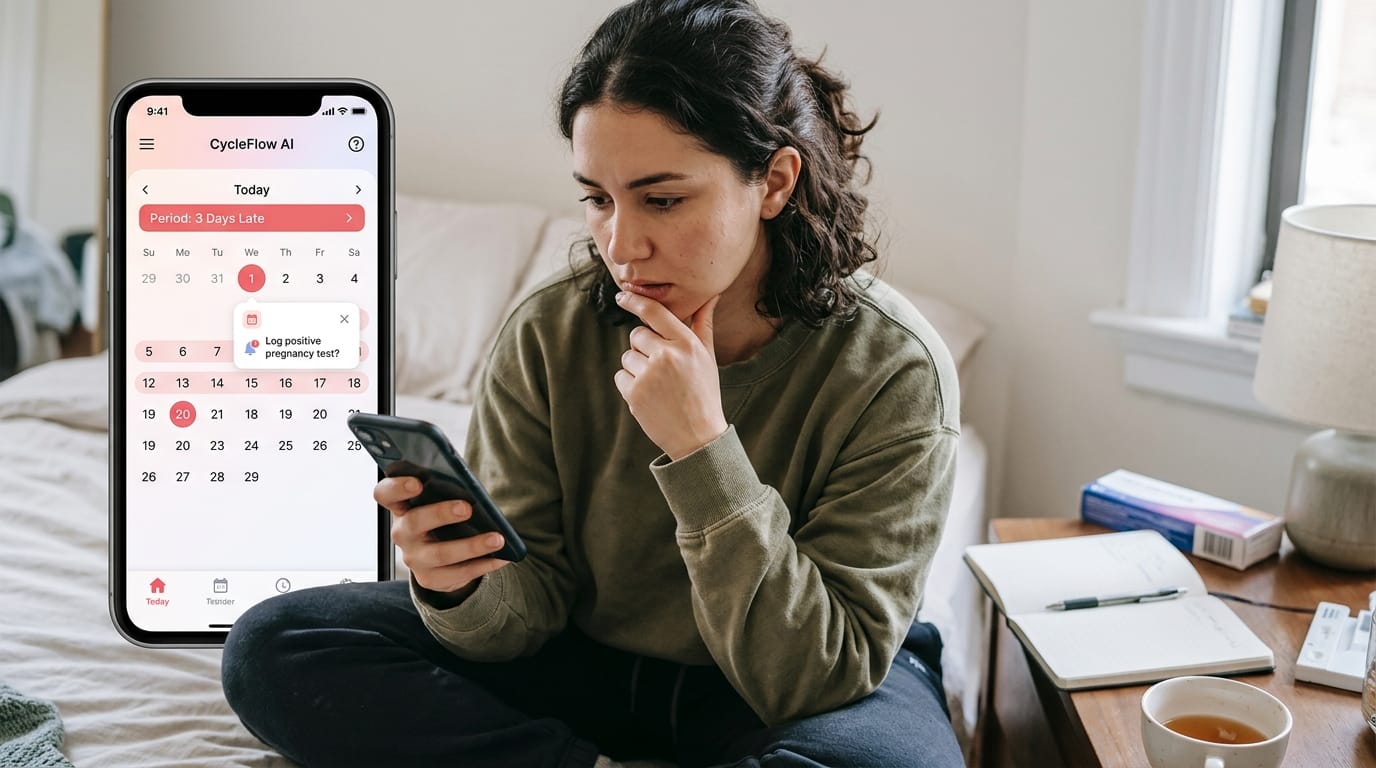
AI period tracker predictions can feel reassuring when your cycle follows a pattern. The app tells you when your period should arrive, when you might ovulate, and when pregnancy risk may be higher. But when your period is late, the same app can make you panic. One missed prediction can quickly turn into late-night searching, repeated pregnancy tests, and constant checking for symptoms.
Period tracking apps can be helpful tools, but they are not perfect. They usually rely on past cycle data, user entries, estimated ovulation timing, and pattern-based predictions. Some apps now use more advanced algorithms or artificial intelligence, but even smarter predictions cannot see exactly what your ovaries, hormones, stress level, sleep, illness, or travel schedule did this month.
This matters because pregnancy reality depends on biology, not an app notification. You may ovulate later than expected. Your period may shift because of stress, illness, weight changes, breastfeeding, coming off birth control, intense exercise, or normal cycle variation. You may also test too early because the app told you your period was “late” when your body simply ovulated later.
This guide explains why AI period tracker predictions can be wrong, how to think about a late period without spiraling, and when a pregnancy test gives better information than an app estimate. This is educational content, not a diagnosis. If you have severe pain, heavy bleeding, fainting, shoulder pain, fever, or symptoms that feel urgent, contact a healthcare professional right away.
Why AI Period Tracker Predictions Can Miss the Real Timing
Apps work best when your cycle behaves predictably. If you usually have a 28-day cycle, the app may predict your next period with reasonable accuracy. But many cycles do not follow the same exact length every month. A period that arrives a few days earlier or later does not automatically mean pregnancy.
Most tracking tools estimate future dates by looking at previous periods. That can help, but it also has limits. If one cycle changes because of stress, illness, travel, or delayed ovulation, the app may not know until after the change already happened.
Your app cannot confirm ovulation by calendar alone
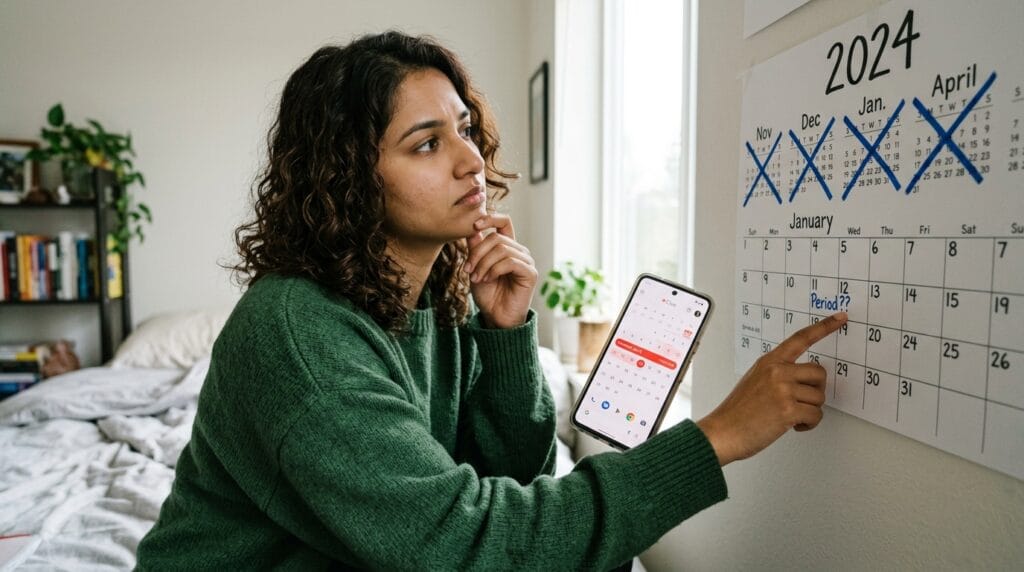
Ovulation is one of the biggest reasons period predictions can shift. Many apps estimate ovulation based on cycle length. For example, they may assume ovulation happens around the middle of the cycle or about two weeks before the next period. That estimate can work for some people, but it can fail when the body changes timing.
If ovulation happens later than expected, your period usually arrives later too. In that situation, the app may label your period as late even though your body is still following a normal post-ovulation timeline. This can make someone think they missed a period when the real issue is delayed ovulation.
Late ovulation can make your period look late
Late ovulation can happen for many reasons. Stress, poor sleep, travel, illness, intense workouts, changes in eating patterns, or hormonal shifts may affect timing. Sometimes there is no obvious reason. The body can simply have a different month.
This is why a late period should not be judged only by an app prediction. A tracker may say your period is five days late, but if you ovulated five days later than usual, your period may not actually be late for your body this cycle. That difference matters when you decide when to test.
Predicted fertile windows are still estimates
Many people also worry because an app marked a certain week as “low risk” or “high fertility.” That prediction can help with awareness, but it should not replace proper contraception or medical guidance. Apps can estimate fertile windows, but they may miss real ovulation timing if your cycle shifts.
If you had unprotected sex or a contraceptive accident, do not rely only on what the app predicted. Consider the date of sex, your usual cycle pattern, emergency contraception timing if relevant, and when a pregnancy test can give a reliable result. Your internal guide on when to take a pregnancy test can help readers plan testing based on timing instead of panic.
Late period anxiety can make app data feel more powerful than it is
When your period does not arrive, your brain may give the app too much authority. A red warning, late label, or missed prediction can feel like proof that something is wrong. But an app does not know your hormone levels. It does not know whether implantation happened. It does not know if your period will arrive tomorrow.
Late period anxiety often grows when you keep refreshing the app, reading forums, comparing symptoms, and testing too early. The more data you check, the less certain you may feel. That is frustrating, but common.
Symptoms cannot correct an inaccurate app prediction
Many people try to solve the uncertainty by reading symptoms. They ask whether cramps mean pregnancy, whether sore breasts mean PMS, or whether nausea means a positive test is coming. The problem is that early pregnancy symptoms and premenstrual symptoms overlap.
Breast tenderness, mood changes, bloating, cramps, fatigue, and appetite changes can happen before a period or in early pregnancy. Heat, dehydration, stress, and poor sleep can also make symptoms stronger. For more help with that overlap, readers can visit your guide on pregnancy symptoms vs PMS.
What to Do When Your App Says Your Period Is Late
The best response is not to delete the app or blindly trust it. Use it as one piece of information. Then compare it with real-world timing: when your last period started, when you had possible pregnancy risk, whether your cycle often varies, and when a test can detect pregnancy hormone.
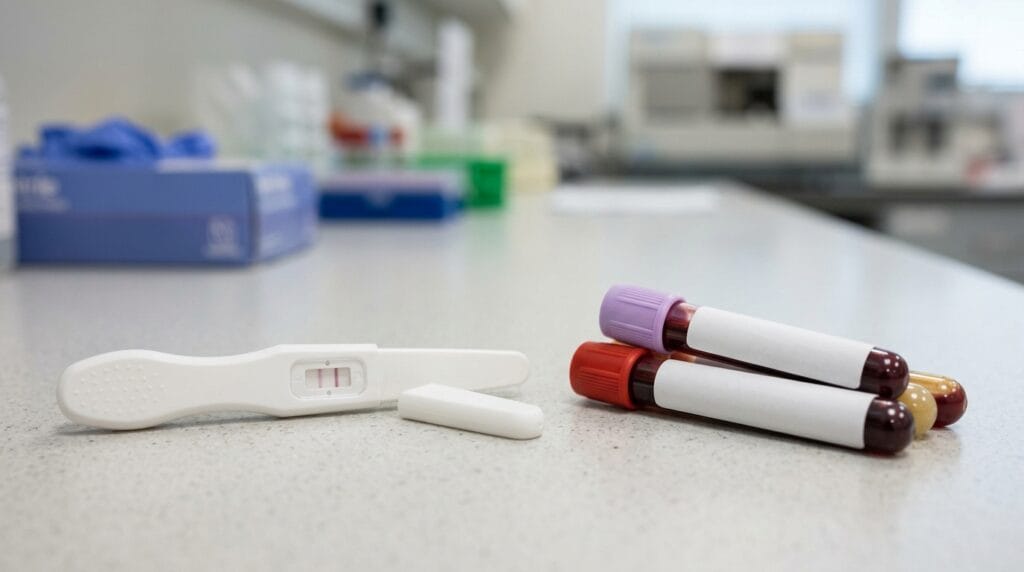
A home pregnancy test checks for hCG in urine. That gives more direct information than an app prediction. However, testing too early can still produce a negative result even if pregnancy is possible. Timing matters.
Use pregnancy testing to replace guessing
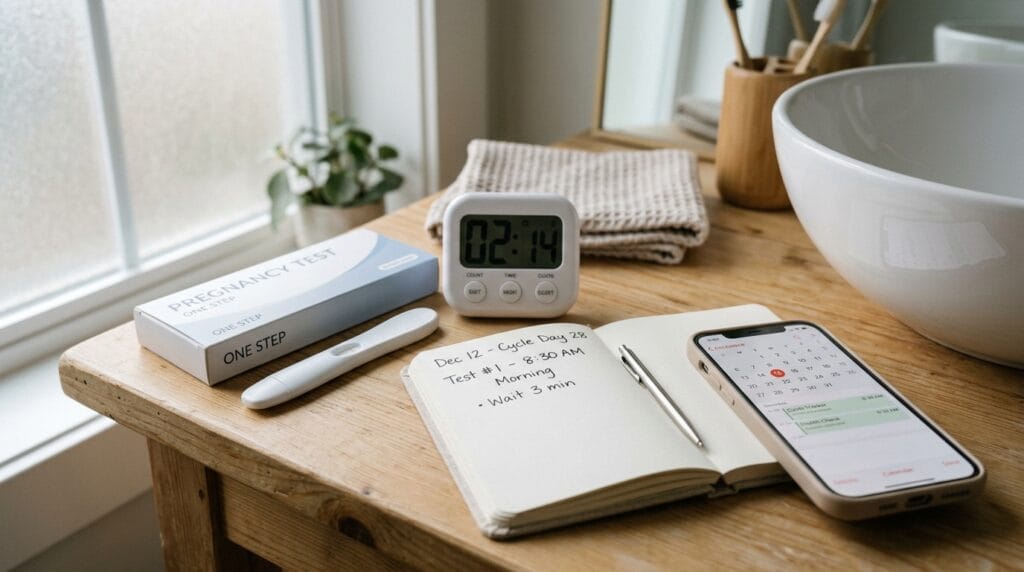
If your period is due or already late, a home pregnancy test may give useful information. Use the test exactly as directed. Read the result within the correct time window. Avoid checking the same test hours later because evaporation lines can create confusion.
If the test is negative and your period still does not arrive, test again in a few days. First morning urine may help when testing early because it is usually more concentrated. Try not to drink a large amount of fluid right before testing, because diluted urine can make a very early result harder to read.
Retest if the timing does not match your body
If the app predicted your period too early, your first test may also happen too early. That does not mean the test failed. It may mean your body has not produced enough detectable hCG yet, or it may mean you are not pregnant and your period is simply delayed.
If you tested negative but still feel unsure, your article on can I still be pregnant even if the test is negative? is a useful internal link. It explains why false negatives can happen when someone tests too soon, uses diluted urine, or ovulates later than expected.
If you see a very faint line and feel unsure whether it is real, your guide on faint positive vs evaporation line can help readers understand why timing, color, and retesting matter.
For external guidance, readers can review the ACOG overview of the menstrual cycle. It explains how menstruation, ovulation, and pregnancy timing connect, which can help readers understand why a calendar estimate may not always match the body.
If your result becomes positive, move from app tracking to practical next steps. Your internal post on positive pregnancy test next steps can help readers think through follow-up care, appointments, medications, supplements, and support.
If your result stays negative and your period remains missing, do not let the app be the final answer. Cycles can change for many reasons, but a healthcare professional can help if missed or irregular periods continue. This matters especially if you often skip periods, have severe pain, experience heavy bleeding, recently stopped hormonal birth control, or have symptoms that feel unusual for you.
The main lesson is simple: AI period tracker predictions can help you notice patterns, but they cannot confirm pregnancy, ovulation, or the exact day your period must arrive. Your body is not a perfect calendar. Apps can estimate, but tests and healthcare guidance give better answers when pregnancy is possible.
Use the app for awareness. Use your dates for context. Use a pregnancy test for clearer information. Use medical care when symptoms feel concerning or your cycle keeps acting differently. That balanced approach gives you more control than panic-refreshing a tracker that may have guessed wrong this month.