
AI pregnancy symptom checkers in 2026 are becoming more common for people who feel unsure before taking a test. You may feel tired, nauseous, bloated, emotional, or late for your period. Then you open an app or chatbot and type, “Could I be pregnant?” Within seconds, it gives you a possible answer.
That quick answer can feel comforting. It can also make anxiety worse. A symptom checker may list early pregnancy signs that match what you feel. It may also mention PMS, stress, hormonal changes, medication effects, illness, or cycle irregularity. Instead of giving peace, it may send you into another search.
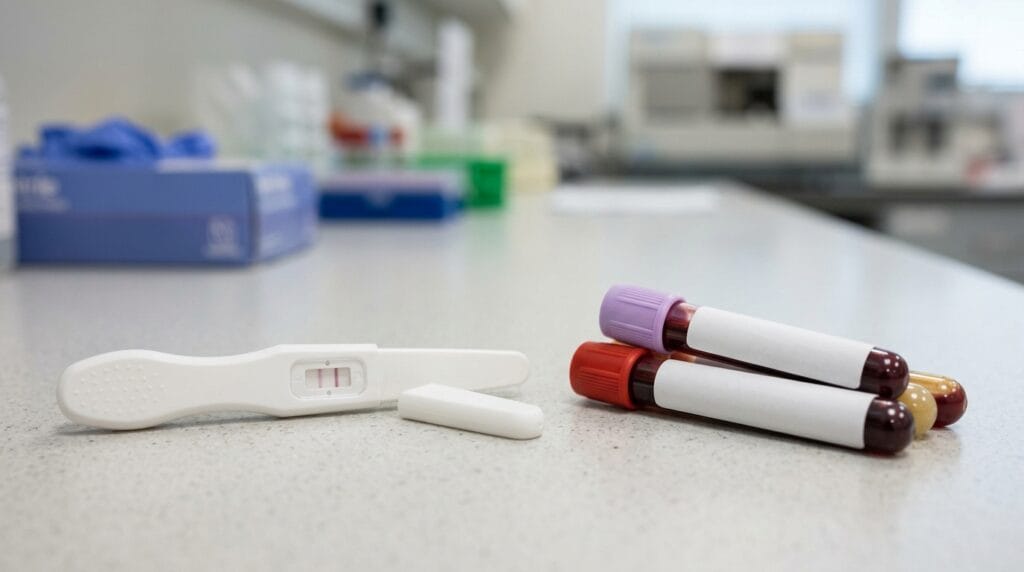
AI pregnancy symptom checkers in 2026 can help with education. They can organize symptoms, remind you when to test, and explain why timing matters. But they cannot confirm pregnancy. They cannot replace a home pregnancy test, blood test, ultrasound, or medical advice.
This matters because early pregnancy symptoms are not specific. Sore breasts, fatigue, nausea, cramping, mood changes, bloating, and spotting can happen for many reasons. The most useful next step is not endless symptom checking. It is knowing when to test, how to read the result, and when to contact a healthcare provider.
How AI Pregnancy Symptom Checkers in 2026 Can Help
An AI symptom checker may help you slow down and organize your thoughts. Instead of searching ten different websites, you can list your symptoms, cycle dates, birth control use, and test timing in one place. That can be useful when your mind feels scattered.
A good tool may remind you that symptoms alone cannot prove pregnancy. It may tell you to check your last menstrual period, estimate when your period was due, and consider whether you tested too early. It may also suggest urgent care if you describe severe pain, heavy bleeding, fainting, or other warning signs.
The problem is that not every tool gives careful guidance. Some apps use dramatic wording. Others push product links, paid features, or generic answers. A tool may sound confident even when your details are incomplete.
Symptom Checkers Can Organize Clues

Pregnancy questions can feel overwhelming because symptoms overlap. One person may feel nauseous before a positive test. Another may feel nothing. Someone else may have sore breasts before every period and still wonder if this month is different.
An AI checker can help you group information. It may ask when your last period started, whether your cycle is regular, when sex happened, whether birth control was used, and whether you already tested. Those questions matter more than one symptom alone.
For example, nausea by itself does not prove pregnancy. A missed period with unprotected sex and a positive test is much stronger evidence. A late period with a negative test may still need retesting if you tested early. Your guide on when to take a pregnancy test is a strong internal link for this section.
It can reduce random searching
Random searching can make anxiety worse. One article may say cramps are normal. Another may mention miscarriage. A forum may include extreme stories that do not match your situation. After an hour, you may feel more confused than when you started.
A symptom checker can be helpful if it keeps you focused on practical next steps. It should guide you toward testing at the right time, tracking symptoms clearly, and seeking medical care when needed.
Still, the tool should not become the final answer. Use it like a notebook with explanations. Do not use it like a diagnosis.
It may help you prepare better questions
AI pregnancy symptom checkers in 2026 may also help you prepare for a clinic call. If you feel nervous, you may forget important details. A tool can help you list your period date, test date, symptoms, medications, birth control use, and concerns.
That list can make a conversation with a provider more useful. You can ask whether to retest, when to schedule care, what symptoms need urgent attention, and whether any medication needs review.
If you already have a positive result, your next step should move beyond symptom checking. Your internal guide on what to do in the first 72 hours after a positive pregnancy test can help readers understand that next stage.
Where AI Tools Can Mislead You
The biggest risk is false confidence. A symptom checker may say pregnancy is “likely” or “unlikely,” but it cannot detect hCG in your urine or blood. It cannot know exactly when you ovulated. It may not understand your full health history.
Early pregnancy is especially tricky. Ovulation can happen earlier or later than expected. Period apps can predict dates incorrectly. Stress, travel, illness, weight changes, breastfeeding, medication changes, and conditions like PCOS can shift your cycle.
Because of that, a negative test does not always end the question if you tested too early. A positive test also deserves follow-up, especially if you have pain, bleeding, or risk factors.
Symptoms can mimic PMS

Pregnancy symptoms and PMS can feel almost identical. Breast tenderness, cramps, bloating, mood changes, headaches, fatigue, and food cravings can appear before a period or during early pregnancy.
This overlap is why symptom checkers can create confusion. If the tool focuses only on symptoms, it may overstate the chance of pregnancy. Timing matters more. A missed period, test result, and recent pregnancy risk give better information than symptoms alone.
Your related article on pregnancy symptoms vs. PMS fits well here because it explains why the body can send mixed signals before a period.
Privacy deserves attention
Pregnancy questions are personal. When you enter cycle dates, sexual activity, symptoms, medication use, location, or health concerns into an app, you may share sensitive information. Some tools may use that data for ads, analytics, product improvement, or third-party services.
Before using any AI pregnancy symptom checker, review the privacy policy. Check whether the tool says how it stores, shares, or deletes your data. Avoid entering your full name, address, exact location, or unnecessary personal details into tools you do not trust.
The Federal Trade Commission explains that companies collecting consumer health information must consider privacy and security when collecting, using, retaining, or disclosing that information. You can learn more from the FTC’s consumer health information guidance.
How To Use AI Pregnancy Symptom Checkers Safely
The safest way to use AI pregnancy symptom checkers in 2026 is to treat them as a starting point. They can help you think clearly, but they should not replace testing or care. The real question is not only “What do my symptoms mean?” It is also “What should I do next?”
Start with timing. If your period is late, take a home pregnancy test according to the instructions. First-morning urine may help if you test early. If the result is negative but your period still does not come, retest in a few days.
If you test before your missed period, be careful with the result. A negative test may only mean hCG is not high enough yet. Your internal guide on being pregnant even if the test is negative can support readers who are confused by symptoms and a negative result.
Use A Test Plan, Not A Panic Loop
A panic loop happens when you check symptoms, search online, test too early, doubt the result, search again, and repeat. This cycle can drain your energy. It can also make normal body sensations feel scary.
A better plan is simple. Write down when your period was due. Choose a test day. Use the test correctly. Read it during the correct time window. If it is negative and your period remains absent, choose one retest day instead of testing repeatedly.
If your result is positive, contact a healthcare provider or clinic for next steps. If your result is unclear, repeat with a new test. Do not keep rereading an old test hours later. Evaporation lines can cause confusion.
For readers who want a basic symptom overview, your article on 10 early signs you might be pregnant can be linked naturally. The key is to use symptoms as clues, not proof.
Know when to get urgent help
Do not rely on an AI tool if symptoms feel serious. Seek urgent medical care for severe one-sided pelvic pain, heavy bleeding, fainting, shoulder pain, severe dizziness, fever, or intense abdominal pain. These symptoms do not always mean something dangerous, but they need real evaluation.
You should also contact a provider if you have a positive test with strong pain or bleeding. A symptom checker cannot rule out ectopic pregnancy, miscarriage, infection, or another urgent condition.
For general medical information on pregnancy test timing and accuracy, readers can review the Mayo Clinic guide to home pregnancy tests. It explains why timing affects accuracy and why testing after a missed period is more reliable.
Let the tool support you, not scare you
AI pregnancy symptom checkers in 2026 should make your next step clearer. If a tool makes you feel trapped in fear, close it. Take a break. Drink water. Write down your dates. Decide when to test. Talk to someone you trust if you need support.
Pregnancy uncertainty can feel heavy because the answer may affect your health, relationships, plans, work, money, and emotions. You deserve calm information, not fear-based content.
The bottom line is direct: an AI checker can explain possibilities, but a pregnancy test gives better evidence. A healthcare provider gives better guidance. Your body deserves more than a chatbot guess.
Use technology wisely. Track symptoms, protect your privacy, test at the right time, and seek care when symptoms are urgent. That balanced approach can help you avoid both false reassurance and unnecessary panic.