
A late period after Plan B can feel stressful, especially if you took emergency contraception after unprotected sex, a broken condom, or a missed birth control pill. You may keep checking your calendar, looking for symptoms, and wondering whether the pill worked. The waiting period can feel even harder if you notice spotting, cramps, breast tenderness, nausea, or a negative pregnancy test that still does not feel reassuring.
Plan B and other levonorgestrel emergency contraception pills are designed to lower the chance of pregnancy after sex. They work best when taken as soon as possible. However, they can also affect your next period. Your bleeding may arrive early, arrive late, feel heavier, feel lighter, or look different from your usual cycle. That change can create confusion because early pregnancy, PMS, stress, and emergency contraception side effects can overlap.
The most important point is this: a late period after Plan B does not automatically mean you are pregnant. At the same time, it should not be ignored forever. You need a clear testing plan, a basic symptom checklist, and a sense of when to call a healthcare provider.
This guide connects with other Could Be Pregnant resources, including Can I Still Be Pregnant Even If the Test Is Negative?, Missed Birth Control Pill and Late Period, Pregnancy Symptoms vs. PMS, Chemical Pregnancy in 2026, and What to Do If You Think You Might Be Pregnant.
Why Plan B Can Make Your Period Late or Different
Plan B contains levonorgestrel, a hormone used for emergency contraception. It mainly helps by delaying or preventing ovulation. If ovulation has not happened yet, delaying it can lower the chance that sperm meets an egg. Timing matters because sperm can live in the reproductive tract for several days. This is why taking emergency contraception sooner usually gives it a better chance to work.
Because Plan B affects hormone timing, your next period may not follow its normal pattern. Some people bleed earlier than expected. Others wait longer than usual. Some notice spotting a few days after taking it. Others have no spotting at all. These changes can be unsettling, but they are common reasons people search for answers.
Still, emergency contraception is not a regular birth control method. It is a backup option. After taking it, you should use condoms or follow instructions for restarting your regular method. If you missed birth control pills, your next steps may depend on how many you missed, where you were in the pack, and whether you had sex during the risk window.
Spotting After Plan B Is Not Always a Period

Spotting after Plan B can happen, but it may not count as your true period. Light bleeding, brown discharge, or a short bleed can be a hormone-related side effect. A real period usually looks more like your normal flow, although it can still be different after emergency contraception.
This distinction matters because some people see spotting and assume pregnancy is impossible. Others see spotting and worry it must be implantation bleeding. In reality, spotting alone cannot confirm either answer. You need timing, testing, and symptom context.
Track Bleeding, But Do Not Diagnose From Color Alone
Bleeding color can vary from pink to red to brown. Brown blood usually means older blood. Bright red blood may feel more like a period. However, color alone does not prove whether you are pregnant, not pregnant, or having a side effect from Plan B.
Instead of focusing only on color, track the date, amount, cramps, clots, and how long the bleeding lasts. If bleeding becomes very heavy, painful, or unusual for you, contact a healthcare provider. Heavy bleeding with strong pain deserves prompt medical advice.
Plan B Side Effects Can Mimic Early Pregnancy
Plan B side effects can include nausea, fatigue, breast tenderness, dizziness, cramps, headache, and changes in bleeding. Unfortunately, early pregnancy and PMS can also cause some of these symptoms. That overlap makes symptom-spotting unreliable.
If your period is late and symptoms continue, use a pregnancy test instead of guessing from how you feel. A test gives clearer information than breast tenderness, cramps, nausea, or mood changes. For more comparison help, read Pregnancy Symptoms vs. PMS.
When to Take a Pregnancy Test After Plan B
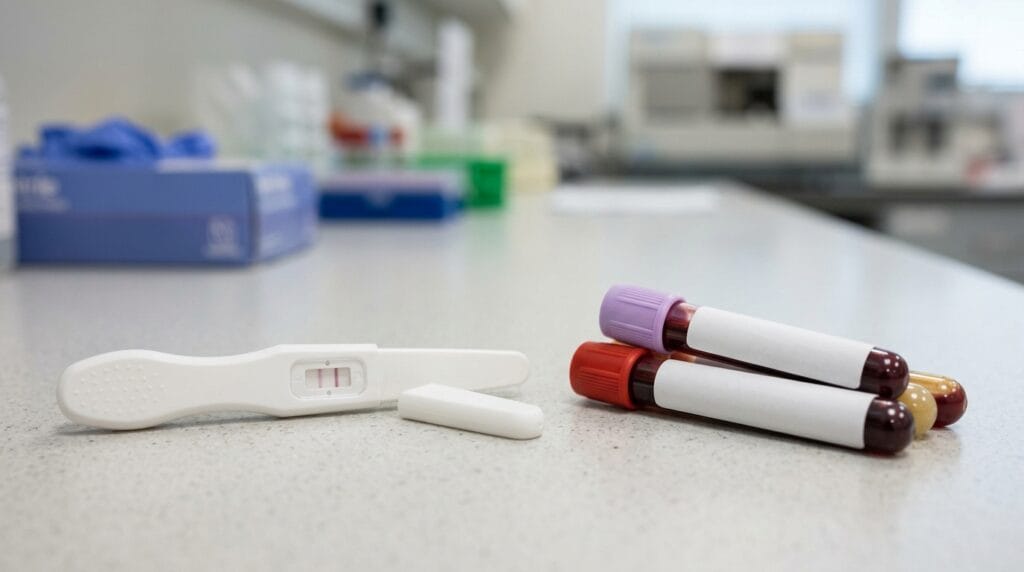
If your period is more than a week later than expected, take a pregnancy test. If you do not know when your period should come, test about 3 weeks after the sex that led you to take Plan B. This timing gives your body enough time to produce detectable hCG if pregnancy happened.
Use first-morning urine if possible. It is usually more concentrated, especially when you are testing early. Check the expiration date on the test. Follow the instructions exactly. Use a timer, and read the result only during the correct time window.
For official guidance on emergency contraception, Planned Parenthood explains that Plan B and other levonorgestrel morning-after pills work better when taken during the first 3 days, and it advises taking a pregnancy test if your period has not arrived within 3 weeks after taking the morning-after pill. You can review that resource here: Planned Parenthood Plan B information.
A Negative Test May Need a Retest
A negative test can be reassuring, but timing matters. If you test too early, the result may be negative even if pregnancy is still possible. Diluted urine, irregular cycles, late ovulation, and reading the test incorrectly can also create confusion.
If your first test is negative but your period still does not come, retest in 48 hours to a few days. If you are 3 weeks past the sex in question and the test is clearly negative, pregnancy is less likely. If you still feel unsure, contact a healthcare provider for advice or ask whether a blood test makes sense.
What to Do If Your Period Is Late After Plan B

Start with a simple timeline. Write down the date of sex, the date and time you took Plan B, the date your period was expected, and any bleeding since then. Also note whether you vomited soon after taking the pill, had more unprotected sex later, missed birth control pills, or used any medications that could affect contraception.
Next, choose a testing date. If your period is a week late, test now. If you do not track periods or your cycle is irregular, test 3 weeks after the pregnancy risk. If the result is positive, call a healthcare provider and ask about next steps. If the result is negative but your period remains absent, test again or request medical guidance.
Also pay attention to symptoms that need care. Severe one-sided pelvic pain, fainting, shoulder pain, heavy bleeding, fever, severe dizziness, or intense abdominal pain should not be managed with online guessing. These symptoms need prompt medical attention.
What If You Had Sex Again After Taking Plan B?
Plan B does not protect you for the rest of the cycle. If you had unprotected sex again after taking it, you may have a new pregnancy risk. This is a common misunderstanding. Emergency contraception helps reduce risk from a recent event, but it is not ongoing birth control.
If this happened, your testing timeline may need to restart from the most recent unprotected sex. You may also need to ask a provider or pharmacist about emergency contraception options. If you use regular birth control, ask when it becomes effective again and whether you need backup protection.
A late period after Plan B can also happen because of stress. Worrying about pregnancy may affect sleep, appetite, and how closely you notice every body change. Stress does not explain every late period, but it can add to the confusion. Try to use dates and tests instead of fear as your guide.
If your test becomes positive, you do not need to panic. A positive result means you should contact a healthcare provider or qualified clinic. Bring your timeline, symptoms, and medication list. If you have bleeding or pain with a positive test, call sooner. If a positive test later turns negative or bleeding starts, review Chemical Pregnancy in 2026 for context, but still consider medical advice.
In conclusion, a late period after Plan B is common enough to cause confusion, but it has a clear next step. Track your dates, test at the right time, retest if needed, and call a provider if symptoms worry you. Emergency contraception can affect bleeding, but pregnancy testing gives the clearest answer.
This article is for educational purposes only and is not a substitute for medical advice. If you have severe pain, heavy bleeding, fainting, or symptoms that feel urgent, seek medical care right away.