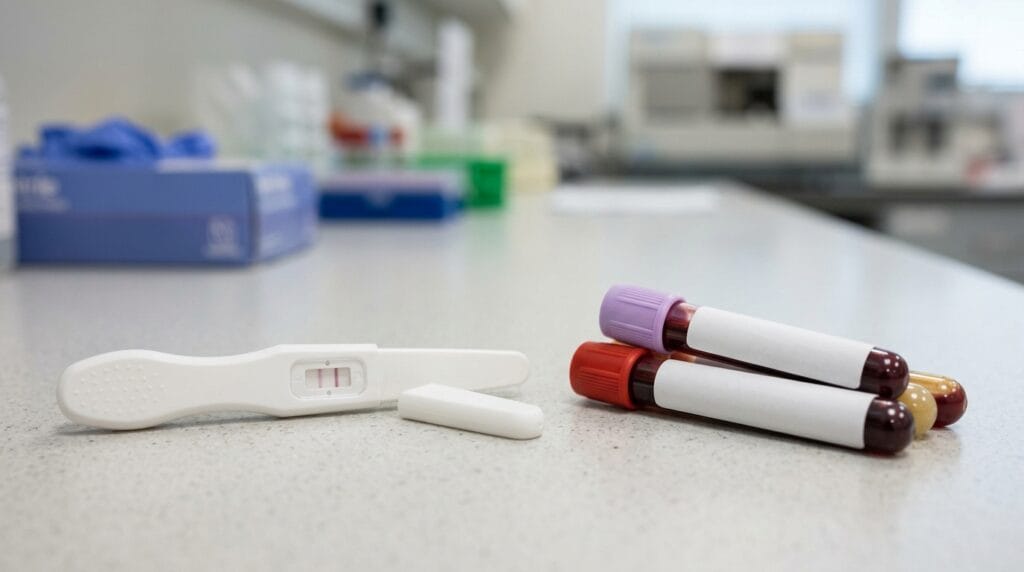

MPerimenopause or pregnancy can be hard to tell apart when your period changes suddenly. One month your cycle may be early. The next month it may be late. You may feel tired, emotional, bloated, nauseous, or tender in the breasts. If pregnancy is possible, even a small change can make you wonder whether your body is entering perimenopause or whether you should take a pregnancy test.
This confusion is common because perimenopause and early pregnancy can overlap in frustrating ways. Both can affect bleeding patterns, energy, mood, sleep, breast sensitivity, and body temperature. Both can make you feel unlike yourself. And if you are in your late 30s, 40s, or early 50s, the question can feel even more stressful because fertility is changing but may not be completely gone.
The clear answer is this: if you still have periods, even irregular ones, pregnancy may still be possible. Perimenopause can make ovulation less predictable, but it does not always stop ovulation right away. That is why a late or missed period should not automatically be blamed on age, stress, or hormones. Testing at the right time is the simplest way to get more clarity.
Why Perimenopause and Pregnancy Can Feel So Similar
Perimenopause is the transition leading up to menopause. During this stage, hormones can rise and fall unevenly. That hormonal shift can change the timing, flow, and symptoms of your menstrual cycle. Some people have shorter cycles. Others have longer cycles. Some skip periods. Some notice heavier bleeding, lighter bleeding, spotting, hot flashes, night sweats, sleep changes, mood swings, or brain fog.
Early pregnancy also changes hormones. That is why symptoms can overlap. Fatigue, breast tenderness, mild cramping, bloating, nausea, food aversions, frequent urination, mood changes, and light spotting can all happen in early pregnancy. These signs can also appear with PMS or perimenopause. Symptoms alone are not enough to confirm what is happening.
If you are trying to compare symptoms, read this related guide on pregnancy symptoms vs PMS. PMS, perimenopause, and early pregnancy can all feel similar, so the most useful clue is not one symptom by itself. It is timing, testing, and whether symptoms continue or change.
Irregular periods do not always mean menopause is near
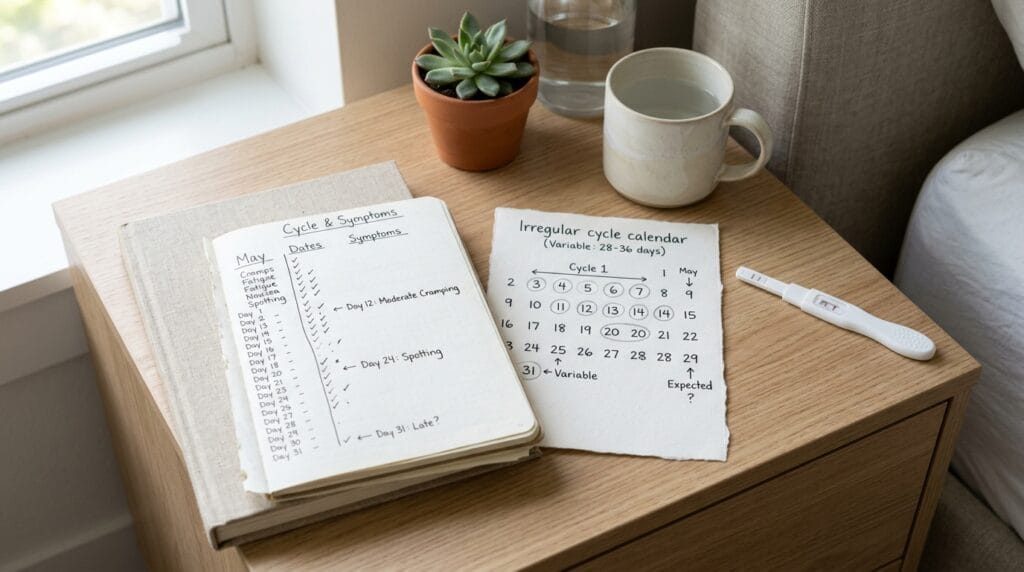
Irregular periods can happen during perimenopause, but they can also happen for many other reasons. Stress, weight changes, thyroid problems, PCOS, breastfeeding, illness, medication changes, missed birth control pills, emergency contraception, travel, and intense exercise can all affect a cycle. Pregnancy is also one of the first possibilities to rule out if you have had sex and your period is late.
This is where many people make a mistake. They assume that because they are in their 40s, a missed period must be perimenopause. That may be true, but it is not guaranteed. If you had unprotected sex, a condom broke, birth control was missed, or you are not using contraception, pregnancy should still be considered.
A late period in your 40s can still be pregnancy-related
Fertility usually declines with age, but lower fertility does not mean zero fertility. Ovulation may be less frequent or less predictable during perimenopause, but it can still happen. If sperm are present around ovulation, pregnancy may occur. The challenge is that irregular cycles make ovulation harder to predict.
For example, if your usual cycle is 28 days but suddenly stretches to 40 days, you may think your period is simply late because of perimenopause. But if ovulation happened later than usual, a pregnancy test may be negative at first and positive later. That is why timing matters.
Skipped periods should not be ignored if pregnancy is possible
A skipped period can be part of perimenopause, but it should not be brushed off if there is any chance of pregnancy. Take a test if your period is late or if your bleeding pattern changes after sex that could lead to pregnancy. If the test is negative but your period still does not arrive, repeat the test in a few days or speak with a healthcare provider.
You should also pay attention to unusual bleeding. Bleeding that is very heavy, happens after sex, lasts much longer than usual, or occurs after menopause should be discussed with a medical professional. Perimenopause can cause changes, but not every bleeding change should be ignored.
Symptoms that commonly cause confusion
Some symptoms are especially confusing because they show up in both perimenopause and pregnancy. Breast tenderness is one example. During perimenopause, hormone fluctuations can make breasts feel sore or swollen. During early pregnancy, rising hormones can also make breasts tender, heavy, or sensitive.
Fatigue is another confusing symptom. Perimenopause can disrupt sleep, especially if night sweats or anxiety are present. Early pregnancy can also cause deep tiredness. If you are sleeping poorly and feeling exhausted, it may be difficult to know whether the cause is hormonal transition, pregnancy, stress, or all of the above.
Nausea can also create worry. Many people associate nausea with pregnancy, but nausea can also happen from anxiety, digestive changes, medications, poor sleep, or hormonal shifts. The same is true for mood changes. Feeling emotional, irritable, sad, or unusually sensitive can happen before a period, during perimenopause, or in early pregnancy.
Hot flashes point more toward perimenopause, but they are not the whole story
Hot flashes and night sweats are more commonly linked with perimenopause than early pregnancy. If you are waking up sweaty, feeling sudden waves of heat, or struggling with sleep changes along with irregular periods, perimenopause may be part of the picture.
Still, hot flashes do not rule out pregnancy. Bodies are not always neat. If pregnancy is possible, take a test instead of relying on symptoms. A test gives you better information than guessing based on one sign.
When to Take a Pregnancy Test During Perimenopause

If you are in perimenopause and your period is late, take a pregnancy test around the time your period is expected or after it is missed. If your cycles are too irregular to know when your period is expected, test about two to three weeks after unprotected sex or a possible birth control mistake. This timing gives the pregnancy hormone hCG more time to rise to a detectable level.
If your first test is negative, do not assume the answer is final if you tested early. Late ovulation can delay a positive result. Use first-morning urine if possible, follow the test instructions carefully, and repeat testing after a few days if your period still does not come. For more details, read when to take a pregnancy test.
A negative test with ongoing symptoms can be frustrating. It may mean you are not pregnant. It may mean you tested too early. ay also mean your symptoms are coming from perimenopause, PMS, stress, or another health issue. If you keep getting negative tests but still feel unsure, this guide may help: Can I Still Be Pregnant Even If the Test Is Negative?
When to call a healthcare provider
Call a healthcare provider if you have repeated negative tests but no period for several months, bleeding that is much heavier than usual, bleeding between periods, bleeding after sex, severe pelvic pain, dizziness, or symptoms that worry you. You should also ask for medical guidance if you get a positive pregnancy test, especially if you are over 35 or have existing health conditions.
A provider may ask about your cycle history, symptoms, medications, birth control, pregnancy test timing, and bleeding pattern. They may recommend a urine test, blood test, pelvic exam, ultrasound, or other evaluation depending on your situation. Perimenopause is often recognized by symptoms and cycle changes, but other causes may need to be ruled out.
For an external medical reference, ACOG explains that the menopause years can include cycle changes such as longer or shorter cycles, skipped periods, and heavier or lighter flow, but bleeding changes should still be reported to a healthcare professional. You can read more here: ACOG: The Menopause Years.
If your test is positive, take a breath and plan your next step. You do not have to figure everything out immediately. Contact a healthcare provider to confirm the pregnancy, discuss dating, review medications, and ask what to do next. You can also read positive pregnancy test next steps in 2026.
Do not rely on age alone to decide what is happening
Age is helpful context, but it is not a diagnosis. Being in your 40s does not automatically mean every late period is perimenopause. Having pregnancy-like symptoms does not automatically mean you are pregnant. The safest approach is to test when pregnancy is possible, track bleeding changes, and talk with a provider when symptoms are persistent, unusual, or concerning.
Final Thoughts: Perimenopause or pregnancy can be difficult to sort out because both can cause irregular periods, fatigue, breast tenderness, mood changes, and confusing body signals. If pregnancy is possible, take a test instead of guessing. If the test is negative but your period still does not arrive, repeat it or ask for medical guidance. Perimenopause may explain the changes, but pregnancy should be ruled out first when there is a real possibility. Clear answers start with timing, testing, and paying attention to symptoms that deserve care.