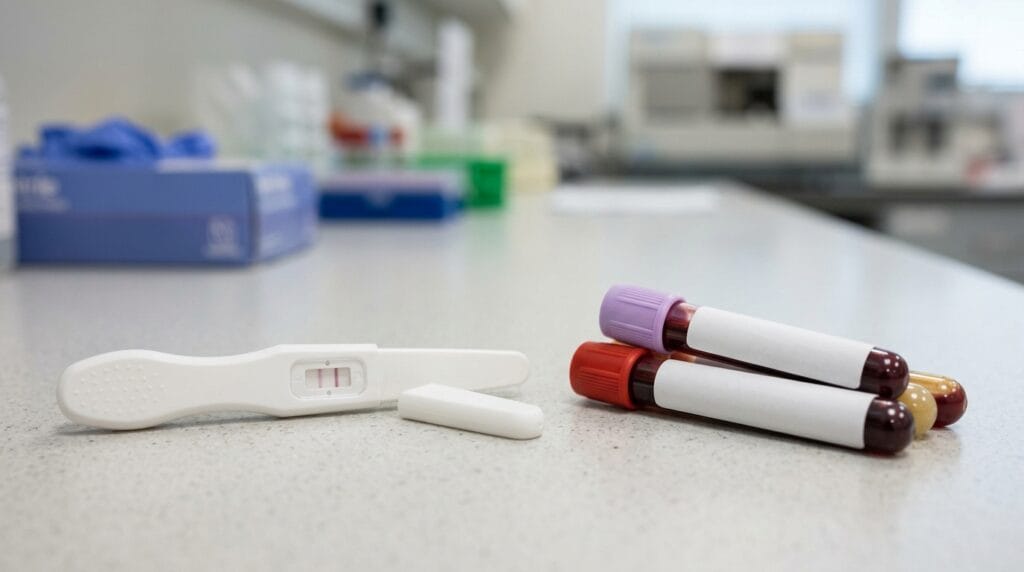

Cheap vs digital pregnancy tests is one of the most common comparisons people make when they are trying to get a clear answer fast. If your period is late or you think pregnancy might be possible, it is completely normal to stand in the store aisle or scroll online and wonder whether the more expensive digital option is truly more accurate than the cheaper strip or line test.
The short answer is that price alone does not decide whether a pregnancy test works. Most home pregnancy tests work by detecting human chorionic gonadotropin, or hCG, in urine. If enough hCG is present and you use the test correctly at the right time, both a cheaper test and a more expensive digital test may be able to detect pregnancy.
Where people often get confused is in the experience of using the test. Digital tests may feel easier to read because they show words like “pregnant” or “not pregnant.” Cheap line tests may feel harder to interpret because faint lines, evaporation lines, and timing mistakes can create stress. That difference in user experience can make one test feel more trustworthy, even when timing is the bigger issue.
This guide explains the real difference between cheap vs digital pregnancy tests, what actually affects accuracy, and how to choose the best option for your situation. This is educational content, not a diagnosis. If you have severe pain, heavy bleeding, fainting, one-sided pelvic pain, shoulder pain, or symptoms that feel urgent, contact a healthcare professional right away.
What Cheap vs Digital Pregnancy Tests Really Means
When people compare pregnancy tests, they usually compare two things: price and readability. A cheap test often means a strip test, a basic midstream test, or a store-brand line test. A digital test usually means a more expensive test that gives a word-based result on a small screen instead of asking you to interpret one or two lines.
That difference matters emotionally because reading a test can be stressful. If you are already anxious, a digital test may feel more comforting simply because you do not need to stare at a line and wonder whether it is real. But comfort and clarity are not exactly the same as biological accuracy.
Both types usually detect the same hormone

Home pregnancy tests work by looking for hCG in urine. After implantation, the body begins producing hCG, and the level usually rises in early pregnancy. Whether the test is cheap or digital, the basic purpose stays the same: detect hCG if it is present at a high enough level.
This means a low-cost test can absolutely work. In many cases, a cheap line test can detect pregnancy just as well as a more expensive option, especially if you use it after your period is due and follow the instructions carefully. A higher price does not automatically mean the test can detect pregnancy sooner in every situation.
Timing affects results more than price
The biggest factor in home pregnancy test accuracy is timing. If you test too early, your hCG may still be too low to detect, even with a more expensive test. That can lead to a negative result even when pregnancy is possible.
This is why the most important question is not only “which test should I buy?” but also “when should I test?” If your period is not due yet, or you ovulated later than expected, the result may be unclear no matter how much you spent. Readers who need help with timing can visit your internal guide on when to take a pregnancy test.
Ease of reading is where digital tests often win
Digital tests often feel easier because they remove the line-reading problem. Instead of deciding whether a second line has color or whether a shadow counts, the device usually displays a word result. For someone who gets anxious easily, that can be a real benefit.
However, that easier reading experience does not mean the digital test is magically more accurate in every situation. It means it may reduce user interpretation errors. If a cheap test gives a faint line and a digital test gives a clear word result, many people will naturally trust the digital one more. But the key issue may still be that the first test was taken very early or was harder to interpret.
Cheap tests are often practical for repeat testing
One advantage of cheap tests is that they make repeat testing easier. If you suspect pregnancy but know it may still be early, buying a multi-pack of inexpensive tests can help you test over several days without spending a lot. This can be especially useful if your cycle is irregular or if you are testing before or around the day your period is due.
That does not mean you should test every few hours. It means cheap tests can be useful when you need a plan. For example, you might test once when your period is due, then again 48 hours later if your period still has not arrived. This can help you track a possible early pregnancy without feeling forced to rely on one expensive test only.
Cheap tests can cause more stress if you misread lines
The main downside is that cheap line tests may create more emotional stress if you are very sensitive to faint lines. A very light second line, a grayish shadow, or a mark that appears after the reading window can quickly lead to confusion. This is where people start taking photos, changing lighting, and searching online for reassurance.
If that has happened to you before, your internal article on faint positive vs evaporation line is a strong related link. It helps readers understand why reading time, color, and retesting matter more than guessing from a questionable mark.
How to Choose the Right Test and Get the Clearest Result
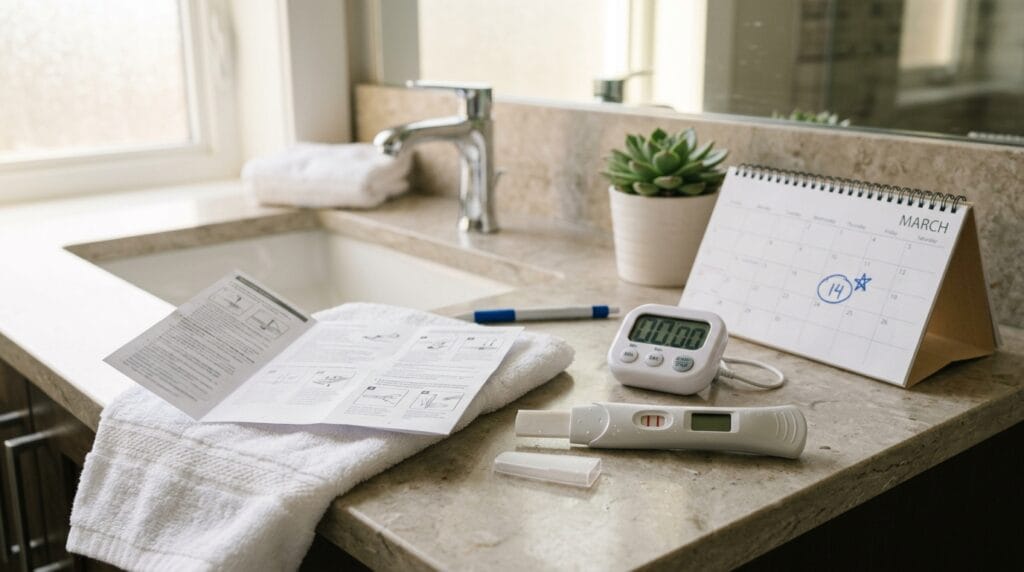
The best test is not always the most expensive one. It is the one that fits your situation and that you can use correctly. If you want the most affordable option and are comfortable following instructions closely, a cheap test may be enough. If you know that line-reading will cause you a lot of anxiety, a digital test may be worth the extra money for peace of mind.
In other words, the better choice depends on your timing, budget, stress level, and whether you are likely to retest if the first result is unclear.
Use a calm testing strategy instead of panic-testing
Start with the date your period was expected and think about whether you had unprotected sex or another pregnancy risk. If your period is due or late, use a test according to the instructions. If you are testing very early, first morning urine may help because it is usually more concentrated.
Avoid drinking a large amount of water right before testing just because you want to “do it right.” Too much fluid can dilute your urine and make an early result harder to detect. Read the instructions before you start, set a timer, and check the result only within the correct time window. Do not keep looking at the same test long after it dries.
Use digital tests when clarity matters most
If you already know you struggle with interpreting faint lines, or if an unclear result will cause a lot of emotional distress, a digital test may be the better option. It can give you a clearer answer in words and reduce the temptation to overanalyze the result.
Digital tests can also be useful as a follow-up after a line test. Some people choose to use a cheaper test first and then confirm with a digital test if they see a possible faint positive. That can be a practical middle-ground approach when someone wants to manage cost but still wants more clarity.
Know when a negative result may not be the final answer
If you test negative but your period still does not arrive, do not assume the answer is final right away. You may have tested too early, ovulated later than expected, or used diluted urine. In that case, testing again in a couple of days may give a clearer answer.
If readers are worried about that exact situation, your internal guide on can I still be pregnant even if the test is negative? is a useful next step. It helps explain why timing, ovulation shifts, and testing conditions can affect results.
For external guidance, readers can review the FDA home pregnancy test guidance. It explains how home tests work and why following instructions and testing at the right time matters.
If your result becomes clearly positive, the next step is not to keep buying more tests unless a healthcare professional recommends it. Your internal article on positive pregnancy test next steps can help readers move from test result to practical care planning.
If your result stays negative and your period still does not come, a healthcare provider may help you understand whether stress, illness, cycle variation, recent birth control changes, or another issue might be involved. A missed period is not always pregnancy, but it should not be ignored forever if the pattern continues.
The main takeaway is simple: cheap vs digital pregnancy tests is really a question about timing, readability, and personal preference. Cheap tests can work well and are often useful for repeat testing. Digital tests can reduce line-reading anxiety and make the result feel clearer. But neither option can overcome testing too early or ignoring the instructions.
If you want the clearest result, test at the right time, use the instructions carefully, read the result within the valid window, and retest in a few days if needed. That gives you a much better answer than relying on price alone.