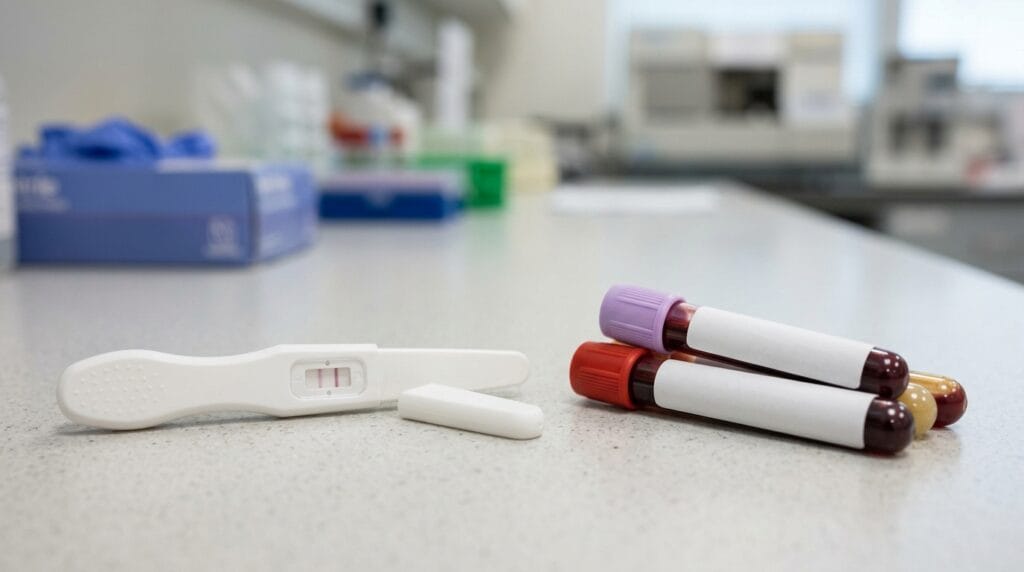

PCOS irregular periods pregnancy test questions can feel especially confusing. If your cycle is unpredictable, it may be hard to know whether your period is truly late. You may test too early, get a negative result, and still feel unsure. Then a few days pass, symptoms continue, and the question comes back again: could you still be pregnant?
Polycystic ovary syndrome, often called PCOS, can affect ovulation and cycle timing. Some people with PCOS have long cycles. Others skip periods, bleed unpredictably, or ovulate later than expected. Because home pregnancy tests depend on timing and hCG levels, irregular cycles can make results harder to interpret.
The good news is that you can follow a clearer testing plan. You do not need to guess every day or take a test every few hours. Instead, you can look at your last unprotected sex, possible ovulation timing, symptoms, and test dates. Then you can decide when to test, when to retest, and when to call a healthcare provider.
This guide connects with other Could Be Pregnant resources, including fertility tracking wearables in 2026, negative pregnancy test but still feel pregnant, missed birth control pill and late period, late period on GLP-1 medication, and prenatal vitamins before a positive test.
Why PCOS Can Make Pregnancy Testing Confusing
PCOS can make testing confusing because a missed period is not always a clear sign. Many pregnancy test instructions use the phrase “after your missed period.” That works better when cycles are predictable. However, if your period often comes late, skips, or changes from month to month, the expected period date may not be reliable.
Ovulation timing is the key issue. Pregnancy can only happen if sperm meets an egg around the fertile window. If ovulation happens later than usual, your period will likely arrive later too. As a result, a test taken on the date your app predicted may be too early. The test may look negative because hCG has not risen enough yet.
ACOG explains that PCOS can involve irregular menstrual periods and ovulation problems. For an official overview, readers can review the ACOG PCOS FAQ. This matters because pregnancy testing depends on where you actually are in your cycle, not only on the calendar date.
Late Ovulation Can Lead to a False Negative
A false negative can happen when you test before your body has enough hCG for the test to detect. With PCOS, this can happen more easily because ovulation may occur later than expected. If you ovulated late, implantation may also happen later. That delays the rise in hCG.
For example, your app may predict a 30-day cycle, but your body may ovulate much later. You may test on day 31 and see a negative result. That result may be accurate for that day, but it may not answer the full question. If pregnancy is possible, retesting later gives your body more time to produce detectable hCG.
Cycle Apps Can Be Helpful, But They Can Be Wrong
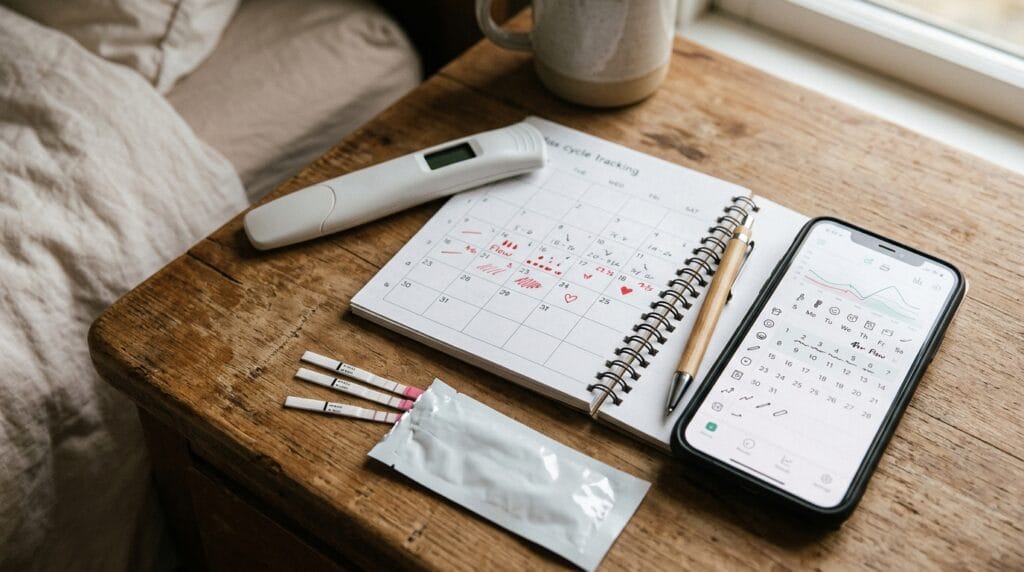
Cycle apps and smart rings can help you notice patterns. They may track bleeding dates, temperature, sleep, heart rate, symptoms, and predicted fertile windows. However, they still make estimates. PCOS, stress, illness, travel, weight changes, medication changes, and poor sleep can all shift ovulation.
Because of that, do not let an app create panic by labeling your period “late” too soon. Use the data as a guide, not as a final answer. If your cycle is irregular and pregnancy is possible, testing based on sex timing may be more useful than testing based only on an app prediction.
Symptoms Can Overlap With PMS and PCOS
Early pregnancy symptoms can overlap with PMS and PCOS-related cycle changes. Breast tenderness, bloating, cramps, fatigue, mood changes, nausea, acne, and food cravings can happen for several reasons. That overlap can make the waiting period stressful.
Symptoms alone cannot confirm pregnancy. A test gives clearer information, but timing still matters. If symptoms continue and tests stay negative, avoid assuming one answer too quickly. Keep tracking, retest at a reasonable interval, and ask for medical guidance if the uncertainty continues.
When to Take a Pregnancy Test if Your Periods Are Irregular
If your periods are irregular, one practical rule is to test at least 21 days after unprotected sex or a possible contraceptive mistake. This timing can help when you do not know when your period should arrive. If the test is negative at that point, pregnancy is less likely, but ongoing symptoms or continued missed bleeding may still deserve follow-up.
If you know when you ovulated, you can also test around the first day your period would be expected after that ovulation. Many people test around 12 to 14 days after ovulation. However, ovulation tracking is not always perfect, especially with PCOS. LH tests can sometimes be harder to interpret for people with PCOS because hormone patterns may be more variable.
Use first-morning urine when possible, especially if you are testing early. Cleveland Clinic notes that first-morning urine is generally the best time for a pregnancy test because it is often more concentrated. If you test later in the day, try to wait a few hours after your last urination and avoid drinking a lot of fluid right before testing.
Retest in 48 Hours if Pregnancy Is Still Possible
If your first test is negative but pregnancy is still possible, retest in 48 hours. This gives hCG more time to rise if you tested early. Use first-morning urine and follow the instructions exactly. Read the result only during the correct time window.
Do not keep checking an old test later in the day. Evaporation lines can cause confusion after the test dries. A new test taken correctly gives better information than rereading an old one.
How to Build a Clear Testing Plan With PCOS

A clear plan can reduce anxiety. Start by writing down the date of your last period, the dates you had unprotected sex, and any birth control mistakes. Also note spotting, cramps, breast tenderness, nausea, fatigue, discharge changes, and medication changes. If you use a wearable or app, compare its predictions with your real cycle history.
Next, choose test dates instead of testing randomly. If your period is unpredictable, test 21 days after possible pregnancy risk. You get a negative result but still have no bleeding, test again in a few days. If the result is positive, call a provider and ask about next steps. If you have pain, heavy bleeding, fainting, or severe dizziness, seek care sooner.
People with PCOS may also have questions about fertility, insulin resistance, weight changes, and medications. If you recently started or stopped a GLP-1 medication, changed birth control, lost weight, gained weight, or changed exercise patterns, your cycle may shift. That does not rule pregnancy in or out. It only means timing may be less predictable.
What to Do After a Positive or Negative Result
If the test is positive, start with calm next steps. Write down the date of the result. Call a healthcare provider. Review medications, supplements, and health conditions. Ask when you should schedule your first appointment. If you are not already taking a prenatal vitamin, ask whether to start one.
If the test is negative but your period still does not arrive, retest later. Also consider other reasons for a late or missing period. PCOS itself can delay bleeding. Stress, illness, travel, thyroid problems, weight changes, intense exercise, and some medications can also affect cycles. A provider can help if missed periods continue or if your symptoms feel unusual.
If you see a positive test and then bleeding starts, the situation can feel scary. Light spotting can happen in early pregnancy, but heavier bleeding or strong pain needs medical advice. For supportive context, read implantation bleeding vs period and chemical pregnancy in 2026.
Call a provider if you have repeated negative tests but no period for several weeks, very heavy bleeding, severe pelvic pain, one-sided pain, fainting, shoulder pain, or symptoms that worry you. These signs need more than guessing at home. A clinician may recommend a urine test, blood hCG test, ultrasound, or evaluation for cycle changes.
A PCOS irregular periods pregnancy test situation can feel frustrating because there may not be one perfect testing day. Still, you can make the process clearer. Use timing from possible pregnancy risk, test with first-morning urine, retest when needed, and avoid overreading symptoms or old tests.
In conclusion, PCOS can make periods unpredictable, but it does not make pregnancy testing impossible. The key is patience and timing. Test when the result has a fair chance to be accurate. Retest if pregnancy is still possible. Then contact a healthcare provider when symptoms, pain, bleeding, or ongoing missed periods need more support. This article is for educational purposes only and is not a substitute for medical advice.